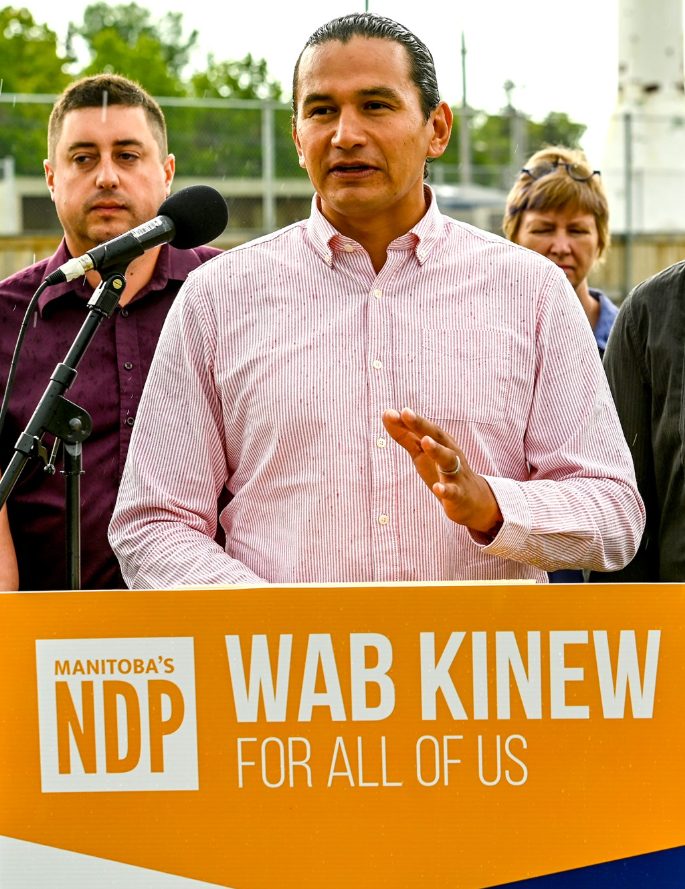
Manitoba Premier Wab Kinew announced this weekend that his province intends to become the first in Canada to ban social media for young people a sweeping proposal that would also capture AI chatbots like OpenAI’s ChatGPT in its scope.
Speaking at an NDP fundraiser in Winnipeg, Kinew framed the move in stark, moral terms. “As your premier, my most sacred responsibility is the protection and the safety of our children,” he told the crowd. The platforms, he charged, are engineered to get users “addicted to the infinite scroll” through dopamine manipulation and he says the toll on young Manitobans is no longer acceptable.
Kinew stopped short of specifying an age threshold or a timeline for introducing legislation. The Manitoba legislature is expected to sit for only four more weeks before the summer recess, with the fall session not resuming until late September meaning any concrete bill is unlikely before autumn at the earliest.
75% of Canadians support a full social media ban for under-16s, per a March Angus Reid poll. Support among parents with children at home sits at 70%.
The announcement arrives amid a rapidly shifting political landscape. Earlier this month, federal Liberal delegates voted at their policy convention to set 16 as the minimum age for Canadians to hold social media accounts. Ontario Education Minister Paul Calandra has signalled that a province-wide prohibition on cellphones in schools paired with a social media ban for under-16s is under active consideration in Queen’s Park. Saskatchewan Premier Scott Moe has promised a public consultation on similar restrictions.
But where other governments have floated possibilities, Kinew appears to be the first premier prepared to legislate. The move mirrors Australia’s December law, which not only bars under-16s from platforms such as TikTok and Meta but also levies fines of up to C$45.5 million on companies that fail to stop underage sign-ups.
Technology analyst Carmi Levy says implementation is the central challenge. Australia’s law requires platforms to deploy age-verification tools and AI-driven account scanning yet motivated teenagers are already finding workarounds. “It’s not a 100-per-cent solution,” Levy acknowledged. “Kids are managing to bypass it in Australia, and I think we would have to expect that the same thing would happen here.” His view: the aim should be maximising safety for the majority, not achieving an impossible perfection.
The inclusion of AI chatbots in Kinew’s framing carries particular resonance following the mass shooting at Tumbler Ridge Secondary School in British Columbia. Investigators revealed that the 18-year-old gunman had been banned from OpenAI’s ChatGPT over concerning interactions but the company did not alert law enforcement, and the shooter simply created a second account. Last week, OpenAI CEO Sam Altman issued an apology to the Tumbler Ridge community, saying the company was “deeply sorry” it had not escalated concerns to authorities.
Federal Culture Minister Marc Miller has deferred to an expert panel currently examining online harms to advise whether AI chatbots should fall within any proposed ban’s reach.
Jurisdictional questions remain unresolved. It is unclear whether a province can constitutionally compel compliance from multinational platforms headquartered outside Canada a point Kinew did not address at the fundraiser.
For now, the premier’s message is simple. He wants children off screens and outdoors. “Freedom to be a kid and to enjoy this beautiful place that we call home by going outside and playing with your friends in person,” he said Saturday night a vision that resonates with parents across the country, even as the legal and technical architecture to deliver it remains to be built.