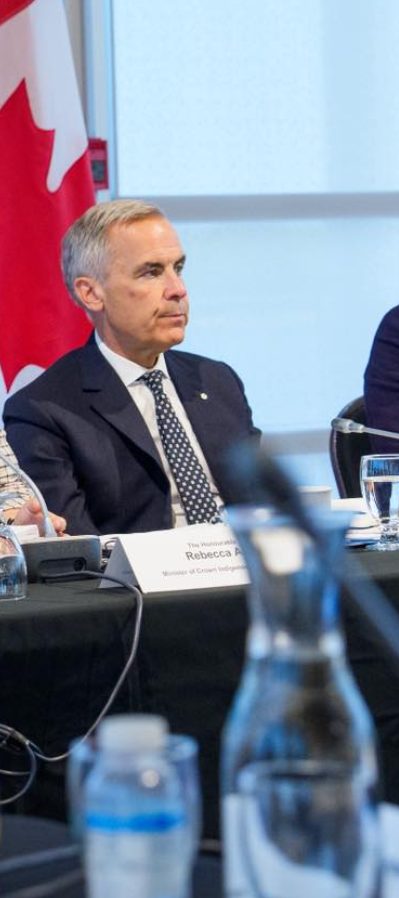
Prime Minister Mark Carney’s off-the-cuff remark “Who cares?” about stalled trade talks with the United States has exploded into a political moment far bigger than the comment itself. But beyond the theatrics in the House of Commons lies a deeper lesson about political authenticity, expectations, and the uneasy reality of Canada’s trade diplomacy in a post-Trump-reset world.
Let’s be honest: no seasoned leader genuinely believes stalled talks with America are irrelevant. Canada’s economic fate is far too intertwined with its southern neighbour. Carney himself knows this, which is why his admission in Parliament that the remark was “a poor choice of words” rings more truthful than the comment that sparked the uproar.
Yet the gaffe opened the door wide for Conservative Leader Pierre Poilievre, who wasted no time painting a picture of two Carneys: the bold, elbows-up candidate before the election and the cautious, equivocating prime minister after it. His attack line was sharp because it hit a nerve. Voters remember Carney calling the tariffs an “existential crisis.” Now they’re told they’re no longer a “burning issue.” That contradiction is political gold for an opposition leader hungry to draw contrasts.
But context matters. Carney made his controversial remark while navigating the chaos of the G20 summit in Johannesburg and in the shadow of Trump’s sudden freeze of trade negotiations, triggered by a province-funded ad featuring Ronald Reagan’s anti-tariff messaging. It was a petty rationale for halting talks, and Carney’s later apology was clearly aimed at smoothing the diplomatic wrinkles. In that tense environment, perhaps “Who cares?” was less a statement of indifference and more an expression of frustration.
Still, words carry weight, especially when spoken by a prime minister who campaigned on seriousness, steadiness, and global competence. Carney’s challenge now is to show that his walk-back is more than damage control that he genuinely understands the stakes facing industries battered by U.S. tariffs. His promise to announce new support for affected sectors this week suggests he’s trying to turn the page and move from rhetoric to action.
Interestingly, Carney is even considering heading to Washington soon, albeit for a FIFA World Cup event rather than trade negotiations. Optics matter, and this trip could be seen as a subtle olive branch or as a distraction, depending on who you ask.
Ultimately, Carney’s slip wasn’t catastrophic, but it was revealing. It highlighted the pressure of balancing international diplomacy with domestic political narratives. It showed how quickly a single phrase can be weaponized in Parliament. And it reminded Canadians that even leaders known for precision can stumble when navigating the minefield of U.S. relations.
The prime minister has admitted the mistake. Now comes the harder part: proving through concrete action that he actually does care not just about the politics, but about the workers and industries who can’t afford a diplomatic misstep.