Mark Carney Calls for Stronger Alliance of Middle Powers During Australia Visit
Arafat Rahman
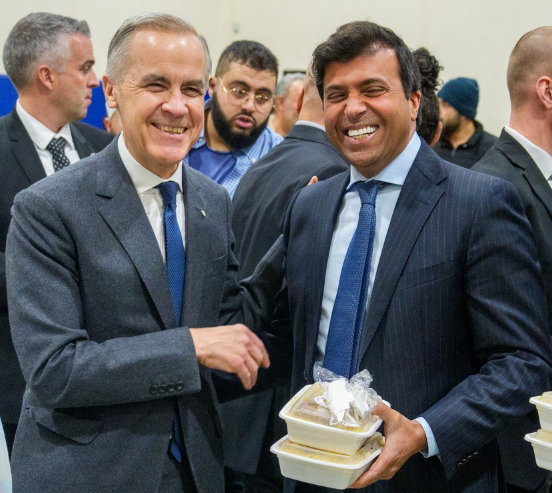
Global economic leader Mark Carney has urged countries such as Canada and Australia to work more closely together, arguing that so-called “middle powers” can play a crucial role in shaping international policies even without the military or economic dominance of major superpowers.
Speaking at the Lowy Institute in Sydney, Carney said nations like Canada and Australia enjoy a high level of credibility and global trust, which gives them the ability to bring countries together and influence international rules and cooperation.
According to Carney, while middle powers may not have the ability to force outcomes in the way large powers can, they are well positioned to build partnerships, coordinate global initiatives and create alliances capable of delivering meaningful results.
“Australia and Canada cannot compel other nations the way major powers can,” he said. “But we can gather partners, set priorities, shape global standards and build coalitions that produce real results quickly and on a worldwide scale.”
Carney stressed that the combined strength of middle powers is often underestimated. He pointed out that if the economies of Europe, Australia, Canada, Japan and South Korea are considered together, their collective GDP would surpass that of the United States, while their trade activity would be three times larger than China’s.
His comments reflected themes he raised earlier this year during a widely discussed address at the World Economic Forum in Davos, where he highlighted the growing importance of cooperation among democratic nations.
During the Sydney speech, Carney also spoke about opportunities for deeper cooperation between Canada and Australia in the area of critical minerals. Both countries possess large reserves of these essential resources, which are used in technologies ranging from electric vehicle batteries to renewable energy systems.
He said the two nations are working toward developing what he described as the largest supply of critical minerals held by trusted democratic partners.
Defence cooperation was another topic he addressed. Carney noted that when Canada and Australia invest in defence, a large portion of that spending goes to American companies. He estimated that around 70 cents of every defence dollar currently flows to the United States.
He suggested that the two countries could increase collaboration in advanced technologies such as artificial intelligence and aerospace projects.
Last year, Ottawa and Canberra signed a deal for Canada to acquire an Australian-made over-the-horizon radar system that will be used to monitor Canada’s Arctic region.
Trade partnerships were also a central theme of Carney’s remarks. He explained that efforts are underway to strengthen links between the Comprehensive and Progressive Agreement for Trans-Pacific Partnership (CPTPP) and the European Union. If successful, the initiative could create a massive trade network connecting roughly 1.5 billion people.
Carney is currently on a 10-day international trip aimed at strengthening economic and political partnerships. Before arriving in Australia, he visited India, and his final destination will be Japan.
Following his speech in Sydney, Carney took part in a discussion session with the audience where he shared a humorous story from his time as governor of the Bank of Canada during the 2008 global financial crisis.
He recalled attending a dinner with other central bankers as the investment bank Bear Stearns was collapsing. With Asian markets about to open and financial markets under intense pressure, he said the meeting’s chair spent nearly half an hour discussing the available wine options.
Reflecting on the moment, Carney joked that central bankers often have more relaxed moments than politicians, who rarely get a break from their responsibilities.
Earlier in the day, Carney met with several prominent figures from Australia’s business and investment sectors. Among those he spoke with were Rio Tinto executive Simon Trott, Competitive Foods chief executive Jack Cowin, Future Fund CEO Raphael Arndt, Macquarie Group CEO Shemara Wikramanayake and Victorian Funds Management Corporation chief executive Kate Galvin.
Carney is scheduled to travel to Canberra next, where he will meet Australian Prime Minister Anthony Albanese and deliver a speech to the Australian Parliament.