Canada Greenlights Enbridge’s $4 Billion Sunrise Pipeline Expansion in British Columbia
Taslima Jamal

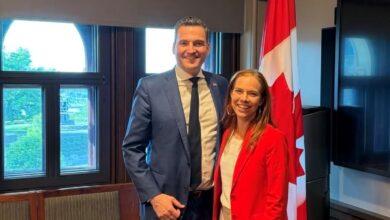
The federal government has thrown its weight behind one of Canada’s most significant energy infrastructure investments in recent years, formally approving Enbridge’s $4 billion Sunrise Expansion Program in British Columbia. Energy and Natural Resources Minister Tim Hodgson made the announcement Friday, describing it as a defining moment for Canada’s ambitions as an energy superpower.
The project involves laying 139 kilometres of new pipeline along British Columbia’s existing natural gas network, adding up to 300 million cubic feet of LNG capacity per day and extending the line all the way to the U.S. border. It sits within the broader Enbridge Westcoast system a 2,900-kilometre artery running from northeast B.C. to the Canada-U.S. border, currently capable of moving 3.6 billion cubic feet of natural gas every single day.
“This project will enable us to heat more homes, businesses, hospitals and schools while bolstering British Columbian industry, including for LNG, and creating thousands of jobs,” Hodgson said. “This is what being an energy superpower looks like.”
Beyond the energy figures, the economic case for the expansion is hard to ignore. Enbridge says the project is expected to pump more than $3 billion into Canada’s economy and put roughly 2,500 construction workers to work many drawn from local communities and Indigenous groups. The federal and provincial governments, meanwhile, are eyeing more than $700 million in combined tax revenue.
B.C. Premier David Eby offered a warm endorsement, framing the project as a pillar of a more self-reliant Canadian economy. “It will also strengthen B.C.’s role as an engine for a more independent Canadian economy delivering affordable energy people rely on and powering growth in major industries,” he said.
Construction is set to break ground in July 2026, with the expanded pipeline targeted to come online in late 2028. The work will include new pipeline segments, upgraded compression facilities, and modifications to existing infrastructure along the corridor.
Shares in Enbridge climbed 1.5 per cent Friday morning on the news.
One notable dimension of the Sunrise project is its tie to a landmark Indigenous investment deal. Back in May 2025, Enbridge announced it would sell a 12.5 per cent stake in the Westcoast pipeline to the Stonlasec8 Indigenous Alliance for $715 million the first transaction to tap a new federal loan program specifically designed to help Indigenous communities acquire ownership stakes in resource projects.
That arrangement positions Indigenous groups not just as stakeholders in the consultation process, but as part-owners with a financial interest in the pipeline’s long-term performance.
The approval did not land without political friction. Conservative Leader Pierre Poilievre offered a pointed if backhanded acknowledgment.
“Finally! It took them forever,” he told reporters. “This is an expansion of an existing project that took far too long for the Liberals to consider.”
Poilievre used the moment to push for more, arguing that Canada still lacks an oil pipeline to the Pacific and criticising Prime Minister Mark Carney for maintaining what he described as “anti-development laws” inherited from the Trudeau era. He took aim at the broader pipeline MOU signed between Carney and Alberta Premier Danielle Smith in November 2025 a proposal for a bitumen pipeline from Alberta to the West Coast saying it has “no permit, no path, no investor, no builder, no start point, no end point, no starting date, no ending date.”
Not everyone is celebrating. Environmental Defence was quick to push back, calling the approval a step in the wrong direction on climate.
“The federal government’s approval of the Enbridge Sunrise pipeline expansion is a disastrous climate decision that prioritizes fossil fuel industry growth over Canada’s climate commitments,” said Alex Walker, the group’s program manager.
Walker pointed to data showing that natural gas emissions were the single largest contributor to rising global emissions in 2025, warning that the project would lock in decades of fossil fuel infrastructure explicitly designed to feed B.C.’s LNG export industry.
The Canadian Chamber of Commerce took the opposite view, welcoming the decision as a sign that Canada is open for business at a time of global energy uncertainty.
“At a time when global demand for reliable energy is rising and the energy supply chain is currently under strain, decisions like this send a strong signal that Canada is ready to move forward,” said Bryan Detchou, the Chamber’s senior director of natural resources, environment and sustainability.
With shovels scheduled to hit the ground next summer, the Sunrise Expansion Program is poised to become one of the defining infrastructure stories of the coming years a flashpoint for Canada’s ongoing debate over how to balance economic ambition with its climate obligations.