Smoke, Sovereignty and Science: Inside the Debate Over Canada’s Wildfire Strategy
Taslima Jamal
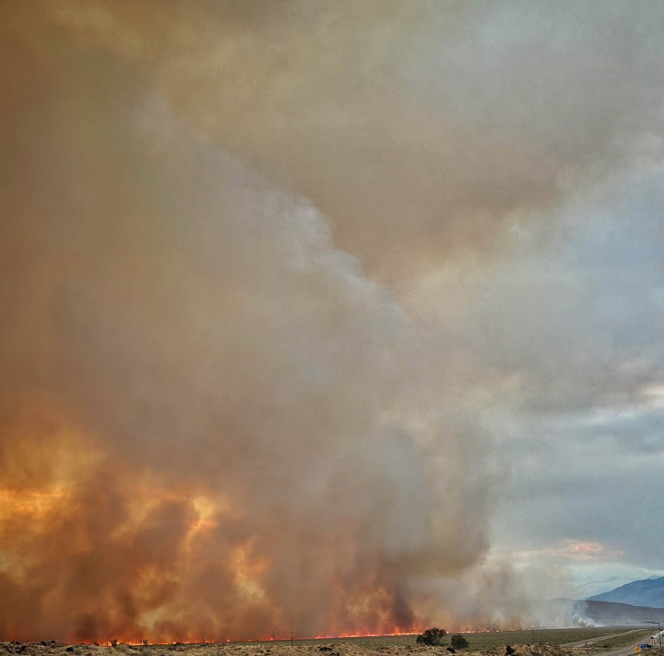
As plumes of smoke from Canadian wildfires continue to drift south, a growing chorus of American lawmakers is asking a pointed question: is Canada doing enough to keep its forests from burning out of control?
The criticism has come from high places. President Donald Trump raised the possibility of tariffs tied to the smoke crossing the border, while a group of U.S. lawmakers sent a letter to Prime Minister Mark Carney last week insisting that Ottawa step up its firefighting efforts. Their message was blunt: sovereignty, they argued, comes with responsibility.
But according to researchers who study disaster response and forestry, the reality is far more complicated than a simple yes-or-no answer.
“The question of ‘what is enough?’ is a really tricky one, and that’s always a question of trade-offs too, of course, but I think there certainly is a lot we need to be doing on the mitigation front,” said Eric Kennedy, an associate professor of disaster and emergency management at York University. “That is a problem that I think we’re only just beginning to grapple with the magnitude of.”
Parks Canada organizes its wildfire management approach around four core pillars.
The first is mitigation reducing risk before fires ever start. That includes FireSmart programs that help communities clear flammable brush, public education campaigns, enforcement of local fire bans, and coordination between different levels of government and agencies.
The second pillar is preparedness: making sure crews, equipment and strategy are in place before flames appear, so response teams can move quickly once a fire is detected.
Third comes the actual response deploying firefighting resources, often shared across provincial, federal and international partners, to fires already burning.
The fourth pillar, restoration, focuses on healing the land afterward. This includes prescribed burns, managed fire programs, and traditional Indigenous fire practices that not only control future risk but also help regenerate ecosystems and build long-term climate resilience.
Money has followed the strategy. In 2022, the federal government committed more than $500 million toward wildfire prevention, preparedness and response funding that went toward new equipment, firefighting gear for First Nations crews, training for 1,000 additional firefighters, and a dedicated satellite system for wildfire monitoring. Budget 2024 added another $145 million over five years for climate resilience and structural mitigation work, and Canada leased ten more firefighting aircraft this year.
Despite that investment, experts say there’s a hard physical limit to what mitigation can accomplish because of the sheer scale of Canada’s wilderness.
“The boreal forest is 300 million hectares in size. There’s no way we can or should even attempt to fuel manage that entire forest. It’s just not happening. It’s not physically possible,” said David Martell, professor emeritus at the University of Toronto’s Institute of Forestry and Conservation.
That reality shapes where resources actually go. Rather than trying to treat every acre of forest, agencies concentrate fuel-reduction work thinning, prescribed burns, strategic harvesting in places where people live or where industry operates. Remote, roadless stretches of forest are largely left alone, not out of neglect, but because reaching them is often neither practical nor affordable.
“Yes, there are strategies that can mitigate risk through forest management in areas where you have some development or an established forest industry, planning where harvesting is occurring to break up areas of continuous fuel, in some cases thinning, prescribed burning, all these things that we hear about can be effective, but it’s very contextual around where you are,” one forestry expert, Taylor, explained. “To look at doing that in remote areas, it’s just the scale of the issue is just, you know, is very challenging.”
Part of today’s wildfire problem, researchers say, traces back to decades of well-intentioned firefighting. By aggressively putting out small fires including suppressing the intentional, controlled burning long practiced by Indigenous communities Canada inadvertently allowed dead wood, brush and undergrowth to pile up across the landscape.
Natural Resources Canada acknowledged as much in its 2024 Canadian Wildland Fire Prevention and Mitigation Strategy, noting that this buildup of flammable material disrupted forests’ natural ability to recover from fire, making it easier for flames to spread toward communities.
The irony isn’t lost on forestry scientists: efforts to stop fires in the past may be part of what’s making today’s fires larger and harder to contain.
Yet fire itself isn’t necessarily the enemy of a healthy forest, said Danijela Puric-Mladenovic, a professor of forestry at the University of Toronto.
“Fire, it’s a natural cycle of our forests, of our boreal forest,” she said. “We have to make decisions on fire to let it go, because it’s a natural cycle. That’s how our boreal species get regenerated, how the forest cycle goes back.”
That means some fires are allowed to burn whether to preserve the long-term ecological health of the forest, because resources simply can’t reach them, or both. The trade-off is more smoke, which doesn’t stay put and often ends up drifting far beyond Canada’s borders.
For Kennedy, that’s precisely why framing this as a one-sided obligation misses the point. Wildfire smoke, he noted, doesn’t respect international boundaries and neither has the response to it, historically.
“Fire does not know borders and we have decades of collaborating between these two countries to work together where we help with American fires that blow smoke into Canada and they help with Canadian fires that blow smoke into the United States,” Kennedy said.
Rather than a dispute over blame, he suggested the moment calls for renewed cooperation.
“There is probably a lot of room for shared goals when it comes to increasing our investment in mitigation, in preparedness, and in effective and efficient response,” he said.
As wildfire seasons grow longer and more intense across North America, the debate over Canada’s forest management may be less about whether the country is doing “enough,” and more about what a genuinely shared, cross-border strategy should look like going forward.