Canada Bets Big on Nuclear: Ottawa Unveils Bold Plan to Build 10 New Reactors and Reshape Global Energy Markets
Taslima Jamal

In what officials are calling one of the most ambitious energy announcements in Canadian history, the federal government on Monday rolled out a sweeping national nuclear strategy one that envisions at least 10 new large-scale reactors on Canadian soil and a dramatically expanded footprint in the global nuclear market over the next decade and a half.
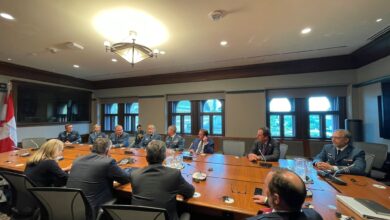
The announcement, delivered by Energy Minister Tim Hodgson in Newmarket, Ontario, marks a turning point in how Ottawa is approaching the clean energy transition. Rather than treating nuclear power as a political third rail, the Carney government is leaning into it hard framing it as an industrial and geopolitical tool as much as an environmental one.
“If our goal is to double our grid and build a low-carbon economy in less than 25 years, there is no credible plan to do that without nuclear energy and the clean, reliable baseload power it provides,” Hodgson told the crowd gathered for the unveiling. “We are writing the next chapter in one of Canada’s great industrial success stories.”
The plan rests on four main pillars: building new reactors domestically, positioning Canada as a major global nuclear supplier and exporter, expanding uranium and nuclear fuel production, and investing in next-generation technologies including both fission and fusion.
At the center of it all is the CANDU reactor a made-in-Canada design for which the federal government holds both intellectual property rights and licensing authority. Unlike many competing reactor designs, CANDU units run on natural uranium, which means they sidestep the expensive and politically sensitive process of uranium enrichment. That design feature also lowers the risk of nuclear proliferation, a selling point Ottawa is leaning on heavily as it pitches the technology to foreign governments.
Canada currently operates 17 CANDU reactors, which together supply about 13 percent of the country’s electricity. Nine more are running in countries including South Korea, Romania, India, and China a track record Ottawa intends to build on.
The strategy’s domestic targets are specific: two new large-scale reactors under construction by 2035, with five more planned or in active development by 2040. At least one new reactor outside Ontario and at least one domestically produced microreactor are to reach commercial operation by 2035 as well. Those microreactors compact units designed for flexibility would then be deployed to remote and off-grid communities in the late 2030s.
Perhaps the most striking aspect of the strategy is its international ambition. The plan calls for securing at least four new export markets for CANDU reactors by 2040, with active engagement across six to ten additional countries interested in entering the nuclear energy sector.
The timing is deliberate. Russia has long been a dominant supplier of enriched uranium to global markets, while China has been rapidly scaling its own nuclear sector. With European and Asian nations increasingly looking to move away from both, Canada sees a window and it intends to climb through it.
“Reactor exports are not transactional,” the strategy document states. “They establish multi-decade partnerships, creating durable geopolitical and commercial relationships that advance Canada’s broader foreign policy interests.”
The document frames CANDU sales abroad as a diplomatic instrument, not merely a commercial transaction a way to deepen ties with middle-power nations and diversify Canada’s own trading relationships in a more fragmented global order.
On top of reactor exports, the plan also targets a doubling of Canadian enriched uranium exports within the next decade a direct play on Saskatchewan’s uranium mining sector, which already accounts for roughly a quarter of global uranium production.
Here’s where the strategy gets complicated: the federal government is not committing any new public money right now.
Officials at Natural Resources Canada confirmed during a media briefing that construction of the new reactors could cost more than $100 billion in total. That figure will largely be financed through private capital, with Indigenous equity participation built into the project structure. The government said a federal financing policy laying out the conditions under which projects can access loan streams and Canada Infrastructure Bank funding will be released by April 2027.
On the research side, the strategy aims to lift private R&D investment in new nuclear technologies to between $500 million and $700 million annually by 2032, more than double current levels.
The plan also requires project proponents to develop long-term nuclear waste management and disposal solutions a condition that has historically proven to be one of the most contentious aspects of nuclear development. A modernized, cost-competitive CANDU reactor design is expected to be ready for proponents by 2030.
The strategy drew an immediate, skeptical response from Conservative Leader Pierre Poilievre, who was asked about it at a separate press conference in British Columbia on Monday.
“An announcement will not build anything,” Poilievre said bluntly. “And this is the problem we’ve had with the Carney Liberals their promises are being reported on as results and so far there have been no results.”
There is also an unusual wrinkle involving the Prime Minister himself. The strategy document explicitly notes that Mark Carney was not shown the plan and played no role in its development, due to an ethics screen currently in place around him. Carney holds options and deferred shares in both Brookfield Corporation and Brookfield Asset Management, which he placed into a blind trust after becoming prime minister. Brookfield co-owns a reactor that competes directly with CANDU hence his recusal from this file.
At the provincial level, Ontario offered a warmer reception. Energy and Mines Minister Stephen Lecce called the federal plan a long-awaited commitment to building “the next generation of Made-In-Canada nuclear energy” that would create jobs and drive long-term competitiveness. The federal and Ontario governments had already announced a combined $3 billion investment last October for four small modular reactors in the Greater Toronto Area a project that has since been referred to the Major Projects Office for expedited review and approvals.
Canada’s nuclear strategy doesn’t exist in a vacuum. It’s part of a broader federal commitment to double the country’s total electricity capacity by 2050 a target that, given the scale of demand growth expected from electrification of transportation, industry, and heating, simply cannot be met by renewables alone, at least according to the government’s own modelling.
Whether the reactors get built on the timelines Ottawa has sketched out will depend on factors that no strategy document can fully control: regulatory timelines, private capital appetite, labour availability, and the always-uncertain terrain of political will over a 15-year horizon. Canada has a complicated history with large-scale nuclear projects running over budget and behind schedule.
But Monday’s announcement signals something real: that nuclear energy, long treated as an awkward subject in Canadian energy politics, has moved squarely into the mainstream. Ottawa is no longer tiptoeing around it. It is, as Hodgson put it, betting on it.