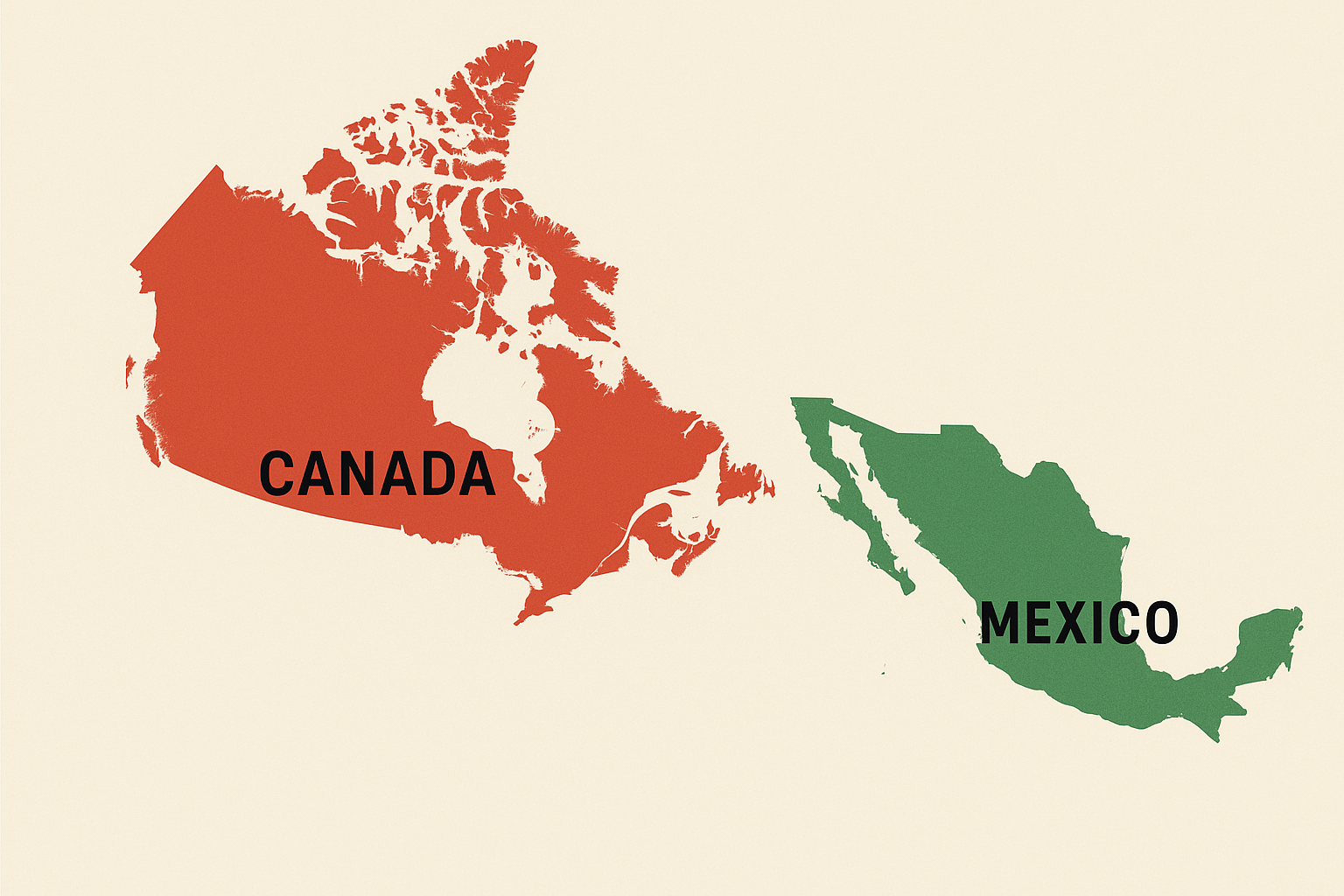
Canada and Mexico don’t often grab headlines for bold bilateral moves. For decades, their relationship has existed mostly in the shadow of their mutual giant to the north: the United States. Yet the new “comprehensive strategic partnership” signed Thursday in Mexico City by Prime Minister Mark Carney and Mexican President Claudia Sheinbaum suggests that era of quiet, secondary ties may be ending.
This pact isn’t just another ceremonial handshake. It sets in motion trade missions, joint infrastructure projects spanning ports and rail lines, and nearly $10 million in United Nations–backed programs to fight drug trafficking and aid migrants. More than that, it signals a conscious decision by both governments to deepen cooperation at a time when Washington is both unpredictable and increasingly protectionist.
The timing is telling. With President Donald Trump again rattling the continental trade deal and dangling tariffs like a sword over Canadian and Mexican industries, Ottawa and Mexico City have good reason to hedge. As Sheinbaum put it, “All three countries want to maintain the trade deal, but we want to strengthen trade with Canada.” That’s pragmatic realism—and smart economics.
Consider the numbers: almost $56 billion in two-way merchandise trade last year and $46.4 billion in direct Canadian investment in Mexico. Those are not small figures. Yet until now, both nations have behaved more like rivals courting U.S. markets than true partners. The Canadian Chamber of Commerce is right to call this agreement “an integral step” toward unlocking their untapped potential.
Energy and climate cooperation could be particularly powerful. Both leaders have deep backgrounds in climate policy, and Mexico’s need for renewable investment aligns with Canada’s expertise in clean tech and mining. Expanding ocean trade routes and easing work visas could knit the two economies closer in ways that blunt the impact of any future U.S. tariff shock.
Skeptics will note that the devil is in the details: Canada’s mining practices in Mexico have drawn criticism, and Mexico’s regulatory environment remains complex. But the bigger picture is clear. This is more than a diplomatic courtesy call. It’s a strategic pivot—a recognition that North America’s strength depends not only on the U.S. but also on the bonds its two neighbors choose to build with each other.
If Carney and Sheinbaum follow through, the so-called “Three Amigos” might soon look less like a lopsided trio and more like a genuine partnership of equals. That’s a future worth betting on, and one Washington would be wise not to ignore.