Canada Agrees to Share Gordie Howe Bridge Profits with U.S. Before Costs Are Recovered
Patrick D Costa
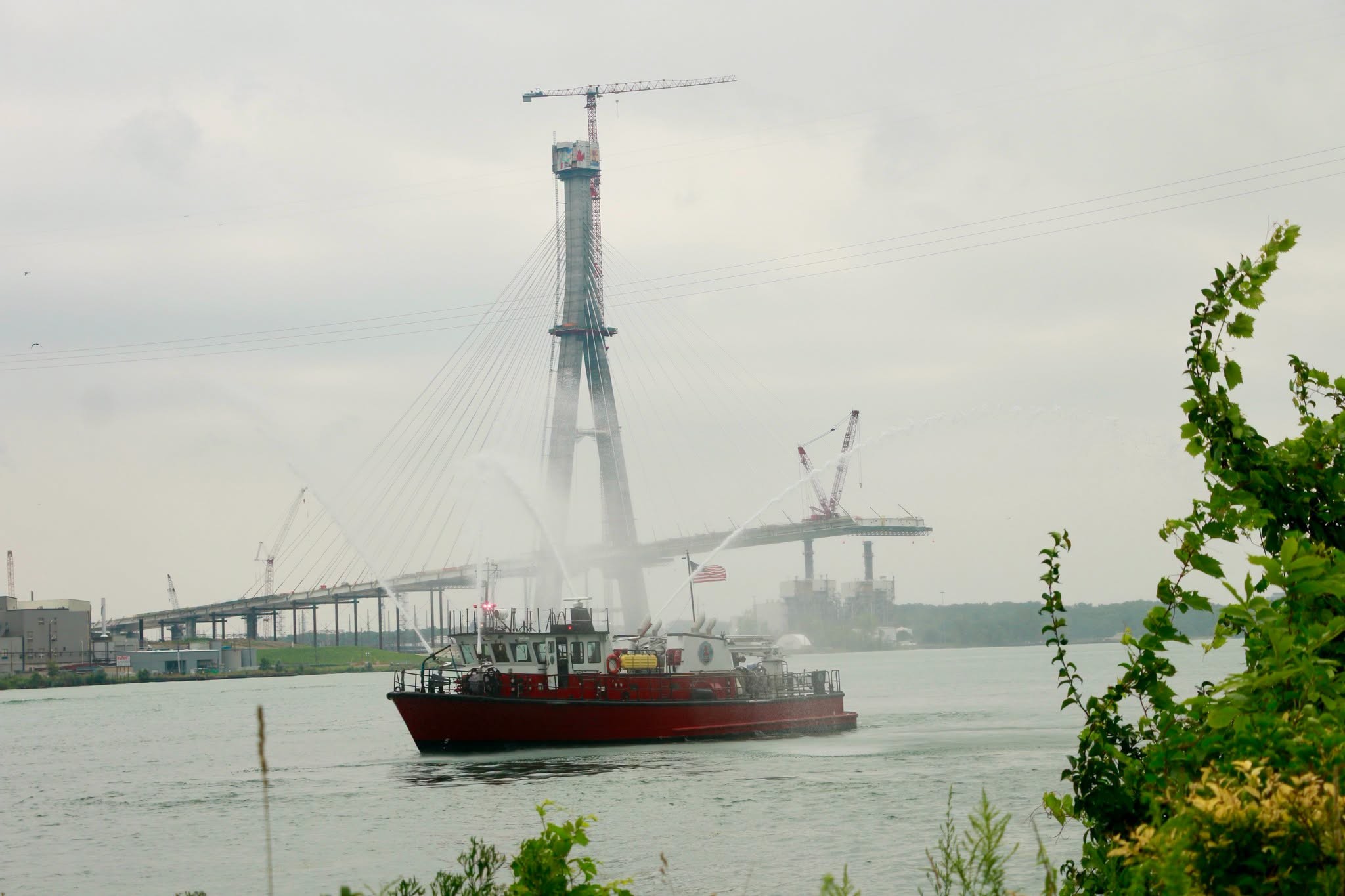
Canada has struck a new deal with the United States that would divert half of the Gordie Howe International Bridge’s toll profits south of the border a significant concession that critics say could indefinitely delay the country’s ability to recoup its $6.4 billion investment in the landmark crossing.
The agreement, announced quietly on a Friday evening, came as the bridge prepares to open on July 27 after months of delays. Under the arrangement, 50 per cent of toll revenues after operational costs will flow into a U.S.-administered regional development fund for 15 years. The remaining half stays with Canada.
The federal government framed the deal in diplomatic terms, saying the two countries had agreed to “cooperative measures focused on toll governance and transparency,” as well as investments in the Windsor-Detroit region through the newly established economic development fund.
But the announcement landed with a thud among some observers. The original 2012 agreement had been explicit: Canada would collect all toll revenues until its investment was paid off a process expected to take no fewer than 50 years. Now, with profits effectively halved, that timeline stretches further into the unknown.
The Gordie Howe Bridge was conceived, financed, and built entirely with Canadian taxpayer money after the United States declined to contribute. Michigan was a willing partner in the crossing, but Washington passed on the bill.
That history makes the new arrangement all the more contentious. Under the 2012 treaty, the Windsor-Detroit Bridge Authority was the sole party authorized to set and collect tolls. The Michigan side of the crossing was explicitly barred from establishing its own charges.
That arrangement, it now appears, has been quietly redrawn.
The renegotiation did not happen in a vacuum. U.S. President Donald Trump has spent months applying public pressure on the bridge file, at one point threatening to block the crossing from opening until the United States was “compensated for everything we have given” Canada.
In February, Trump argued on social media that because the bridge sits partly on American soil, the U.S. deserved at minimum half ownership of the asset. Over the weekend, after details of the new deal emerged, he declared it “a MUCH BETTER DEAL for America.”
Prime Minister Mark Carney signalled the shift was coming as far back as Thursday, saying Canada was “willing to clarify aspects of the current arrangements.” A ribbon-cutting ceremony had already been cancelled last month, with Carney attributing the delay to unresolved “technical aspects” requiring further negotiation with Washington.
Not everyone is buying the diplomatic framing. Derek Holt, vice-president and economist at the Bank of Nova Scotia, was blunt in his assessment, arguing that the United States effectively walked away from a binding commitment and faced no consequences.
In a statement Monday, Holt warned that Canada’s willingness to offer financial concessions sets a damaging precedent particularly with the Canada-U.S.-Mexico Agreement having expired on July 1 without a replacement or formal extension. With trade negotiations ongoing, he suggested the bridge episode should be a cautionary tale for anyone counting on Washington’s signature to mean something.
The federal government has not explained what prompted the change, nor why it diverged from the original 2012 terms. Global News sought answers from both the Prime Minister’s Office and Housing, Infrastructure and Communities Canada; the PMO deferred to the department, which in turn pointed to the public release.
The bridge itself remains a transformational piece of infrastructure a new international trade corridor between Windsor and Detroit that backers say will ease congestion and strengthen cross-border commerce. Whether Canadians will ultimately see a return on their investment now depends on a deal that sends a portion of that return abroad for at least the next decade and a half.