Canada’s Hunger Crisis: One in Four Canadians Struggles to Put Food on the Table
Arafat Rahman
Across Canada from the fishing communities of the Atlantic coast to the remote northern territories millions of families are quietly fighting a battle that rarely makes headlines until it’s too late: they don’t have enough money to eat.
New data from Statistics Canada has laid bare the scale of the problem. Roughly one in four Canadians lived in a food-insecure household last year, a figure that lands with particular weight when set against a backdrop of food prices that climbed 3.5 per cent year-over-year during the same period. For households already stretched thin by soaring rent and stagnant wages, even that modest-sounding percentage increase can be the difference between a full plate and an empty one.
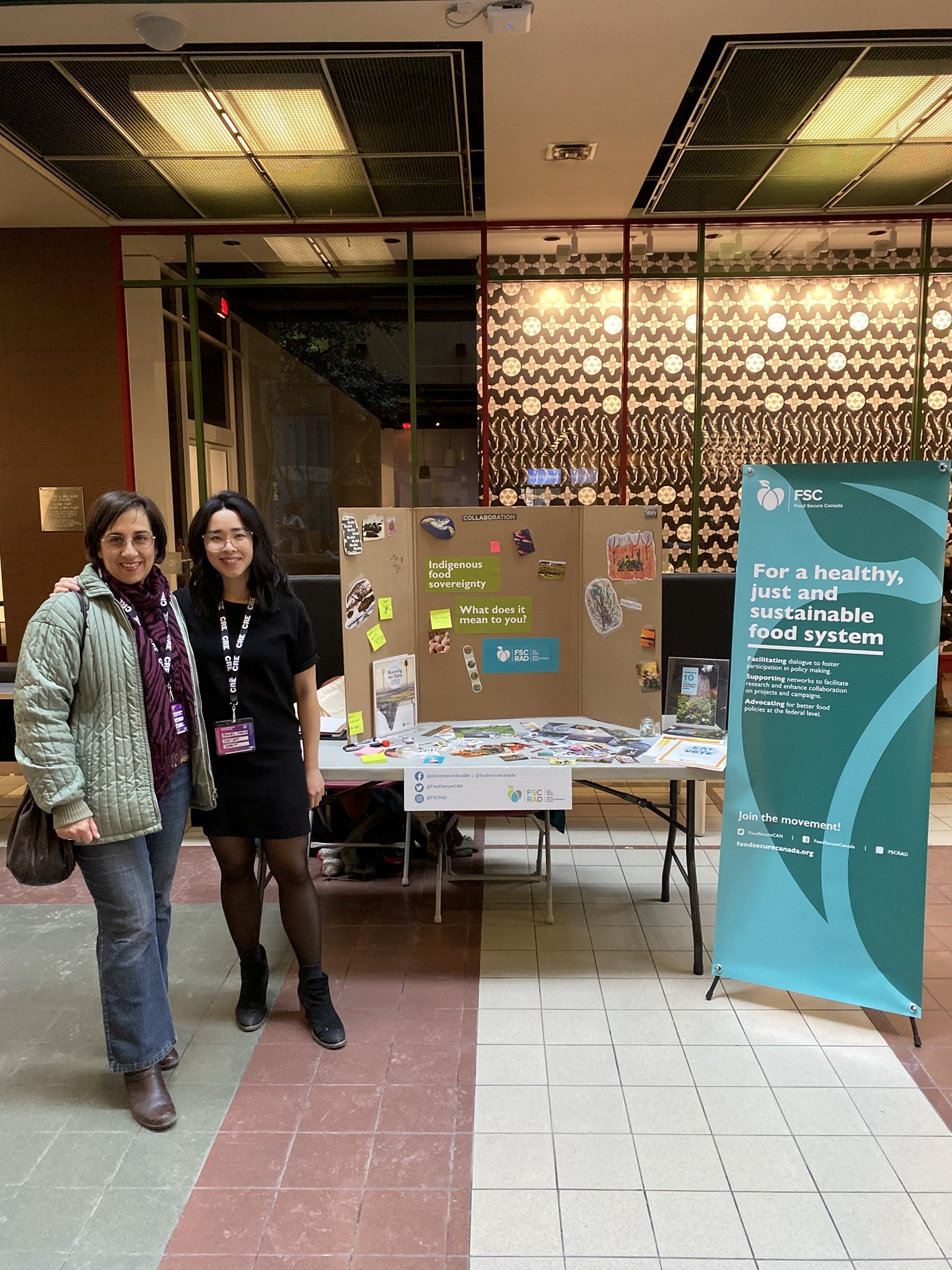
“It’s horrible,” said Marissa Alexander, executive director of Food Secure Canada. “The main issue is that folks do not have enough income to support their lifestyle because we are not getting paid fair wages or appropriate wages, the cost of housing has gone up, the cost of groceries have gone up.”
The data paints a picture that is bleak almost everywhere, but uneven in ways that reveal deeper structural inequities. Most provinces reported that between 23 and 28 per cent of their residents lived in food-insecure homes. Quebec stood apart at 18 per cent lower, but hardly cause for comfort.
The starkest numbers came from Canada’s north. While the territories generally reported rates between 15 and 16 per cent, Nunavut shattered any national average: 56 per cent of its residents live in food-insecure households. More than half a territory’s population unable to reliably afford food is not a statistic it is an emergency.
In Peterborough, Ontario, the pressure on community organizations has been building for years and shows no sign of easing. Ashley Anderson, executive director of Kawartha Lakes Food Source, said the organization has recorded more than 1,000 visits every single month.
“This time of year, we have to buckle down and really stretch our dollars because donations do go down,” Anderson said. “A lot of talk is, we’re hearing people with full-time jobs, they have kids and the gas prices those are a few conversations we have heard in the waiting room.”
That detail is worth pausing on. People with full-time jobs. The old assumption that food insecurity was a problem for the unemployed or the irresponsible has been crumbling for years, and advocates are tired of having to say so out loud.
“There used to be some problematic beliefs that it was just certain people who could be food insecure, and it was due to their own personal failings or challenges,” Alexander said. “We’ve been very clearly advocating that that is not the case. It’s not an individual failing, it’s a systemic failing.”
Lakelands Public Health data from 2022 to 2024 confirmed this on the ground: 22.3 per cent of households in the region were food insecure a figure that included families earning minimum wage, people on Ontario Works, and individuals receiving Ontario Disability Support Program benefits.
The numbers are particularly unforgiving when broken down by household type. A family of four in Peterborough earning minimum wage and paying rent on a three-bedroom apartment could spend as much as 71 per cent of their income on housing and food alone and still only have $1,432 left for everything else: transit, clothing, medicine, school supplies.
For a family on Ontario Works, the math turns openly punishing. After rent and groceries, they could end up spending roughly 120 per cent of their income, leaving them with negative $666 a deficit that must somehow be covered, month after month.
The numbers shift depending on the city. In Windsor, a minimum-wage family of four fares somewhat better, potentially retaining $2,644 after paying rent and buying food. A family on Ontario Works there could be left with $545. These are not comfortable amounts but they illustrate how geography compounds economic vulnerability in ways that provincial policy rarely accounts for.
Food insecurity is not just a matter of hunger. It carries a compounding health toll that eventually lands on the public system.
“We know that as household food insecurity rates go up, as the severity of household food insecurity goes up, so do health-care expenses,” said Lauren Kennedy, a registered dietician with Lakelands Public Health. “When folks are facing household insecurity, it’s hard to eat enough, let alone healthy food.”
For people managing chronic illnesses diabetes, heart disease, hypertension the inability to afford nutritious food can accelerate deterioration and drive up both hospitalizations and medication costs. Children carry their own burden: those growing up in food-insecure homes are more likely to develop depression and struggle with hyperactivity and inattention, consequences that can trail them into adulthood.
A report from Food Banks Canada recorded nearly 2.2 million visits in a single month in 2025. That figure is both a testament to the dedication of food bank workers and an indictment of a system that relies on them as a first line of defence against what is, at its core, a policy failure.
Kennedy put it plainly: “When it comes to household food insecurity, we want to try to fix it with providing emergency food. At the same time, we need to be careful that we don’t forget that we need to address the root causes of household food insecurity. It’s an income problem that requires income solutions.”
Advocates have not been short on proposals. Alexander pointed to expanded benefits like the newly introduced Groceries and Essentials Benefit as a step in the right direction, alongside stronger delivery of the Canada Child Benefit directly to those who need it most. Longer term, a basic income in some form has been floated as the kind of structural change that could prevent families from falling through the cracks in the first place.
“What we’re noting is we know that food is a human right,” Alexander said, “and right now in Canada, we are failing to meet that human right.”
That sentence should not be easy to read. In one of the wealthiest countries on earth, millions of people are going without enough food not because there isn’t enough, but because the systems meant to distribute it fairly are not doing their job.