Canadian Aid Groups Urge Ottawa to Counter U.S. Rollback of Global Sexual Health Funding
Syed Azam
As Donald Trump’s administration tightens its grip on how American foreign aid dollars are spent abroad, Canadian humanitarian organizations are sounding the alarm and looking to Ottawa for leadership.
The Biden era’s relatively open approach to global health funding is now a distant memory. In its place, a dramatically expanded version of the so-called “global gag rule” is reshaping how aid flows to developing countries, forcing charities worldwide into uncomfortable choices about which principles they can afford to defend and which they must quietly set aside to keep the lights on.
The Mexico City policy has been a political football since 1985, toggled on and off depending on which party holds the White House. Republican administrations use it to block U.S. funding from any organization that provides abortion counselling or referrals. Democrats rescind it. Republicans bring it back.
But what Trump signed in February is something older versions of the policy never attempted. It bars U.S. funding from reaching any group that receives money from other sources for abortion-related services effectively extending Washington’s reach into the budgets of organizations that never took a single American dollar. It also strips funding from groups that advocate for LGBTQ+ rights or gender-affirming care.
Aid organizations had learned to work around the old rule. They’d route abortion funding through European donors or build sexual health facilities beside general clinics close enough to serve patients, separate enough to satisfy auditors. Those workarounds are now largely closed off.
“They are trying to completely change the way in which comprehensive health services are provided around the world,” said Caitlin Goggin, CEO of the Canadian Partnership for Women and Children’s Health, “and asking partners all the way down to local small organizations to make impossible choices about whose money they receive.”
For Erin Kiley, director of international programs at Oxfam Canada, the consequences aren’t abstract. She describes partners in countries across southern Africa watching the architecture of sexual health services crumble around them not because the need has gone away, but because the funding has.
“People are more likely to die because they’re not receiving this kind of assistance,” she said bluntly.
Kiley notes that coalitions once united around gender rights are beginning to fracture. Some organizations are quietly sidestepping advocacy on LGBTQ+ issues, not because they’ve changed their views, but because they fear being frozen out of funding they might one day need. Others are holding the line publicly. The result is a movement in tension with itself.
“In Zimbabwe in particular, they referred to a chilling effect on rights and advocacy,” Kiley said.
Because Oxfam Canada takes virtually no American funding, it has more room to speak freely than many of its counterparts. Several other organizations declined to be interviewed for this story, citing concern about drawing the attention of Washington.
The gap between need and supply is already widening. Erica Belanger, interim Canada head of MSI Reproductive Choices, says her organization has seen demand for sexual health services jump by 20 per cent since Trump returned to office and began gutting the foreign aid budget.
In rural Zambia, MSI stepped in to deliver contraceptives that had been sitting in city depots because no other group had funding to move them. In Malawi, American officials are reportedly asking governments to divide the work of health workers those handling sexual health cannot practice general medicine, and the reverse.
“Without full access to the comprehensive slate of services, women don’t have full bodily autonomy around the world,” said Goggin.
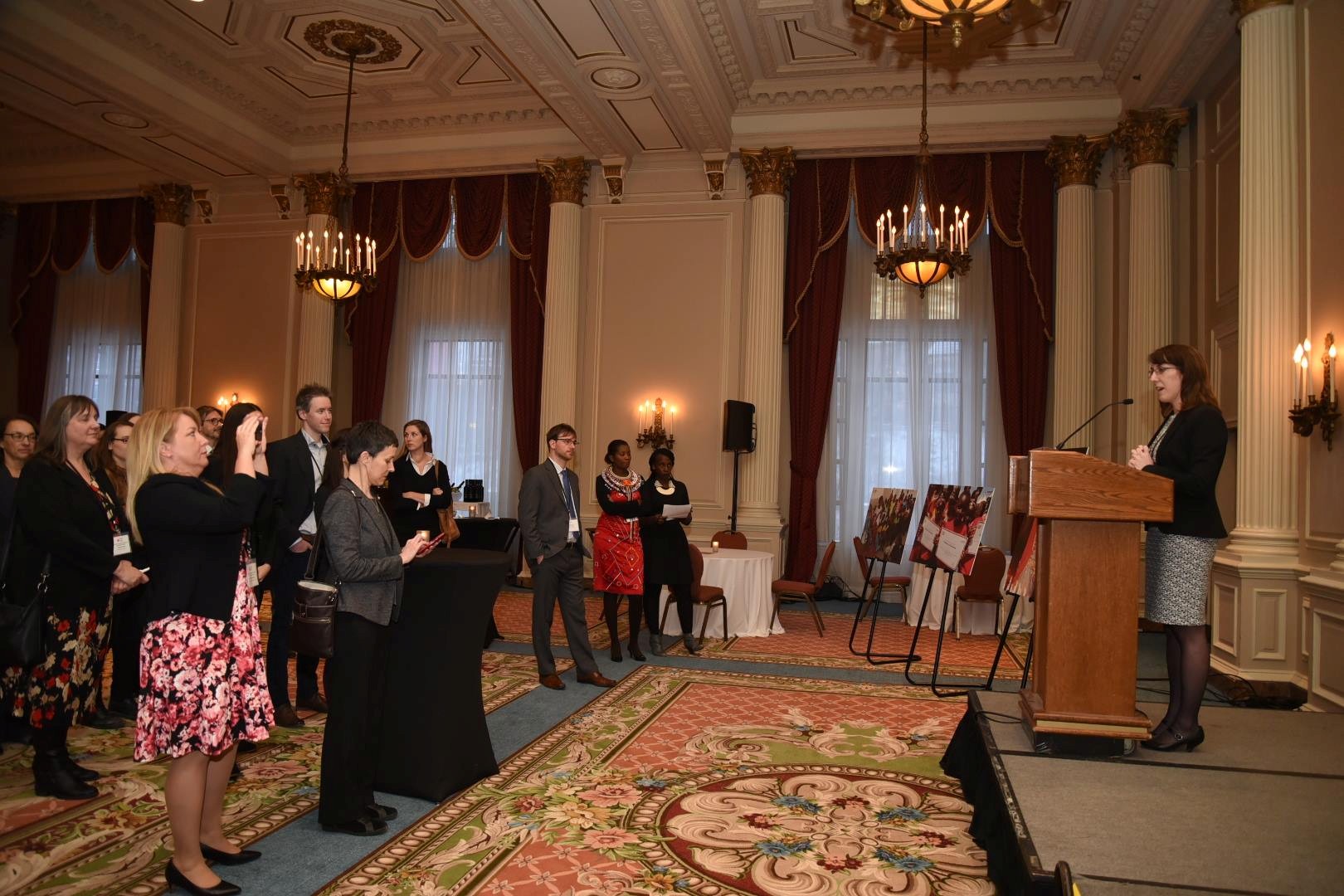
The tension within the aid community surfaced openly at an April conference in Ottawa, where representatives from globally federated charities acknowledged internal disagreements about whether organizations uninvolved in maternal or LGBTQ+ health should accept American funds at all.
Jessica Stern, who served as the U.S. special envoy on LGBTQ+ rights under Joe Biden, urged conference participants to take the money where they could.
“U.S. taxpayers are contributing significant dollars and we should make sure that some of that money goes to good work,” she said. Her deeper fear, she explained, is a scenario where American funding actively flows toward conversion therapy programs and initiatives that pressure women to remain in abusive relationships.
Meanwhile, the Canadian government’s response has been measured. Randeep Sarai, secretary of state for international development, was unavailable for comment. His office issued a statement saying Canada is engaging with domestic organizations to assess the operational fallout, and reaffirmed that gender equality “will remain a core part of our international assistance going forward.”
Those words have been met with polite but pointed pressure from the aid sector: statements are welcome, but what’s needed now is a coalition.
Both Oxfam Canada and the Canadian Partnership for Women and Children’s Health are calling on Prime Minister Mark Carney to help assemble a bloc of like-minded nations a multilateral counterweight to Washington’s social conservative funding agenda.
“Canada’s soft power really, really matters in this moment,” said Belanger. “We need strong government leadership that will stand up for these issues.”
The ask comes at a consequential juncture. Canada’s 10-year commitment to funding health services through a gender equity framework expires in 2030, and the sector is watching closely to see whether Ottawa will renew it and with how much urgency.
Canada has used the G7, G20, and United Nations to advocate for gender equality before. Whether those forums will be enough to push back against what aid workers are calling a deliberate effort to restructure global health systems around socially conservative values remains to be seen.
What is clear, to those on the ground, is that the window for action is not wide. Funding gaps compound. Fragmented coalitions take years to rebuild. And in the meantime, real people in Zimbabwe, Zambia, and Malawi are navigating a health system being reshaped, thousands of miles away, by political fights they had no part in starting.