Ottawa Pumps $5.4 Billion Into National $10-a-Day Child Care as Provinces Press for More
Syed Azam
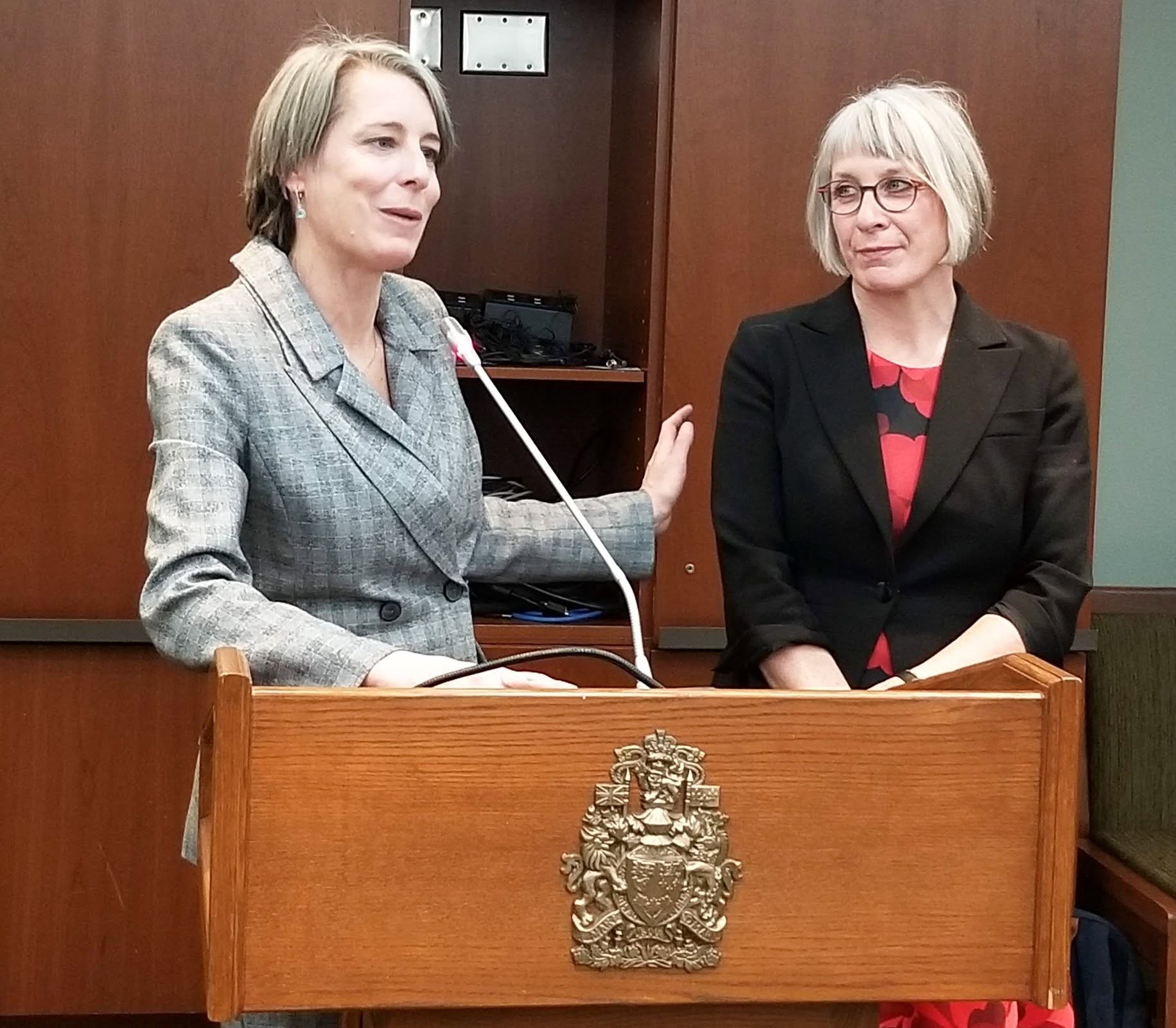
The federal government has announced an additional $5.4 billion in funding over two years to sustain the national $10-a-day child-care program, with Jobs and Families Minister Patty Hajdu framing the move as a stabilization measure for a program that has faced mounting cost pressures since it launched in 2021.
The announcement came ahead of a federal-provincial ministers’ meeting and follows sustained lobbying from provinces and territories struggling to lower fees for parents, build new child-care spaces, and attract and retain enough early childhood educators all in the face of rising demand and operating costs that have outpaced original projections.
Hajdu acknowledged that money had been central to the difficulties, noting that the new funding would be flexible, allowing provinces to direct it toward whichever pressures are most acute in their own systems. “That money that will be injected is flexible, so they can use it in the ways that will address their own specific pressures,” she said.
The program’s original framework set out to create 250,000 new child-care spaces by March of this year. The current tally stands at roughly 173,500 a significant shortfall that underscores the scale of the challenge. Meanwhile, while many provinces and territories have successfully driven average fees down to $10 a day, five jurisdictions have not. Ontario, the country’s most populous province, remains among those still off-target, with daily fees averaging $19.
Ontario Education Minister Paul Calandra stopped short of endorsing the new funding, saying the province needed to see the specific provincial allocation before passing judgment. Ontario has made clear it requires an additional $2 billion per year to bring fees down to the $10 target. “It is critical that the federal government provide an appropriate funding package by September in order to sustain the federal child care program in Ontario,” he said in a written statement.
In Alberta, Education and Childcare Minister Demetrios Nicolaides expressed cautious encouragement but similarly said his government was waiting for specifics. Alberta had signed only a one-year extension to its child-care agreement ahead of last year’s federal election, and the new funding is expected to factor into ongoing negotiations for a longer-term deal.
For child-care advocates, the announcement arrives after months of anxiety. Universal child-care supporters had grown increasingly worried earlier this year when the federal government’s spring economic update included no new investment in the file. Gordon Cleveland, an Ontario-based child-care policy expert, said the new money amounts to the clearest signal yet that Prime Minister Mark Carney’s government is prepared to own this program.
“The Carney government inherited this program from the previous government and nobody quite knew what does Mark Carney really think about this,” Cleveland said. “So this is, I think, the first very strong commitment, which says, ‘OK, we, the new federal government, are in this for the long haul.'”
Still, not all advocates were ready to celebrate without reservation. The Ontario Coalition for Better Child Care called the development a short-term fix, warning that the fundamental problem of multi-year uncertainty has not been addressed. Policy co-ordinator Carolyn Ferns put it bluntly: “We cannot build a system that lasts for generations on two-year instalments with the threat of a funding cliff.”
Hajdu framed the new money not as an expansion but as protection for what has already been built. She said that on average, Canadian families are saving approximately $11,000 a year per child thanks to lower child-care fees a figure she described as significant. “It is definitely about the protection of what we’ve gained, and what we’ve gained is very significant,” she said.
The reduced fees have, predictably, driven up demand for child care across the country, which in turn has swelled wait lists in many communities. The new funding will come with a requirement for additional data sharing from provinces and territories a condition Hajdu described as necessary to better map the gaps and track the actual state of access and operations from coast to coast.
The federal government views affordable child care as both a social good and an economic driver, and Hajdu made clear the intent is to ensure that progress however uneven does not unravel. Whether $5.4 billion over two years is enough to satisfy provinces like Ontario and forge longer agreements with those still on one-year extensions is a question that will test that commitment in the months ahead.