Ontario Signals Willingness to Leverage LCBO Power After Crown Royal Dispute
Arafat Rahman
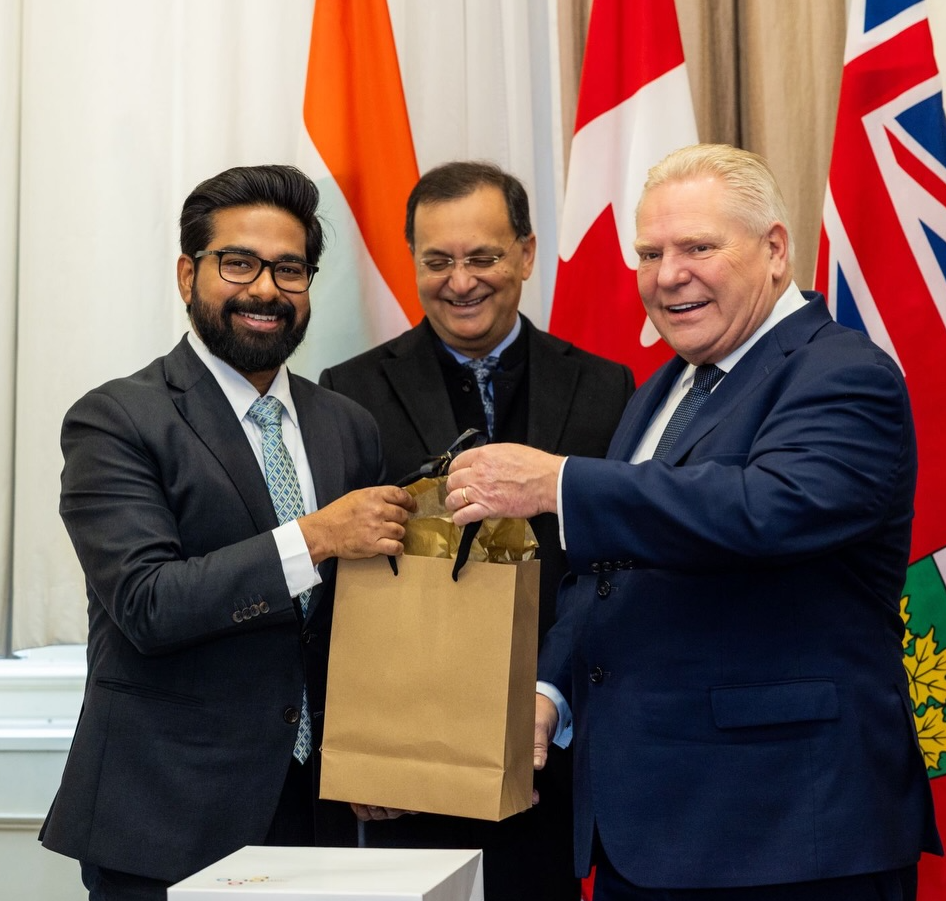
The Ontario government is making it clear that its recent standoff with global spirits giant Diageo over Crown Royal may not be a one-off.
Days after Premier Doug Ford withdrew a threat to pull Crown Royal products from Liquor Control Board of Ontario (LCBO) shelves, Finance Minister Peter Bethlenfalvy suggested the province is prepared to flex the Crown corporation’s purchasing power again if companies make decisions that could harm Ontario workers or consumers.
The dispute ended with a $23-million agreement between the province and Diageo, which owns the Crown Royal brand. According to the government, the deal includes a $1-million investment in the Windsor-Amherstburg region, new purchase agreements with manufacturers in eastern Ontario, Toronto and Scarborough, and $5 million earmarked for Ontario-based marketing and advertising.
Despite the agreement, a planned plant closure will still proceed, resulting in the loss of approximately 200 local jobs a key point of contention for opposition critics.
“We’re the largest buyer of so many products,” Bethlenfalvy said, emphasizing the LCBO’s significant market influence. “You want to treat your customer well. We’re going to continue, wherever we have clout, to use that clout.”
The comments follow criticism that the government “weaponized” the LCBO during negotiations. Earlier in 2025, the Ford government removed American-made wine and liquor from LCBO shelves in response to tariffs imposed by U.S. President Donald Trump on Canadian exports. That move drew international attention and was later cited by American officials as a sticking point in ongoing trade discussions.
Bethlenfalvy defended the province’s approach, stating the government will act whenever business decisions threaten jobs, consumer choice, or economic stability.
“Anytime that we feel that a business decision is going to hurt workers, hurt consumers, hurt choice and convenience, we’re going to take a hard look at it,” he said. “And if it goes that way, we’re going to fight hard.”
However, opposition parties argue that such tactics risk undermining Ontario’s reputation as a stable place to invest.
Liberal MPP Rob Cerjanec warned that aggressive government actions could discourage foreign investment.
“When you’re trying to attract investment, you need a stable political and economic environment,” Cerjanec said. “If the government appears to attack companies whenever there’s a dispute, that can send the wrong signal.”
New Democratic Party MPP Liza Gretzky, who represents Windsor West, questioned whether the government’s strategy delivered meaningful results for the community.
“The jobs are still gone,” Gretzky said. “There’s no plan to bring them back. That’s still a loss for our region.”
While the province secured new investment commitments and marketing spending, the plant closure remains a reality for affected workers. Bethlenfalvy acknowledged the disappointment but described the agreement as the best possible outcome under the circumstances.
The episode highlights the growing willingness of the Ontario government to use the LCBO’s purchasing power as a bargaining tool a strategy that may shape future negotiations with multinational corporations operating in the province.