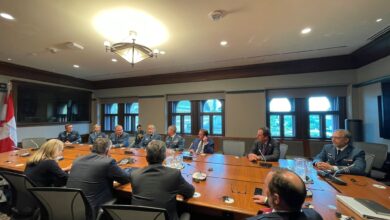
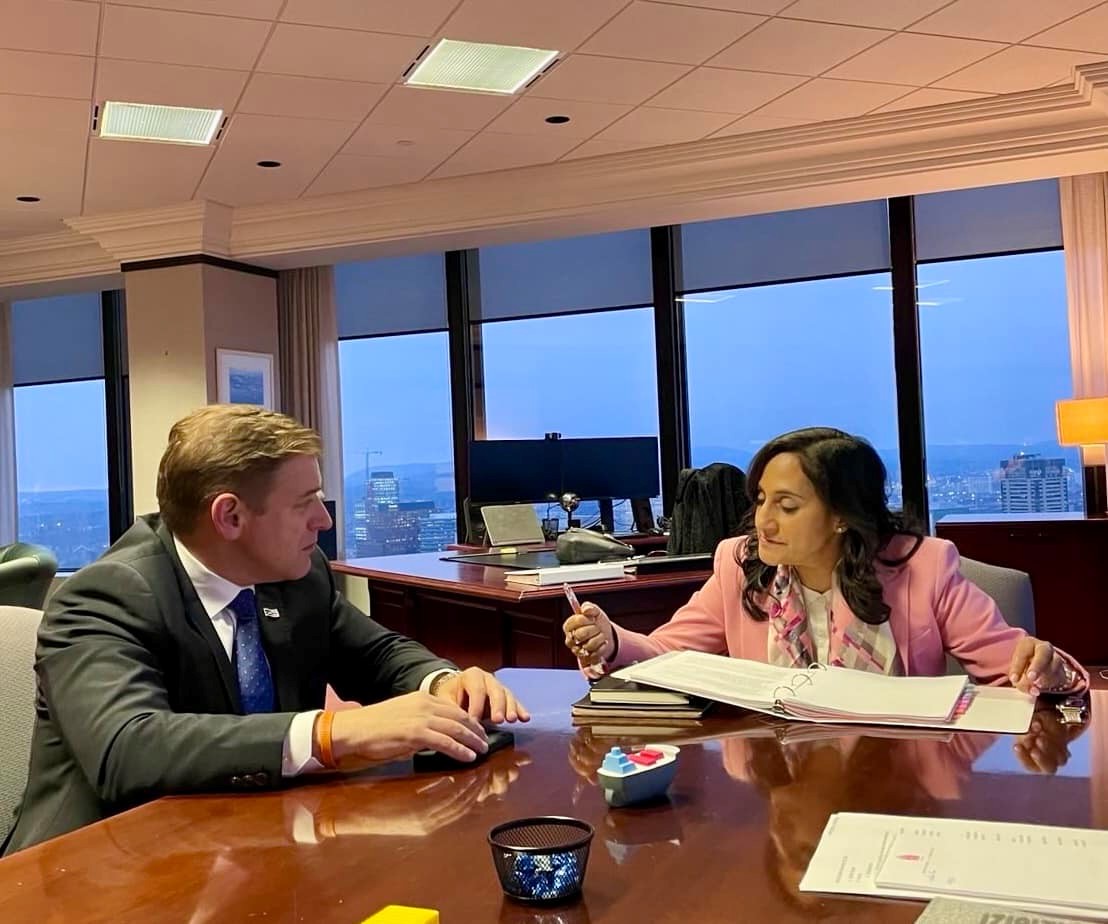
Canada’s Foreign Affairs Minister Anita Anand was in Washington on Wednesday as the United States unveiled a new push to reshape global supply chains for critical minerals, urging partner countries to join a preferential trade zone that would include enforced price floors.
Speaking at the U.S. State Department, Vice-President JD Vance told foreign ministers and senior officials that the proposed framework is designed to reduce overreliance on any single supplier while strengthening trusted partners.
“The goal is diversifying global supply in the critical minerals market while strengthening the partner countries who help all of us in the shared effort,” Vance said, emphasizing that participating nations would be “on the same team.”
The initiative is closely tied to Washington’s broader effort to curb China’s dominance over rare earths and other strategic minerals. That concern intensified last year after U.S. President Donald Trump escalated a trade confrontation with Beijing, imposing steep tariffs that were met with Chinese retaliatory duties and export restrictions. Those moves sent shockwaves through global manufacturing supply chains, particularly in the auto, electronics, and defence sectors.
Under the proposed plan, the United States would set reference prices for critical minerals at various stages of production, which Vance said would reflect “real-world fair market value.” For countries admitted to the preferential zone, those reference prices would act as a minimum, enforced through adjustable tariffs to prevent undercutting.
Membership would also bring practical incentives. Vance said partner countries would gain access to private financing and receive assurances of priority access to critical mineral supplies during emergencies or major disruptions.
U.S. Secretary of State Marco Rubio echoed the call for collective action, telling attendees that success would depend on international cooperation across the entire supply chain from mining to refining.
“Everyone here has a role to play,” Rubio said.
The outreach comes amid strained relations with some traditional allies. The Trump administration has taken a hard line on tariffs, questioned multilateral institutions, and unsettled partners with provocative rhetoric, including renewed interest in acquiring Greenland remarks that angered European governments and raised concerns about the future cohesion of NATO.
Despite those tensions, Washington has already signed critical minerals agreements with countries such as Australia and Japan, signalling that the initiative is moving forward with or without universal buy-in.
The discussions also follow Trump’s announcement earlier this week of “Project Vault,” a new strategic reserve for rare earth elements. While the United States already maintains defence-related stockpiles, officials say the expanded reserve is meant to protect civilian industries from future supply shocks. The project is to be financed through a $10 billion loan from the U.S. Export-Import Bank, alongside nearly $1.7 billion in private investment.
For Canada, the shape of any new agreement remains unclear. Canadian officials have highlighted rare earths and critical minerals in talks with Washington as they prepare for a mandatory review of the Canada–U.S.–Mexico trade agreement later this year. Ottawa and the U.S. Department of Defense already share a co-investment arrangement aimed at accelerating mining development in Canada and reinforcing North American supply chains.
Whether Canada will formally join the proposed preferential zone and on what terms is likely to be a key question in the months ahead as both countries reassess their economic and strategic ties.