Mark Carney’s Balancing Act: Can Canada Really Win a “Transactional” Trade Deal with Trump?
Patrick D Costa
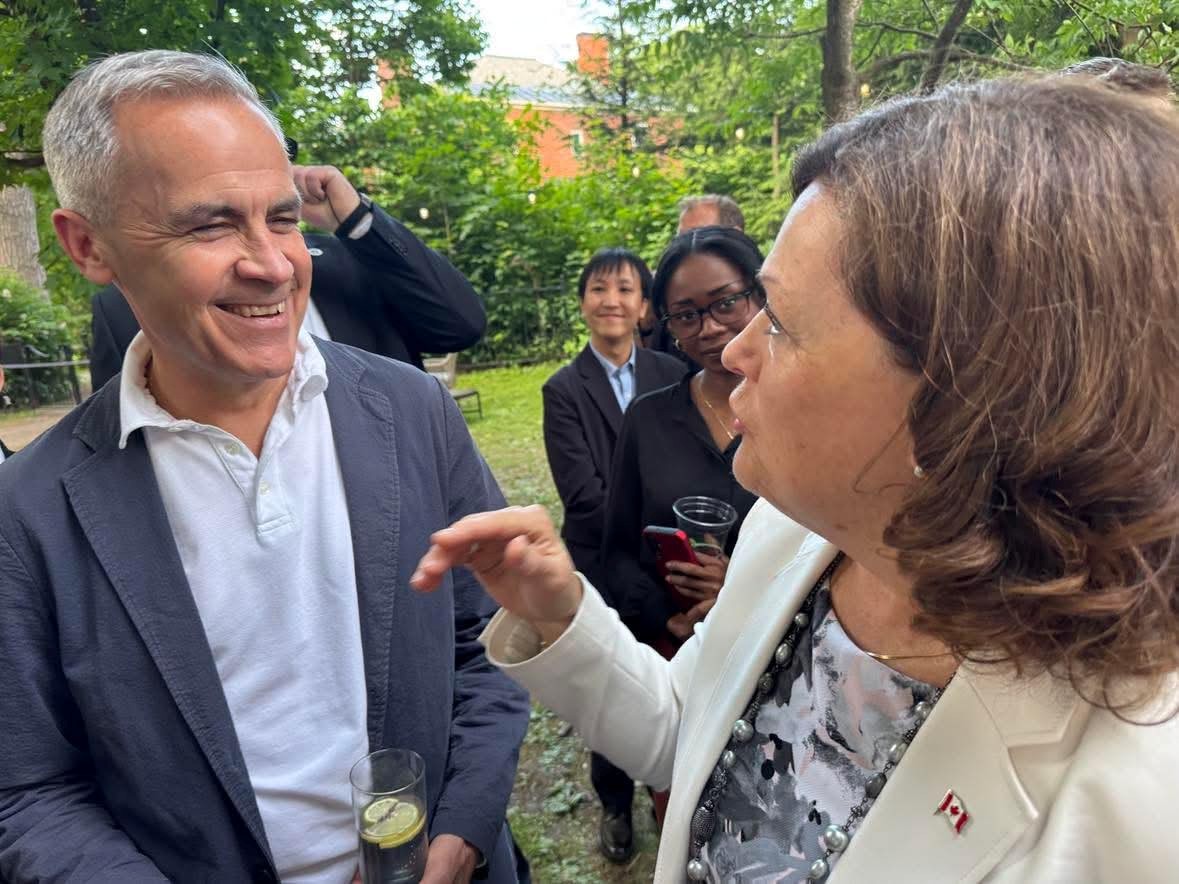
When Prime Minister Mark Carney met U.S. President Donald Trump in Washington this week, the optics suggested optimism smiles, handshakes, and talk of “material progress” on steel, aluminum, and energy trade. But beneath the photo ops lies a hard truth: Canada’s trade relationship with the United States has become increasingly transactional, and Carney is walking a very fine line between cooperation and capitulation.
Carney’s office was quick to highlight “progress” and a shared desire for stronger economic and security ties. The real message, though, came from Trade Minister Dominic LeBlanc, who bluntly said the goal was to “quickly land deals” on key sectors hit by tariffs. That urgency sounds less like strategic patience and more like political pressure. After all, every passing week without a deal means more anxiety for Canadian workers in steel, aluminum, and auto manufacturing.
In private, sources say Carney even raised the idea of reviving the long-dead Keystone XL pipeline an eyebrow-raising move that underscores how desperate Ottawa is for progress on the tariff front. Linking energy cooperation to tariff relief might seem pragmatic, but it also risks sending the signal that Canada is willing to trade away leverage just to keep U.S. protectionism at bay.
Trump, unsurprisingly, continues to frame the relationship on his own terms. U.S. Commerce Secretary Howard Lutnick made that perfectly clear, declaring an “America first, Canada second” approach to automaking. That’s the brutal honesty behind Washington’s smiles. Trump may enjoy the theatrics of “friendship,” but his economic strategy hasn’t changed: make deals that prioritize U.S. gains while keeping allies off balance.
Carney, to his credit, appears to understand the tightrope. Speaking at the Eurasia Group’s U.S.-Canada Summit, he said the challenge is finding “the right balance” in a trading relationship that’s become purely transactional. That’s diplomatic language for saying: the U.S. wants deals, not partnerships.
Yet Carney’s comment that Canadian private investment in the U.S. could reach $1 trillion within five years if the “right deal” is struck set off alarm bells back home. Conservatives, led by Pierre Poilievre, were quick to accuse him of selling out Canadian workers to secure short-term wins. “Give me $1 trillion, and even I will say something nice about this guy,” Poilievre quipped in the House of Commons. Behind the sarcasm lies a valid concern will Canada’s jobs and industries simply move south in the name of “cooperation”?
What makes this moment so pivotal is the timing. The Canada-U.S.-Mexico Agreement (CUSMA) is due for review next year. Carney hinted that “some bilateral deals” could emerge alongside it, but also acknowledged that “not everyone shares” his faith in CUSMA’s long-term benefits. That’s diplomatic understatement. The reality is that Trump’s America isn’t thinking about continental integration it’s thinking about control.
Still, Carney’s approach isn’t naïve. He’s betting that strategic patience and modest bilateral wins on steel, aluminum, maybe even autos — can protect Canada’s industries while buying time for a longer-term reset. It’s a calculated gamble, one that assumes Trump’s “America first” instincts can be redirected just enough to preserve a functioning partnership.
Whether that gamble pays off remains to be seen. What’s clear is that Carney faces a tougher test than any Canadian prime minister in recent memory: how to negotiate with a neighbor who sees friendship as leverage and fairness as a sign of weakness.
In the end, the measure of success won’t be the number of deals signed in the “coming weeks,” but whether Canada emerges from this period of transactional diplomacy with its economic independence and dignity intact.