When Science Loses Its Anchor: Why Canada Can’t Follow America’s Lead on Public Health
Afroza Hossain
For decades, Canada has looked south for leadership in health and science. American institutions like the Centers for Disease Control and Prevention (CDC) and the National Institutes of Health (NIH) were once global gold standards places where evidence, expertise, and transparency shaped policy. That era, it seems, is over.
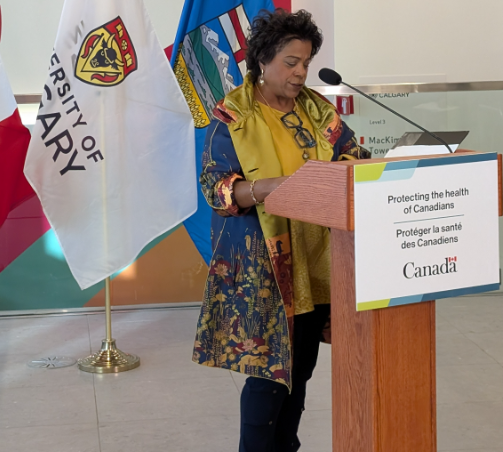
Health Minister Marjorie Michel’s recent admission that Canada can no longer fully trust the United States as a reliable health partner is not diplomatic posturing. It is a sober assessment of a troubling reality. When the world’s most powerful country allows ideology to override science, the consequences do not stop at its borders.
At the heart of the issue is vaccines one of the most effective public health tools ever developed. Under U.S. President Donald Trump’s administration, the appointment of Robert F. Kennedy Jr., a long-time anti-vaccine activist, as Secretary of Health and Human Services sent shockwaves through the global medical community. Those fears were quickly validated. The CDC’s website was altered to contradict the overwhelming scientific consensus that vaccines do not cause autism a claim that has been repeatedly debunked over decades.
When former CDC officials publicly state that the agency’s vaccine safety information can no longer be trusted, something has gone profoundly wrong. Trust, once broken, is not easily restored especially in public health, where credibility can mean the difference between containment and outbreak.
The situation worsened when an advisory panel selected by Kennedy recommended ending routine hepatitis B vaccinations for newborns and began reconsidering the entire childhood vaccine schedule. These are not minor technical adjustments; they are decisions that could expose millions of children to preventable diseases. The ripple effects are already being felt across North America.
Canada is not immune. In fact, it is already paying a price.
This fall, the Pan American Health Organization revoked Canada’s measles-free status, which the country had proudly maintained since 1998. Measles one of the most contagious viruses known requires at least 95 per cent vaccination coverage to prevent outbreaks. That threshold is slipping, fueled by misinformation, pandemic-era mistrust, and years of underinvestment in public health infrastructure.
An editorial in the Canadian Medical Association Journal warned bluntly that the Trump administration is dismantling the U.S. public health and research apparatus. Budget cuts to the CDC and NIH including reductions in research on misinformation itself have left institutions weaker and less capable of responding to communicable disease threats. The authors described a “crisis of communicable disease” unfolding across North America, driven not by scientific uncertainty, but by political interference.
Canada’s own vulnerabilities—shortages of family doctors, strained public health funding, and lingering skepticism after COVID-19—are being exacerbated by this environment. When misinformation crosses borders faster than viruses, no country can afford complacency.
To her credit, Michel appears to recognize the urgency. At a federal-provincial-territorial meeting in October, all provinces agreed to place vaccination at the center of their shared communiqué. The message was clear and refreshingly unambiguous: vaccines save lives and reduce health-care costs. Ministers committed to coordinated action to rebuild trust and respond to ongoing measles outbreaks.
That unity matters. In an age where science itself has become politicized, clarity is a form of leadership.
Still, rebuilding trust will not be easy. As Michel noted, the pandemic left behind widespread misunderstanding about how vaccines work and deep skepticism toward public health authorities. Social media continues to amplify disinformation, often more effectively than governments communicate facts. Confidence in science does not return on its own it must be earned, explained, and defended.
Canada now faces a choice. It can either drift in the slipstream of American health politics or deliberately chart its own evidence-based course, aligned with countries that still treat science as a public good rather than a political inconvenience.
The good news is that trust can return. History shows that when governments speak honestly, invest consistently, and let evidence not ideology guide decisions, public confidence follows. But that requires resolve.
Science does not need to be reinvented. It needs to be protected. And if the United States is no longer willing to do that, Canada must be.