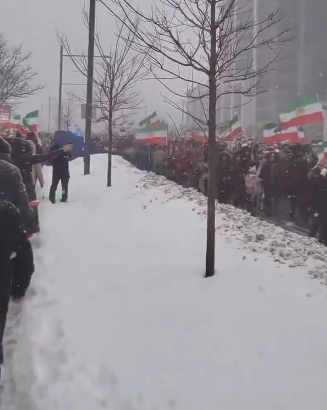
For more than a decade, Canada’s relationship with Iran has existed in a deep freeze a diplomatic void shaped by sanctions, severed ties, and mutual distrust. Today, as mass protests shake Iran and the regime responds with brutal force, the consequences of that long-ago rupture are no longer abstract. They are painfully real for the thousands of Canadian citizens and permanent residents still inside the country, now being told to “leave now” not through an embassy door, but across a land border.
At least 3,000 Canadians are believed to be in Iran. With no Canadian embassy in Tehran and no diplomatic staff on the ground, Ottawa’s ability to help them is severely constrained. Instead, Canadians are being advised to cross into Turkey or Armenia, where they can finally access consular assistance. It’s a stark reminder of what the absence of diplomacy looks like when crisis hits: uncertainty, fear, and a reliance on third parties to do what your own government cannot.
This didn’t happen overnight.
Canada’s break with Iran dates back to 2010, when the Conservative government under Stephen Harper imposed sweeping sanctions over concerns about Iran’s nuclear ambitions. Two years later, Ottawa went further shutting down the Canadian embassy in Tehran, expelling Iranian diplomats from Canada, and formally cutting diplomatic ties. At the time, the decision was framed as a moral stand. Iran was accused of supporting terrorism, aiding Bashar al-Assad’s violent repression in Syria, and posing, in then–foreign affairs minister John Baird’s words, “the most significant threat to global peace and security.”
Those concerns were not imagined. Iran’s record on human rights, regional destabilization, and nuclear brinkmanship has long been troubling. But the decision to slam the door entirely came with a cost: Canada lost direct access, influence, and the basic ability to protect its citizens on Iranian soil. Italy stepped in as a “protecting power,” but such arrangements are, by nature, limited and imperfect.
There was a brief moment when it seemed relations might thaw. In 2015, the election of Justin Trudeau’s Liberal government coincided with the signing of the Iran nuclear deal, the JCPOA. Canada lifted some sanctions and spoke of renewing ties, cautiously acknowledging progress on nuclear restrictions. Yet that opening was fragile, and it collapsed quickly after the United States withdrew from the deal under Donald Trump in 2018.
Tensions escalated further in 2020 with the killing of Iranian general Qassem Soleimani and, days later, Iran’s downing of Ukraine International Airlines Flight 752 a tragedy that killed 176 people, including 55 Canadian citizens and 30 permanent residents. For many Canadians, that moment permanently shattered any remaining trust. Accountability from Tehran was slow, defensive, and deeply unsatisfying.
Then came the death of Mahsa Amini in 2022 and the protests that followed. Her killing became a symbol of a regime that polices women’s bodies and crushes dissent with violence. Canada responded forcefully, imposing new sanctions, naming a street after Amini in Ottawa, and later designating the Islamic Revolutionary Guard Corps as a terrorist organization. Tehran, in turn, escalated rhetorically, even labeling the Royal Canadian Navy a terrorist entity.
Now, with fresh protests and reports of more than 2,000 people killed, Canada once again condemns Iran’s “bloodthirsty” repression but condemnation is about all it can offer. Without diplomats on the ground, consular help is “extremely limited.” Airlines have suspended flights. Citizens are told to flee overland if they can, and to call an emergency number in Ottawa if they cannot.
This is the paradox Canada now faces. Cutting ties with Iran may have been morally satisfying and politically defensible, but it has left ordinary Canadians dangerously exposed in moments like this. Diplomacy is not an endorsement of a regime’s actions; it is a tool one that becomes most valuable when things go wrong.
As Iran burns and Canadians scramble for safety, we are forced to confront an uncomfortable truth: when diplomacy collapses, it is not governments that suffer first. It is citizens.