Toronto Braces for World Cup Fever: Major Road Closures and Transit Surge Planned for June
Tina Mukhesh
The City of Toronto is preparing to hit the brakes on downtown driving this June as it gears up for the 2026 FIFA World Cup. Local officials have unveiled a sweeping transportation strategy designed to transform the city’s core into a transit-first zone, warning residents and visitors alike that “the car is no longer king” during the tournament window.
Between June 12 and July 2, Toronto will play host to six high-stakes men’s matches. With global heavyweights like Germany and Senegal set to face off alongside the Canadian national team, city planners are anticipating a massive influx of tens of thousands of fans into the downtown corridor.
The most striking element of the city’s proposal is the total absence of designated parking for the matches. Instead, Toronto is banking on a “70-13-10” split to keep the city moving. The goal is to have 70% of fans arrive via TTC or GO Transit, 13% by foot or bicycle, and 10% via ride-share services.
While the city expects roughly 7% of attendees to attempt to drive, officials have been blunt: there will be nowhere to leave your vehicle.
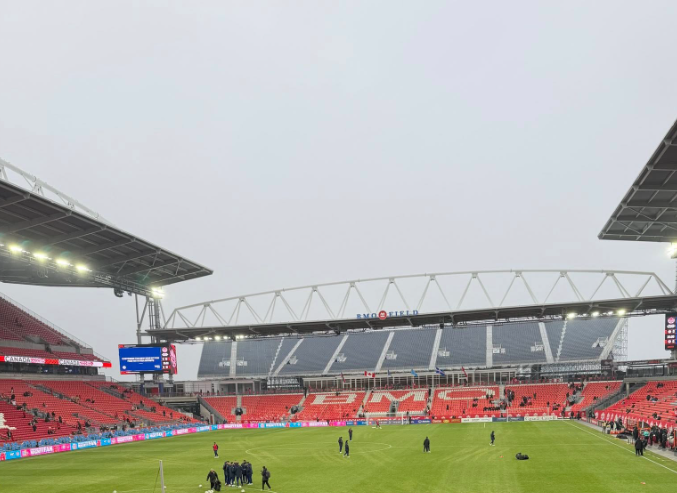
Managing the swell of spectators at BMO Field (rebranded as Toronto Stadium for the event) will require a “slew” of road closures that will effectively reshape the West End on match days.
Under the current report, a 10-hour lockdown will go into effect starting five hours before kick-off. Key closures include Strachan Avenue: Fully closed between Lake Shore Boulevard and East Liberty Street. Lake Shore Boulevard West: Shut down from Bathurst Street to British Columbia Road. Liberty Village: Restricted to local traffic only, cutting off a major thoroughfare for commuters. Supporting Routes: Fleet Street, Fort York Boulevard, and the southern tip of Dufferin Street will also see significant restrictions.
To mitigate the chaos, parking may be suspended on King Street to allow for a smoother flow of vehicles diverted from the waterfront.
To compensate for the gridlock, the TTC is preparing for a “marathon” of service. Streetcar frequencies will be ramped up significantly during match windows: The 504 King will arrive every four minutes, The 511 Bathurst will run roughly every five minutes and the 509 Harbourfront will see a streetcar every seven minutes.
Cyclists are also getting a boost. Toronto’s Bike Share program will introduce “valet service” at key locations near the stadium. This will allow riders to drop off their bikes even when docking stations are at capacity, ensuring those who choose two wheels aren’t left wandering for a spot.
As the city prepares for its moment on the world stage, the message to Torontonians is clear: leave the keys at home, lace up your walking shoes, and get ready for a downtown experience unlike any other.