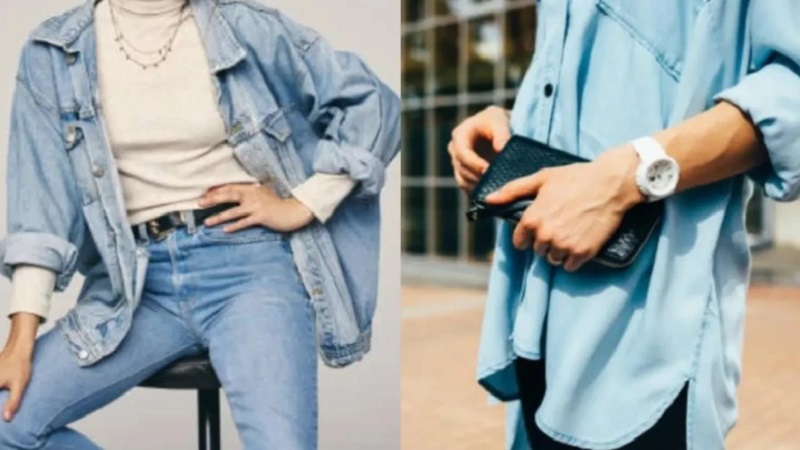
Almost all people in the world are more or less comfortable wearing clothes made of jeans. Its use as a casual wear is popular everywhere. Even in fashion, denim shirts or pants are always in trend.
Now the question is whether such popular jeans clothes are banned in North Korea. Behind this ban lies the history, ideology and strict regime on the people.
To find out why North Koreans can’t wear jeans, you have to go back to the mid-20th century, just after World War II. Then North and South Korea split. North Korea was led by Kim Il-sung, which was shaped by communist ideology.
He had strong ties with the Soviet Union and later China. The United States, on the other hand, became a staunch ally of South Korea. So North Korea later renounced all symbols of the United States.
Jeans became a symbol of American culture in the Western world, especially during the Cold War. Back then, jeans were a symbol of Western individualism, freedom and rebellion. For this reason, North Korea has never allowed this symbol of the United States to be included in its country’s fashion. Even today, no one is allowed to wear jeans in North Korea.
Currently, Kim Jong Un is the supreme leader there. You will be surprised to know that he has tied the clothes of the men and women of that country and even the children to the hair cut according to his instructions. The people of North Korea also follow the instructions of their Supreme Leader to stay well.
You will be more surprised to know that the fashion police are there to check whether anyone in North Korea is wearing jeans or not. A special unit of the North Korean government takes care of this and patrols the streets.
Anyone who wears jeans or does not wear North Korea’s prescribed clothing faces serious consequences. Fines, public embarrassment and even imprisonment can result.
Not only jeans, but everything with Western influence is banned in North Korea. The ban on jeans is just one example. North Korea is a place where control is paramount. There the common people do not have the power to aspire to individual freedom and self-expression.

![Three smiling women sit on a colorful padded floor, posing with a large sign that reads Canada Child Benefit and its French translation, in a community setting with a pillow saying This Classroom Runs on Kindness nearby.]','Three women pose for a group photo indoors, holding a white board about the Canada Child Benefit and its French equivalent, with colorful circles in the design and a kindness-themed cushion nearby.'] }``` Wait formatting wrong. We must provide proper JSON. Let's craft properly. Provide 5 options. Ensure no stray quotes. Let's produce proper JSON. Use single quotes in descriptions? Must be double quotes. I'll provide array of strings. Ensure no stray characters. Let's do. } For safety. Let's output.} Let's craft final.} Wait earlier included typos. Let's deliver.]]>](https://www.thesouthasiajournal.com/wp-content/uploads/2026/07/12-2-390x220.jpg)