Chinese EV Access Emerges as Flashpoint in USMCA Renewal Talks, Mexican Official Says
Taslima Jamal
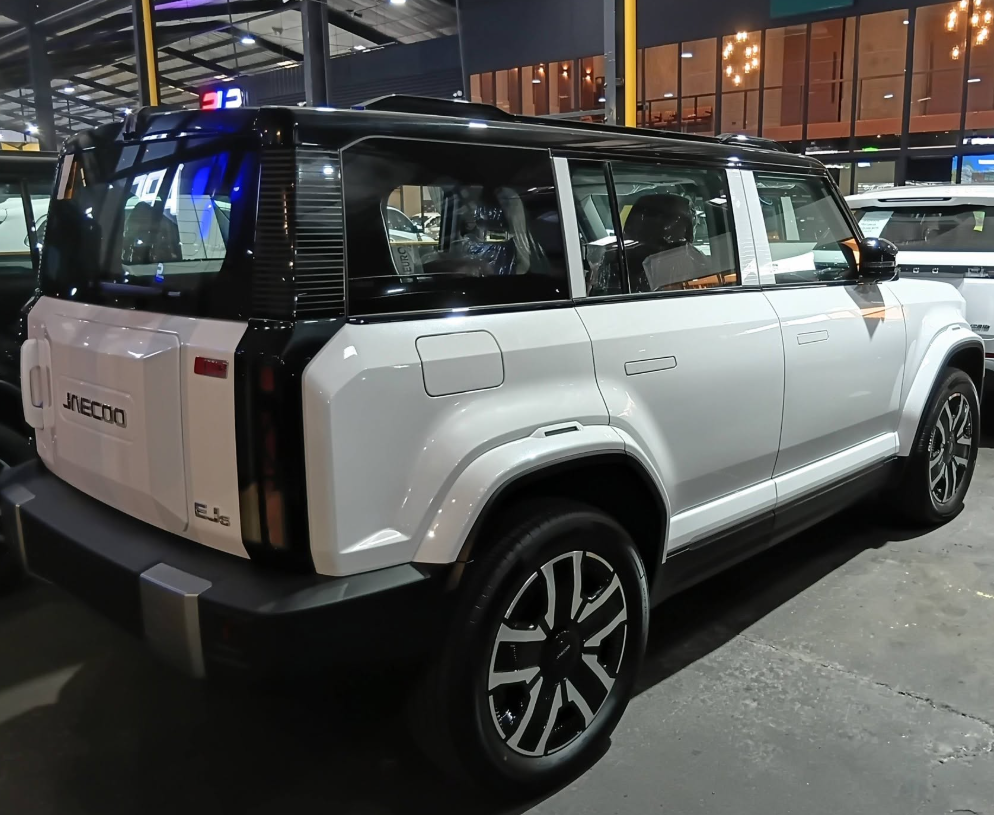
The question of how many Chinese-made electric vehicles should be allowed onto North American roads has become entangled in the broader renegotiation of the continent’s trade pact, Mexico’s top diplomat said Friday during a visit to the Canadian capital.
Roberto Velasco Alvarez, Mexico’s Secretary of Foreign Affairs, told reporters that the matter is now squarely on the table as part of discussions with Washington over the future of the Canada-U.S.-Mexico Free Trade Agreement, known as CUSMA in Canada, USMCA in the United States, and T-MEC in Mexico.
“Of course, this is part of the USMCA talks, and we continue to look for ways as well to lower the tariffs that the United States has implemented,” Velasco Alvarez said when a reporter asked whether Chinese EVs sold in Mexico were complicating efforts to extend the trilateral pact.
Velasco Alvarez was in Ottawa for a bilateral sit-down with Foreign Affairs Minister Anita Anand, part of an ongoing round of diplomacy as all three USMCA partners try to figure out what comes next for the agreement that underpins nearly all continental trade.
The trade pact’s future was thrown into question earlier this month when U.S. Trade Representative Jamieson Greer announced on July 1 that Washington would not renew the agreement “in its current form.” The deal itself isn’t dead it stays in force and now enters a cycle of annual reviews that could stretch on for up to ten years before facing a hard expiration if no extension is reached.
Within that uncertain window, few issues loom larger than the flow of Chinese electric vehicles into North American markets.
In Mexico, Chinese-built EVs have already captured roughly one-fifth of the auto market. Canada, for its part, struck an agreement in January permitting as many as 49,000 Chinese electric vehicles into the country annually, subject to a most-favoured-nation tariff of 6.1 per cent.
That arrangement has not sat well with the Trump administration. The president has threatened fresh tariffs over the issue and warned that Canada would not be allowed to serve as a “drop-off port” funneling Chinese-made cars into the American market.
Anand pushed back on the notion that Canada’s EV arrangement poses a serious threat to the broader North American auto sector, noting that the 49,000-vehicle allotment would represent less than three per cent of the total Canadian car market.
“The key really is in establishing those lines,” Anand said. “We are cognizant that the trading relationship across North America is one of the most integrated in the world.”
For his part, Velasco Alvarez downplayed the scale of Chinese manufacturing presence in Mexico itself, framing the country’s EV imports as concentrated in the budget end of the market rather than reflecting a broader industrial foothold.
“We don’t have a large manufacture of Chinese vehicles in Mexico right now. I don’t think there’s more than one Chinese manufacturer in Mexico,” he said. “At this point, we import vehicles from China for mainly the lowest cost vehicle sector of our market.”
Reporters also pressed Velasco Alvarez on whether Mexico might abandon the three-way structure altogether and pursue a bilateral deal directly with Washington, leaving Canada out of the equation.
He rejected the premise, insisting Mexico remains committed to the trilateral framework even as each country works through its own set of grievances with the others.
“The USMCA is a trilateral agreement. And of course, we, the three countries, agree that architecture should continue,” he said, though he acknowledged “there are many issues with which we need to communicate directly with the United States.”
He added that coordination between Mexican and Canadian trade officials remains strong, and that trilateral conversations happen “when it’s appropriate.”
Anand echoed that both tracks bilateral and trilateral will need to move in tandem as the three countries work toward a resolution.
“With both the United States and Mexico, the trade and investment relationship is fundamentally important,” she said. “And we are committed to protecting and strengthening those relationships, both bilaterally and trilaterally.”
With the clock now ticking on the first of what could be a decade of annual reviews, the coming months are likely to test just how much common ground the three trading partners can find particularly on the question of how open North America’s borders should be to the next wave of Chinese-built cars.