Poilievre Calls for United Front on U.S. Trade, Rejects Trump’s Rhetoric While Urging Economic Self-Reliance
Sathia Kumar
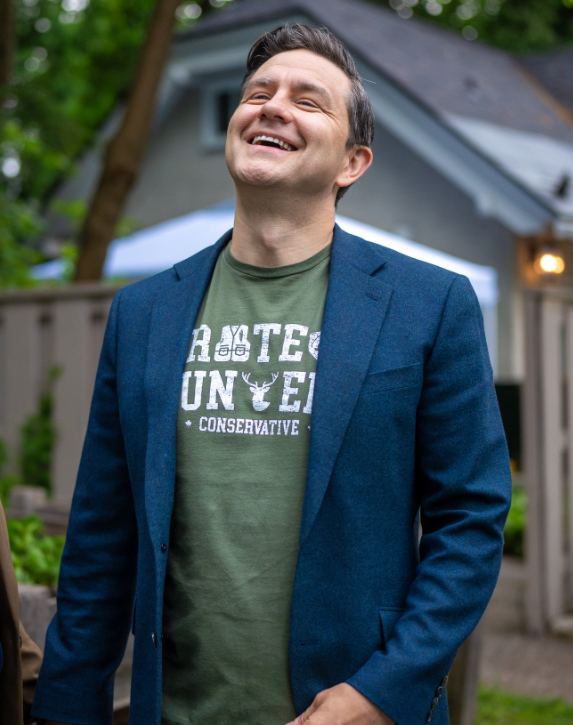
Conservative Leader Pierre Poilievre on Thursday sharply criticized U.S. President Donald Trump’s comments about Canada, while urging a steady and pragmatic approach to managing the country’s most important bilateral relationship.
Speaking at the Economic Club of Canada in Toronto, Poilievre laid out what he described as a sovereignty-focused strategy for navigating economic turbulence and trade tensions with the United States. His message centered on a simple principle: control what Canada can control.
“The path to sovereignty is focusing relentlessly on what is within our power,” Poilievre told a room of business leaders, emphasizing that Ottawa should concentrate on strengthening domestic economic fundamentals rather than reacting emotionally to developments in Washington.
In a notable shift in tone, Poilievre directly named Trump multiple times during the speech something he avoided at last month’s Conservative convention in Calgary. “What President Trump says about Canada is wrong,” he said, addressing recent rhetoric and trade pressures from the White House.
At the same time, the Conservative leader called for cooperation across party lines. He proposed forming an all-party working group to prepare for the upcoming review of the Canada-U.S.-Mexico Agreement (CUSMA), saying members would operate in good faith and prioritize national interests over partisan politics.
He pledged to work constructively with the Liberal government, while underscoring the opposition’s constitutional role in holding the government accountable.
The theme of control echoed elsewhere in Toronto on Thursday. Canada-U.S. Trade Minister Dominic LeBlanc, speaking at the Canadian Club, used similar language in addressing U.S. tariffs. “We have to control what we can control,” LeBlanc said, confirming he will meet U.S. Trade Representative Jamieson Greer in Washington next week.
Poilievre framed Canada’s response to trade uncertainty as one of resilience through growth. He repeated a familiar argument from the last federal election campaign: Ottawa should remove barriers to resource development and business expansion.
“The most effective response to uncertainty is not outrage, it is results,” he said.
He maintained that restoring tariff-free trade with the United States should remain Canada’s objective, despite signals from Washington that some level of tariffs may persist in any new agreement. Greer said earlier this week that Ottawa would likely have to accept “some level of higher tariff” if it seeks a deal.
Poilievre argued Canada could strengthen its negotiating leverage by boosting domestic energy and mineral production, establishing a strategic resource reserve, and tying future purchases of U.S. military equipment to progress on free trade.
He also cautioned against deepening ties with China at the expense of Canada’s relationship with the United States. Taking aim at recent Liberal efforts to reset relations with Beijing — including Prime Minister Mark Carney’s meeting with President Xi Jinping and the removal of certain retaliatory tariffs Poilievre warned against what he characterized as a strategic pivot away from Canada’s “biggest customer and closest neighbour.”
Instead, he proposed pursuing an automotive agreement with Washington that would commit both countries to keeping Chinese vehicles out of their markets in exchange for tariff-free production within North America.
On India, however, Poilievre struck a more supportive tone, expressing backing for a potential free-trade deal even as Canadian security officials continue to investigate allegations of foreign interference and intimidation linked to New Delhi.
In a fireside discussion following his speech, Poilievre was asked why he has not adopted a more confrontational stance toward the United States, given widespread public frustration over tariffs and annexation rhetoric.
He replied that anger would not produce results.
“We cannot control what the U.S. president says or does,” he said, echoing remarks previously made by Prime Minister Carney. “We can control what we do on this side of the border.”
The key difference, Poilievre argued, is execution suggesting the government has failed to turn that principle into tangible economic gains.
As Canada prepares for critical trade negotiations and a formal CUSMA review, Poilievre’s speech signaled an attempt to balance political criticism with a call for cross-party cooperation and to position his party as both vigilant and pragmatic in the face of growing economic uncertainty.