Leaders Gather in Toronto for Global Progress Summit as Canada Charts Economic Course
Abdur Rahman Khan
Political leaders and policy experts from across the world converged on Toronto Saturday for the 2026 Global Progress Action Summit, a high-profile gathering that put Canada’s economic resilience and democratic values front and center on the international stage.
The day-long summit, co-hosted by Canada 2020 and the Center for American Progress Action Fund, drew some of the most recognizable names in progressive politics including Canadian Prime Minister Mark Carney and former U.S. President Barack Obama for wide-ranging conversations on economic security, global cooperation, and the future of democratic institutions.
Much of the day’s energy centered on Canada’s evolving relationship with the United States, particularly against the backdrop of ongoing American tariffs on Canadian steel, aluminum, and automobiles.
Speaking to the crowd, Prime Minister Carney struck a cautiously optimistic tone. He pointed out that more than 85 percent of Canadian goods still cross the border tariff-free, calling the existing trade arrangement with the U.S. the best Canada has. But he was equally clear that Canada is not sitting idle.
“If that route is not ultimately possible, we will invest heavily in new markets and products,” Carney said, signaling that his government is prepared to pivot aggressively if deeper integration with Washington proves elusive. “We will reward those who build, buy and produce in Canada.”
He also floated the idea of what he called a “Fortress North America” framework a model of deeper sectoral integration with the U.S. though he was careful to frame it as one option among several, not a foregone conclusion.
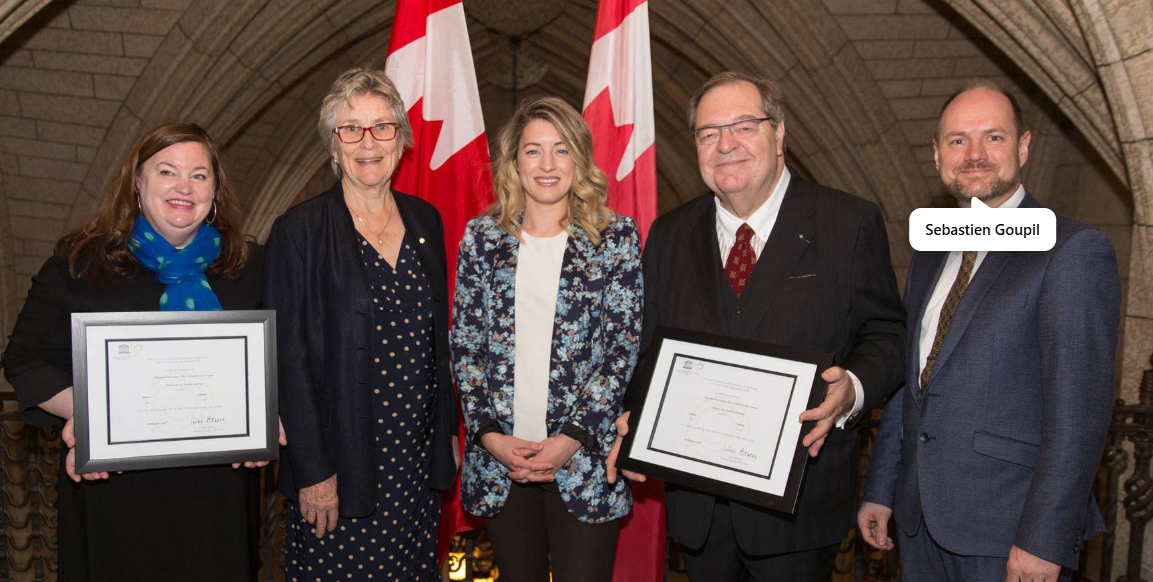
The summit opened with Industry Minister Mélanie Joly in conversation with former U.S. Transportation Secretary Pete Buttigieg, where the two discussed the link between economic security and public trust in democratic systems.
Joly was candid in her assessment of American political turbulence and its ripple effects beyond U.S. borders. “What is going on in the U.S. doesn’t stay in the U.S.,” she said. “If U.S. democracy is not working well, it has an impact on all democracies.”
Foreign Affairs Minister Anita Anand echoed that sentiment during a separate panel on Canada-U.S. relations, stressing that both countries ultimately want to see their relationship flourish over the long term. She described trade diversification not as a retreat from the American relationship, but as a practical hedge during what she characterized as a period of significant disruption to the global trading order.
“There is a complete breakdown of the global trading order,” Anand said, framing Canada’s pivot toward new partners as a matter of necessity rather than ideology.
Carney also used the summit to preview Canada’s upcoming artificial intelligence strategy, telling attendees that Canadians want technology that is both “safe and sovereign” language that suggests the government is leaning into a model that prioritizes national oversight alongside economic opportunity.
He framed AI not as a threat to public services, but as a potential engine for strengthening them, signaling that Ottawa intends to position Canada as a serious player in the global AI race rather than a bystander.
Carney closed out the summit with a rallying cry for decisive action in the face of global uncertainty a message clearly aimed as much at his domestic audience as the international crowd in the room.
“We have to take risks again,” he said. “Because in a crisis, fortune favors the bold.”
It was a fitting capstone for a summit that, by design, was meant to project confidence and coalition-building at a moment when both feel harder to come by. Whether Saturday’s conversations translate into concrete policy movement remains to be seen but the gathering made one thing plain: Canada is not waiting for the world to settle down before deciding where it stands.