How ‘boiling rocks’ created oceans in Mongolia 410 million years ago
Arafat Rahman
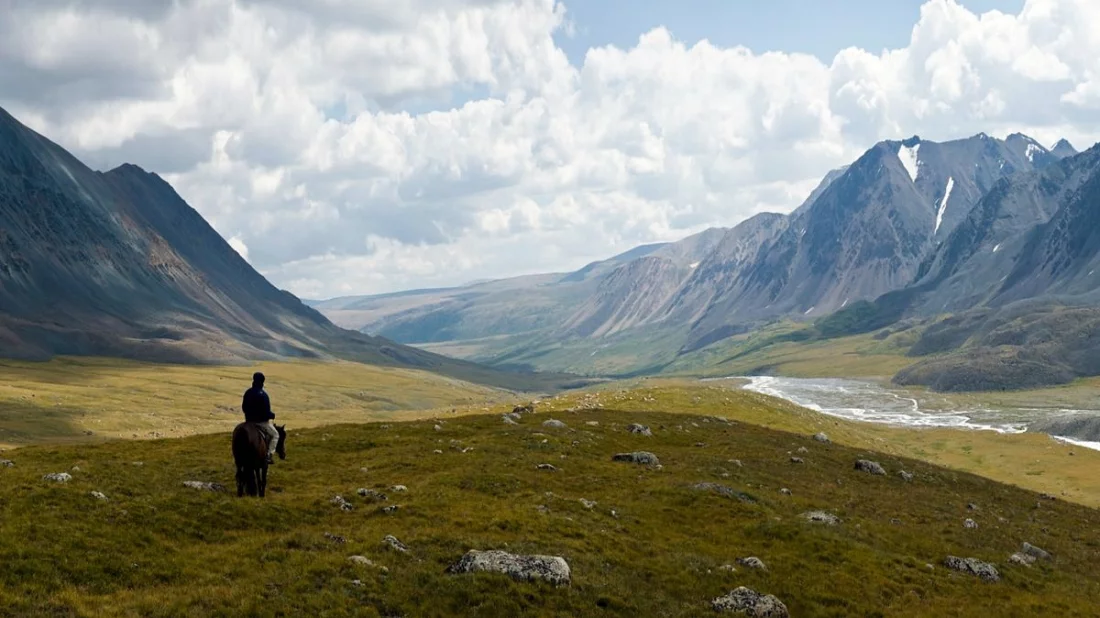
About 400 million years ago, hot rock erupted from the thick layer of hot, solid rock between Earth’s crust and the molten iron core, tearing apart Mongolia’s crust. There created an ocean. It is estimated that this ocean existed for 115 million years.
The geological history of these oceans can help researchers understand ‘Wilson cycles’, or the process by which supercontinents break apart and rejoin. A supercontinent refers to a landmass larger than a continent, or extra-large, which was subsequently broken up.
It is a slow and extensive process, said Daniel Pastor-Galan, a geoscientist at the National Spanish Research Council in Madrid. The subject tells us about some processes that happen in the world, which are not very easy to understand.
Geologists are fairly certain that the last supercontinent broke up and re-formed about 250 million years ago. Before that, however, it is difficult to predict how the crust interacted with the thick layer of hot, solid rock, or mantle, between Earth’s crust and the molten iron core.
In a new study, researchers were interested in volcanic rocks in northwestern Mongolia from the Devonian period (419 million to 359 million years ago). The Devonian period was essentially the ‘age of fish’, when fish dominated the oceans. At that time plants began to spread over the land.
During prehistoric times the planet had two major continents – Laurentia and Gondwana. Also a long stretch of microcontinents eventually became what is now Asia. These microcontinents gradually collided with each other and merged in a process called accretion.
The researchers began fieldwork in northwest Mongolia, where these ‘continent-building’ collision-period rocks rise to the surface. In 2019, the age and chemistry of the ancient rock layers were studied.
Scientists have found that between 41 million and 415 million years ago, an ocean called the ‘Mongolian-Okhotsk’ ocean was formed in that region of Mongolia. The chemistry of the volcanic rocks that accompanied these rifts revealed the presence of a mantle plume—specifically, a stream of hot mantle rock.
Mingshuai Zhu, a professor of geology and geophysics at the Chinese Academy of Sciences and lead author of the study, said mantle plumes are typically the first phase of the Wilson cycle. The breakup of the continents and the creation of an ocean like the Atlantic Ocean! Hot rocks rose up from the center of a solid part of the continent, causing the crust to tear apart.
The weak spots between the subcontinents and combined with the plume probably helped form the ocean, Zhu said. The researchers published their findings on May 16 in the journal Geophysical Research Letters.
Researchers say that the ocean has closed in the same place where it was created. This is a common pattern in the life cycle of the ocean.
The formation of the ‘Mongolian-Okhotsk’ ocean was probably similar to what is seen today in the Red Sea, the research scientists said. where the crust is spreading about 0.4 inches (1 cm) per year. The Red Sea is part of a larger continental rift, which is thought to have created a new ocean in East Africa over millions of years. Geologists don’t yet know, however, whether other continental forces will prevent the ocean from opening up completely.

![Three smiling women sit on a colorful padded floor, posing with a large sign that reads Canada Child Benefit and its French translation, in a community setting with a pillow saying This Classroom Runs on Kindness nearby.]','Three women pose for a group photo indoors, holding a white board about the Canada Child Benefit and its French equivalent, with colorful circles in the design and a kindness-themed cushion nearby.'] }``` Wait formatting wrong. We must provide proper JSON. Let's craft properly. Provide 5 options. Ensure no stray quotes. Let's produce proper JSON. Use single quotes in descriptions? Must be double quotes. I'll provide array of strings. Ensure no stray characters. Let's do. } For safety. Let's output.} Let's craft final.} Wait earlier included typos. Let's deliver.]]>](https://www.thesouthasiajournal.com/wp-content/uploads/2026/07/12-2-390x220.jpg)