Greenland Is Not for Sale: Why Trump’s Arctic Ambitions Are a Dangerous Illusion
Manjit Sing
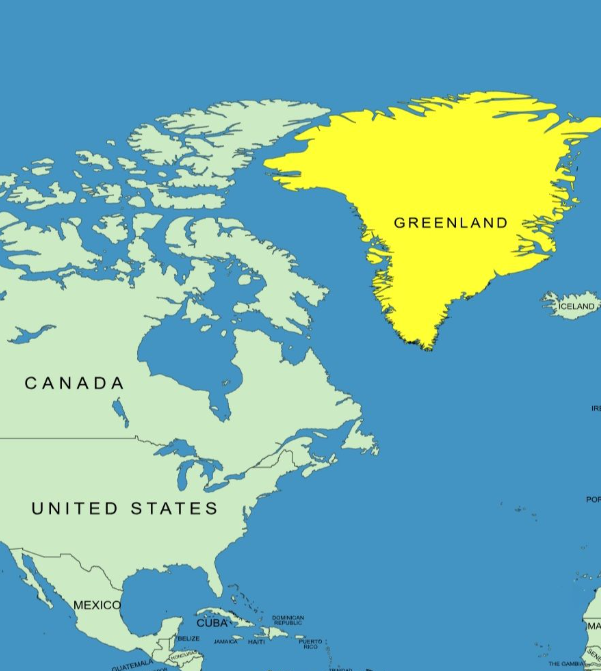
For months, Donald Trump has revived an idea that should have remained a historical curiosity: the acquisition of Greenland by the United States. Once dismissed as bluster from his first term, the rhetoric has returned with sharper edges following a recent U.S. military operation in Venezuela an action that signalled, more than anything else, Trump’s renewed vision of unapologetic American dominance across the Western Hemisphere and beyond.
Now, Greenland is back in the spotlight.
The White House insists this is about security. According to press secretary Karoline Leavitt, Trump sees Greenland as vital to deterring Russian and Chinese aggression in the Arctic. Diplomacy, we are told, is the “first option,” though military force has not been ruled out. Secretary of State Marco Rubio has framed the issue more gently, reiterating Trump’s preference to “purchase” Greenland rather than seize it.
But beneath the strategic language lies a troubling reality: the idea that a powerful nation can still bargain, coerce, or intimidate its way into control of another people’s land in the 21st century.
Greenland is not an empty chessboard square. It is a self-governing territory of Denmark, home to 56,000 people around 90 per cent of them Inuit whose future, by international law and democratic principle, must be decided by them alone. Denmark, Canada, and European allies have all reaffirmed this basic truth in recent days. That such reminders are necessary at all speaks volumes.
To be clear, Greenland is strategically important. Its location off Canada’s northeastern coast and deep within the Arctic Circle makes it a critical node for missile warning systems, space surveillance, and North Atlantic security. The U.S. already operates the Pituffik Space Base under a long-standing treaty with Denmark. NATO already benefits from Greenland’s geography. Cooperation is not lacking.
Which raises an uncomfortable question: what exactly would the U.S. gain by “owning” Greenland outright?
According to defence experts, the answer is: very little. Andrea Charron of the University of Manitoba argues there are “no advantages to be gained” for U.S. national security by taking over Greenland. What would be gained, however, is enormous damage to NATO cohesion and Western unity damage that could be permanent. Alienating Denmark, a NATO ally spending over three per cent of its GDP on defence, would be a strategic self-own of historic proportions.
Even more concerning is how these ambitions are being pursued. Last year, the Pentagon quietly shifted Greenland from U.S. European Command to U.S. Northern Command without consulting European allies. That move may seem bureaucratic, but it signals a mindset: Greenland as an American asset first, a shared responsibility second.
The Arctic itself is changing rapidly. Melting ice is opening new shipping routes and access points, intensifying competition among Arctic and near-Arctic powers. Russia has expanded its military footprint in the region. China has declared itself a “near-Arctic state” and is pushing its so-called Polar Silk Road. These developments are real, and they do require coordinated responses.
But coordination is the key word. Arctic security has long depended on cooperation among allies particularly Canada, Denmark, and the United States. Turning Greenland into a geopolitical tug-of-war undermines exactly the stability the region needs.
Then there’s the issue of resources. Greenland’s vast reserves of rare earth minerals essential for smartphones, electric vehicles, and advanced weapons systems are undeniably attractive. With China dominating global rare earth supply chains, the temptation to secure alternative sources is understandable. But Trump’s approach once again blurs the line between national security and corporate interest.
As analyst Emma Ashford notes, Trump frequently conflates U.S. security with the priorities of American energy and mining companies. His enthusiasm for Venezuela’s oil reserves following military intervention there reinforces this pattern. Environmental protections, Indigenous rights, and local democratic decisions are treated as obstacles, not principles.
Greenland’s own government banned uranium mining in 2021 over environmental concerns a decision that effectively halted rare earth extraction. Trump has shown little patience for such constraints, whether at home or abroad. The implication is clear: if Greenland won’t open itself to extraction willingly, pressure may follow.
That pressure may not stop with Denmark. Canada, which has made Arctic sovereignty a cornerstone of its defence policy, could also find itself squeezed as the U.S. signals its willingness to use force as leverage.
This is what makes Trump’s Greenland fixation so dangerous. It is not just about one island. It reflects a worldview in which power replaces partnership, and might substitutes for multilateralism. In a time of rising authoritarianism and global instability, that approach doesn’t strengthen the West it fractures it.
Greenland matters. The Arctic matters. But so do alliances, international law, and the right of people to decide their own future. Treating Greenland as a prize to be acquired is not strategic brilliance. It is a throwback to an era the world should have left behind.