I don’t believe all Generation Z in Bangladesh are progressive, modern, scientific-minded, and technologically proficient.
The main reasons for this belief are our education system and socio-economic conditions.
It’s difficult to say what percentage of Generation Z are truly intelligent because there are no statistics or research on this matter.
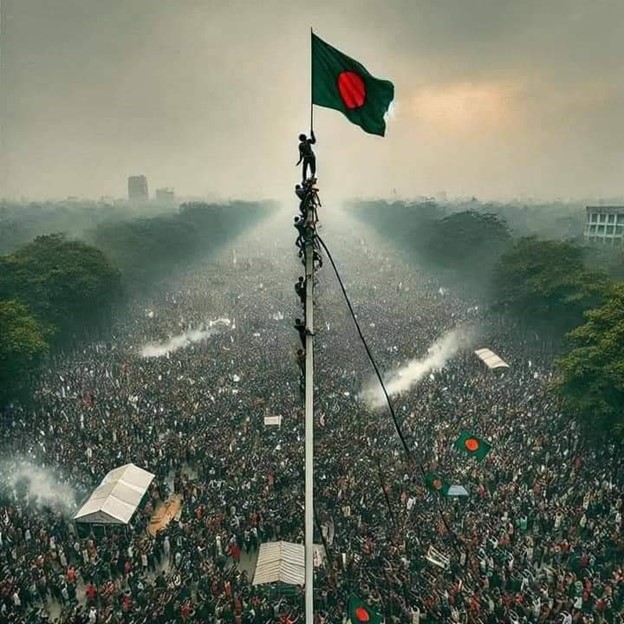
However, a few examples will clarify this point. During the July student protests, I felt that Meer Mahfuzur Rahman Mugdh, who was distributing water, was truly a smart, progressive, modern, scientific-minded, and technologically proficient member of Generation Z. At least, based on the information I’ve gathered about him so far, my assessment of Mugdh is such. This intelligent boy was highly skilled. He had the ability to compete with any world-class intellect. Looking at his track record, I considered him an extraordinary youth. I was so impressed by Mugdh that I wrote about him on Facebook at that time. His voice still rings in my ears, “need water? need water?
The question is, do all members of Generation Z possess the same level of intellect as Meer Mugdh? Or even something close to it?
The answer is most likely “no.”
Generation Z in Bangladesh is likely to be quite diverse.
Who exactly are these diverse individuals?
A significant portion of Bangladesh’s Generation Z attends private colleges and universities. What kind of education do these private universities provide? Do these private education systems foster modern, progressive, and technologically proficient individuals, or do they hinder such development? These questions are very relevant.
This is further complicated by the inclusion of the madrasa education system. Madrasas teach a wide range of subjects, including science. However, the question is whether simply teaching these subjects, including science, in a modern way is sufficient within the madrasa education system. There is room for doubt about whether teachers in madrasas are providing education that meets international standards.
In Bangladesh, there are truly intelligent students as well as those who receive a poor or substandard education. There are also students who are superstitious, dogmatic, and opposed to progress.
In 2016, a horrific incident took place at the Holey Artisan Bakery in Bangladesh. It’s likely that the date was July 1st. Twenty-two people, including foreigners, were brutally murdered. English medium students in Bangladesh were involved in this massacre. These students forced the victims to recite verses from the Quran, killing those who could not. They were armed with AK-47 rifles. So the question is, how did these English medium boys become terrorists? Who brainwashed them? Later, the Islamic State claimed responsibility for the killings. Although the Holey Artisan incident happened many years ago, eight years ago to be exact. Even though the incident is isolated, it shows how Generation Z can be manipulated. Where did they get the weapons at that time? Movies have been made about this in both India and Bangladesh, but no research has been done on how these boys came to this path.
So, on one hand, we find Meer Mugdha among Generation Z, and on the other hand, we see a very different kind of Generation Z.
Therefore, my feelings about Generation Z are very mixed.