Doug Ford’s Politics of the U-Turn: Why Leadership Requires More Than Chasing Popularity
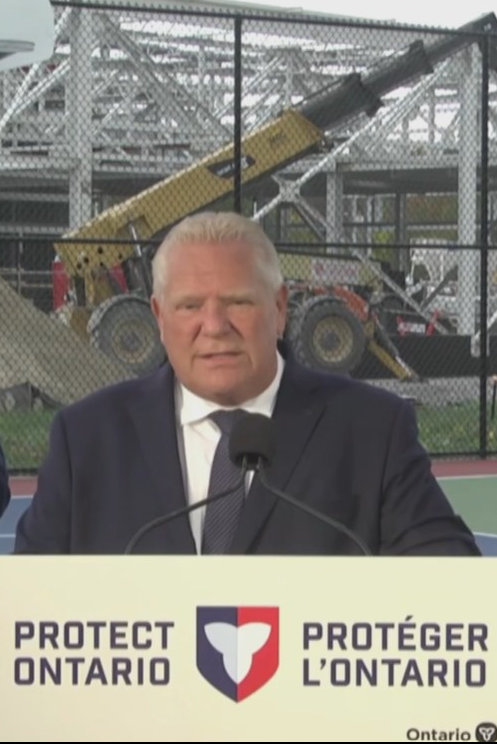
Doug Ford’s government has been in power long enough now that Ontarians are beginning to see a troubling pattern. It’s not just about the premier’s decisions, but how often he reverses them. Speed cameras and supervised drug injection sites are only the latest examples of Ford introducing a policy, championing it and then years later, attacking it as if it had been someone else’s idea.
Take the case of automated speed enforcement cameras. Back in 2019, after months of lobbying by Toronto’s mayor and safety advocates, Ford finally let municipalities install cameras in school zones and community safety areas. His own ministers hailed the program as life-saving. The point, they said, was protecting children, reducing injuries, and slowing down dangerous drivers. The research backed them up. Toronto’s program showed a 45 per cent drop in speeding, a number most parents would find hard to argue with.
Fast forward to 2025, and Ford now calls the same cameras “nothing but a tax grab.” He points to thousands of tickets for drivers creeping just a few kilometres over the limit, as if that proves the system is unfair. But anyone who has walked near a school zone knows a car travelling even a little too fast can be the difference between a close call and a tragedy. To dismiss this as “just revenue” is not only disingenuous it undermines the work of municipalities, police, and public health experts who know the data says otherwise.
And this is not an isolated flip-flop. Ford’s government is also dismantling supervised drug consumption sites, many of which it opened in 2019. At the time, the premier’s team admitted the overdose crisis was too serious to ignore. Now, with the opioid epidemic worse than ever, the same government is calling these sites unsafe and shuttering them. What changed? Not the science. Not the need. Just the politics.
These reversals speak to a larger problem: Ford seems more interested in being liked in the moment than in standing by difficult, sometimes unpopular but necessary policies. Governing is not supposed to be about being a “weather vane,” blowing whichever way the political winds turn. It’s about leadership making tough calls and sticking with them when they’re right for people’s safety and well-being.
Ford often says he wants to “show” Ontarians better ways to solve problems, whether it’s slowing traffic or tackling addiction. But so far, what he has mostly shown is a willingness to abandon his own solutions as soon as they become politically inconvenient. And that should worry anyone who expects their premier to lead with consistency rather than chase applause.


![Three smiling women sit on a colorful padded floor, posing with a large sign that reads Canada Child Benefit and its French translation, in a community setting with a pillow saying This Classroom Runs on Kindness nearby.]','Three women pose for a group photo indoors, holding a white board about the Canada Child Benefit and its French equivalent, with colorful circles in the design and a kindness-themed cushion nearby.'] }``` Wait formatting wrong. We must provide proper JSON. Let's craft properly. Provide 5 options. Ensure no stray quotes. Let's produce proper JSON. Use single quotes in descriptions? Must be double quotes. I'll provide array of strings. Ensure no stray characters. Let's do. } For safety. Let's output.} Let's craft final.} Wait earlier included typos. Let's deliver.]]>](https://www.thesouthasiajournal.com/wp-content/uploads/2026/07/12-2-390x220.jpg)