Canada Walks Diplomatic Tightrope as Chinese Foreign Minister Visits Ottawa
Patrick D Costa
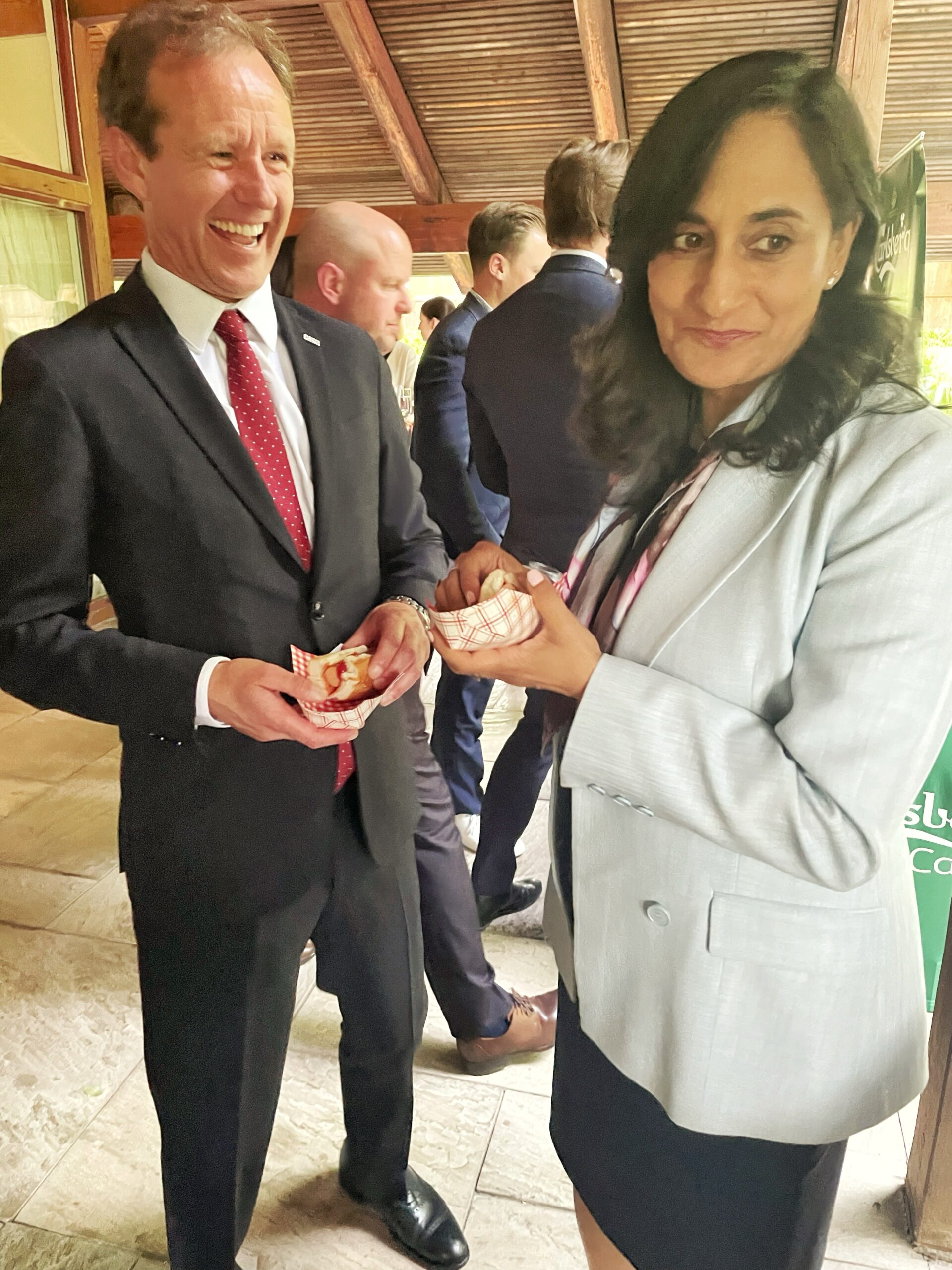
Canada’s relationship with China has once again come under the spotlight as Chinese Foreign Minister Wang Yi began a three-day visit to Ottawa, amid growing debate over trade, national security, and human rights concerns.
Speaking ahead of her meeting with Wang on Friday, Canadian Foreign Affairs Minister Anita Anand described the economic partnership between the two countries as “significant” and emphasized Ottawa’s intention to expand trade ties with Beijing in the coming years.
Anand stated that Canada aims to increase exports to China by 50 per cent by 2030 while continuing to protect the country’s economic interests, national security, and democratic values. However, her remarks notably avoided any direct reference to human rights issues in China.
The visit has drawn attention not only because of renewed trade discussions but also due to heightened tensions surrounding Taiwan. Shortly before Wang’s arrival, Canada confirmed that the naval vessel HMCS Charlottetown had carried out a routine transit through the Taiwan Strait on May 22 and 23.
China, which claims Taiwan as its territory, has repeatedly objected to military activity by Western nations in the strategically sensitive waterway. Beijing has increased military operations around Taiwan in recent months, raising concerns among allies in the Indo-Pacific region.
Former Canadian ambassador to China Guy Saint-Jacques warned that the naval transit would likely anger Beijing but argued that Canada should not compromise its principles.
“We have to stand by our values and avoid self-censorship,” he said, defending Canada’s right to operate in international waters.
Wang Yi later met Prime Minister Mark Carney at the Prime Minister’s Office in Ottawa. Journalists were allowed only a brief photo opportunity and were not permitted to ask questions. Neither leader delivered public remarks following the meeting.
The restrictions on media access revived memories of Wang’s previous visit to Ottawa a decade ago, when he sharply criticized a Canadian reporter during a joint appearance over questions related to China’s human rights record.
Conservative Leader Pierre Poilievre criticized the government’s handling of the visit, accusing Prime Minister Carney of avoiding actions that could upset Beijing.
“That’s how things are done in Beijing,” Poilievre told reporters on Parliament Hill. “And now Mark Carney is importing those methods here.”
Carney’s relationship with China has remained under scrutiny since his January visit to Beijing, where he met Chinese President Xi Jinping to discuss trade, agriculture, energy, and international security issues.
Following that visit, Canada and China reached a preliminary trade understanding under which China agreed to ease some tariffs on Canadian agricultural goods, while Canada moved to reduce tariffs on certain Chinese electric vehicles.
Despite these developments, critics say major concerns remain unresolved. Cheuk Kwan, co-chair of the Toronto Association for Democracy in China, argued that Beijing has become increasingly aggressive toward Canada over the past year.
Kwan said Ottawa’s difficult relationship with the United States under President Donald Trump has left Canada seeking stronger economic opportunities elsewhere, giving China additional leverage in negotiations.
Observers say the current visit highlights the balancing act facing the Canadian government pursuing economic cooperation with China while navigating growing geopolitical tensions and pressure to defend democratic values.


![Three smiling women sit on a colorful padded floor, posing with a large sign that reads Canada Child Benefit and its French translation, in a community setting with a pillow saying This Classroom Runs on Kindness nearby.]','Three women pose for a group photo indoors, holding a white board about the Canada Child Benefit and its French equivalent, with colorful circles in the design and a kindness-themed cushion nearby.'] }``` Wait formatting wrong. We must provide proper JSON. Let's craft properly. Provide 5 options. Ensure no stray quotes. Let's produce proper JSON. Use single quotes in descriptions? Must be double quotes. I'll provide array of strings. Ensure no stray characters. Let's do. } For safety. Let's output.} Let's craft final.} Wait earlier included typos. Let's deliver.]]>](https://www.thesouthasiajournal.com/wp-content/uploads/2026/07/12-2-390x220.jpg)