
Flesh-Eating Parasite Triggers Border Controls: Canada Curbs Texas Livestock Imports
Taslima Jamal
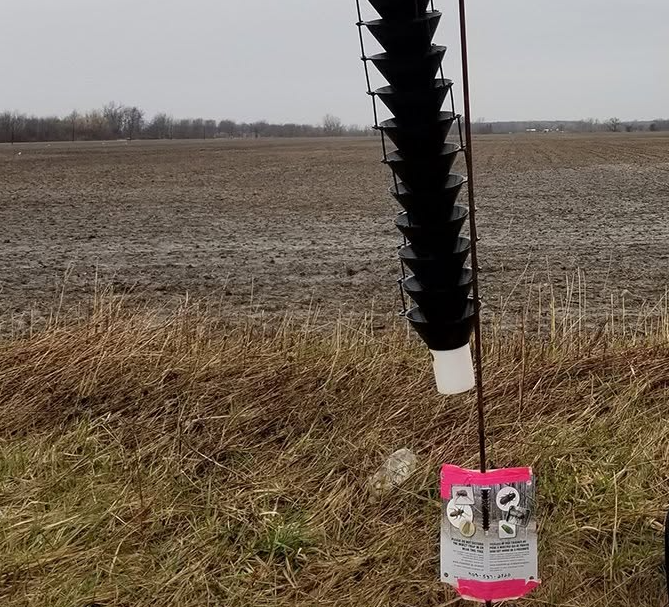
The Canadian government has slammed the breaks on livestock imports from Texas following the sudden re-emergence of the New World screwworm, a devastating flesh-eating parasite undetected in the United States for over half a century.
The Canadian Food Inspection Agency (CFIA) announced emergency border restrictions after the U.S. Department of Agriculture (USDA) confirmed two distinct cases of the parasitic fly larvae in Zavala County, Texas. The fast-moving border controls mark a significant escalation in continental efforts to contain a pest that threatens to ravage North America’s multi-billion-dollar livestock economy.
Under the new Canadian directive, any livestock including cattle, bison, horses, sheep, goats, and swine that originated from or traveled through Texas within 21 days prior to reaching the border will be denied entry into Canada.
While the CFIA acknowledged that Canada’s frigid winter climate prevents the long-term establishment of the tropical fly, officials warned that the parasite could easily thrive and spread during the warm summer months.
“Taking this action now is an appropriate risk mitigation measure to prevent its introduction and protect animal health,” the CFIA stated, urging domestic ranchers and veterinarians to closely inspect animals for unusual, foul-smelling wounds.
The Canadian ban mirrors strict precautions sweeping across the continent. Canada has already prohibited most livestock imports from Mexico, where the parasite has been advancing northward for over a year.
The crisis erupted in South Texas when a rancher in La Pryor noticed a three-week-old calf suffering from a severe, gaping lesion around its umbilical cord. Lab tests confirmed the maggot was the New World screwworm (Cochliomyia hominivorax). Days later, a second case was detected in another young calf just five miles away.
Unlike ordinary maggots that feed exclusively on dead, decaying tissue, screwworm larvae burrow directly into the living flesh of warm-blooded animals. Female flies lay hundreds of eggs inside minor scratches, tick bites, or fresh branding marks. Once hatched, the hook-shaped larvae literally eat their host alive, causing agonizing pain, severe tissue degradation, and death if left untreated.
Agricultural authorities emphasize that the parasite poses absolutely no threat to the commercial food supply, as the larvae do not infest processed meat, fruits, or vegetables. However, the economic stakes for live cattle are staggering. Texas alone faces an estimated $1.8 billion in potential economic devastation if the fly breaches containment.
Texas Governor Greg Abbott has issued a statewide disaster proclamation, unleashing emergency funds to combat what he warns will be an “extraordinarily challenging summer.” Law enforcement and agricultural inspectors have set up blinking checkpoint stations on major roads out of the infection zones, checking every passing livestock trailer for infected wounds.
The primary weapon against the outbreak is biological warfare: the Sterile Insect Technique. The USDA has launched emergency aerial missions, dropping two million sterile male flies twice a week over the affected Texas brushland. When these sterile males mate with wild females, the resulting eggs fail to hatch, effectively collapsing the local population.
Texas and federal officials are racing to accelerate the completion of a massive, $750-million sterile fly breeding facility in Texas. Initially slated for late 2027, Governor Abbott stated the timeline must be pulled forward immediately. Concurrently, a joint U.S.-funded breeding facility in Mexico is scheduled to go online next month to help buffer the border.
“Without greater sterile fly production,” Governor Abbott warned during an Austin press briefing, “we cannot make it through a second summer.”