Canada has, for the first time since the end of the Cold War, met the North Atlantic Treaty Organization’s benchmark of spending two per cent of its GDP on national defence marking a significant turning point in the country’s military and strategic posture.
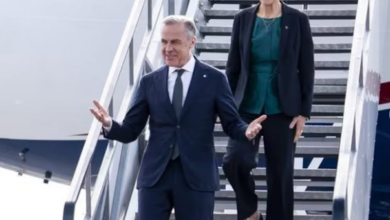
Prime Minister Mark Carney described NATO’s confirmation of the milestone as “very encouraging,” highlighting it as a generational leap in defence investment. According to NATO estimates released this week, Canada allocated over $63 billion toward defence in 2025, representing the largest year-over-year increase in decades.
Speaking during a visit to a naval vessel in Halifax, Carney emphasized that the investment reflects both evolving global threats and Canada’s commitment to strengthening its role within the alliance. He noted that modern warfare shaped by drones, autonomous systems, and space-based capabilities demands a more robust and adaptive defence strategy.
Defence Minister David McGuinty called the development “the beginning of a new era for Canadian defence,” underscoring the need for urgency and preparedness. He stressed that Canada must be ready not only to defend itself but also to lead and protect shared global interests.
The announcement aligns with broader commitments made at the 2025 NATO Summit in The Hague, where member states agreed to significantly increase defence-related spending. Under the new framework, countries are expected to allocate at least 3.5 per cent of GDP to core defence by 2035, with additional spending bringing the total to five per cent for wider security needs.
Carney acknowledged that while Canada has now reached the two per cent threshold, further increases will be necessary over the next decade. He pointed out that a growing economy will make higher spending more achievable, while also creating opportunities for innovation and economic growth tied to defence industries. Recruitment efforts are also showing positive signs, with Canadian Forces enlistment reportedly up by 13 per cent.
The shift comes after years of pressure from the United States and other NATO allies. U.S. President Donald Trump has repeatedly criticized member nations for failing to meet defence commitments, warning that countries not contributing adequately should not expect full U.S. protection.
NATO Secretary-General Mark Rutte suggested that such pressure played a decisive role in pushing all alliance members to meet the two per cent target for the first time. He noted that several major economies, including Canada, had long lagged behind and were overly dependent on American military strength.
Carney had earlier pledged to accelerate Canada’s defence spending timeline during his leadership campaign, advancing the deadline ahead of plans set under former Prime Minister Justin Trudeau. The government ultimately moved even faster, achieving the target years ahead of schedule.
However, the announcement has drawn criticism from opposition figures. Conservative defence critic James Bezan argued that the increased spending does not necessarily translate into improved military capability. He claimed that a significant portion of the reported boost stems from reallocations across government departments rather than direct enhancements to the armed forces.
Bezan also pointed to the broader implication that Canada’s accelerated action was influenced by external pressure rather than internal strategic planning, raising concerns about the country’s credibility and long-term defence independence.
Despite the debate, Canada’s achievement marks a notable milestone in its defence policy, signaling a stronger commitment to NATO obligations and a recognition of the rapidly changing global security landscape.