Canada, India Deepen Economic Ties as Leaders Confront Diplomatic Strains
Patrick D Costa
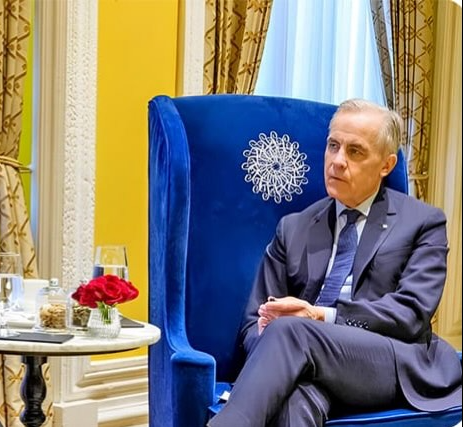
Canadian Prime Minister Mark Carney and Indian Prime Minister Narendra Modi announced a slate of major economic agreements in New Delhi on Monday, signaling a renewed push to strengthen bilateral ties even as unresolved allegations surrounding a 2023 killing continue to cast a shadow over relations.
Central to the visit was a $2.6 billion supply agreement between Saskatchewan-based uranium producer Cameco and India. Under the deal, Cameco will provide nearly 22 million pounds of uranium to support India’s expanding nuclear energy program.
In addition, both governments signed memorandums of understanding covering co-operation in critical minerals and broader energy collaboration. Canadian officials said the trip generated 10 commercial agreements worth more than $5.5 billion, reflecting growing private-sector engagement between the two countries.
Speaking alongside Modi, Carney described the recent diplomatic activity as unprecedented. He said engagement over the past year had surpassed that of the previous two decades combined, framing the moment not as a simple restoration of ties but as the start of a more ambitious partnership.
The leaders’ discussions included formal delegation-level talks followed by a private meeting lasting roughly 35 minutes. Scheduling overruns led to the cancellation of a planned working lunch and delayed public statements. A press conference featuring Carney expected to be his first opportunity to field questions during the trip was also called off shortly before it was set to begin.
Instead, Foreign Affairs Minister Anita Anand and International Trade Minister Maninder Sidhu spoke with reporters. Anand faced repeated questions about the killing of Hardeep Singh Nijjar, who was shot outside the Guru Nanak Sikh Gurdwara in Surrey, British Columbia, in June 2023.
Nijjar, an advocate for an independent Sikh homeland, became the center of a diplomatic crisis after then-prime minister Justin Trudeau publicly stated that Canadian intelligence had credible allegations linking Indian government agents to the killing.
Over the weekend, a report by The Globe and Mail cited anonymous sources alleging that Indian consular officials in Vancouver provided information connected to the attack. The claims have not been proven in court.
Anand declined to comment on specific details, emphasizing that the investigation by the Royal Canadian Mounted Police remains active. She said discussing particulars could compromise the process but confirmed that concerns about foreign interference and transnational repression were addressed in meetings with Indian officials.
Canadian authorities have taken several steps in response to broader security concerns, including designating the Bishnoi Gang as a terrorist entity, pursuing bail reforms aimed at countering extortion, and expelling Indian diplomats last year.
Before the trip, a senior Canadian official suggested Ottawa believed active interference had ceased, arguing that the visit would not have proceeded otherwise. Anand later clarified that while protective measures are in place, Canada remains vigilant in safeguarding its citizens and democratic institutions.
Beyond security matters, both governments expressed optimism about future economic collaboration. Carney indicated that negotiations are underway to finalize a comprehensive trade agreement by year’s end. Canada also unveiled a new bilateral strategy focused on talent development and innovation, including 13 new partnerships between universities in both countries.
For his part, Modi credited Carney with accelerating renewed engagement, praising what he described as fresh momentum across sectors.
While economic co-operation appears to be expanding rapidly, the unresolved Nijjar case continues to test diplomatic resilience highlighting the delicate balance between advancing trade interests and addressing national security concerns.