A Pragmatic Bet on Power and Prosperity: Why Carney’s Qatar Move Matters
Patrick D Costa
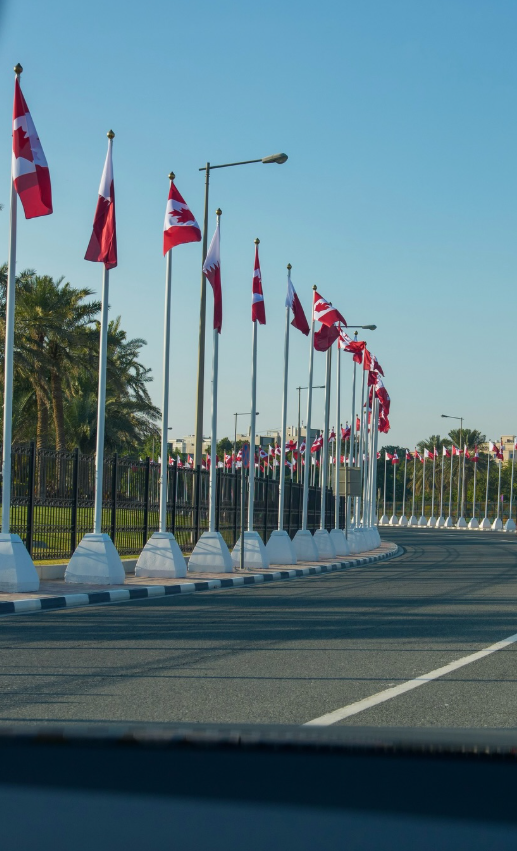
Prime Minister Mark Carney’s announcement of a new strategic investment relationship with Qatar is more than just another diplomatic headline it’s a clear signal about how Canada intends to navigate an increasingly fractured global order.
At a time when multilateral institutions are struggling to deliver meaningful progress, Carney is placing a deliberate bet on “strategic partnerships.” His meeting with Sheikh Tamim bin Hamad Al Thani, the Emir of Qatar, and the promise of “significant” Qatari investments in Canada’s nation-building projects mark what Carney rightly called a “new chapter” in bilateral relations. Whether one applauds or questions the approach, it reflects a sober assessment of today’s geopolitical realities.
The centrepiece of this new chapter is the long-delayed Investment Promotion and Protection Agreement (IPPA) with Qatar. Years of stalled negotiations suggest how difficult such agreements have become in a world wary of foreign capital and political risk. Finalizing this deal now sends a message: Canada is open to investment but selectively, and with strategic intent.
Carney’s framing is telling. This is not capital for capital’s sake. He positioned Qatari investment as a catalyst for accelerating major infrastructure and energy projects, creating thousands of high-paying Canadian jobs, and strengthening domestic industries. In other words, this is about nation-building, not just balance sheets. For a country struggling with housing shortages, energy transitions, and infrastructure bottlenecks, faster project delivery is no small promise.
Critics will inevitably raise concerns about deepening ties with a Gulf state whose political system and human rights record differ sharply from Canada’s own values. That debate is valid and necessary. But foreign policy is rarely conducted in a vacuum of ideals. Carney’s argument implicitly and explicitly is that engagement, not isolation, offers more leverage and more stability in a volatile world.
Beyond investment, the scope of the agreement is notably broad. Expanded air services, the posting of a Canadian defence attaché, and the launch of negotiations on military, security, and defence cooperation indicate a relationship that goes well beyond trade. Add to that a shared interest in areas like artificial intelligence, and it becomes clear that Ottawa sees Doha not just as a source of capital, but as a long-term strategic partner in security and technology.
This approach fits neatly into Carney’s wider worldview. He has been candid about the erosion of multilateralism, noting that freer trade is increasingly replaced by tariffs, restrictions, and stalled negotiations. In that context, his emphasis on “plurilateral” deals agreements among like-minded countries rather than universal consensus sounds less like ideology and more like realism.
The recent deal allowing increased imports of Chinese-made electric vehicles at a reduced tariff underscores the same philosophy. Carney is diversifying Canada’s economic relationships, not putting all its eggs in one geopolitical basket. His remarks about President Xi Jinping’s interest in broader trade engagement further reinforce the idea that Canada is positioning itself as flexible, adaptive, and opportunistic in an uncertain global economy.
Inviting the Emir of Qatar to Canada later this year and even proposing they attend a World Cup match together may seem symbolic, but symbolism matters in diplomacy. It humanizes relationships, builds trust, and reinforces the idea that these agreements are meant to endure beyond press releases.
Ultimately, Carney’s Qatar initiative reflects a hard-nosed assessment of today’s world: stability and prosperity will not come from waiting for global consensus. They will come from carefully chosen partnerships that align economic interests with strategic needs. Whether this gamble pays off will depend on execution, transparency, and Canada’s ability to ensure that foreign investment genuinely serves the public good.
But one thing is clear: Canada is no longer content to sit on the sidelines of a changing world. With moves like this, Carney is signaling that the country intends to shape its future one strategic partnership at a time.

![Three smiling women sit on a colorful padded floor, posing with a large sign that reads Canada Child Benefit and its French translation, in a community setting with a pillow saying This Classroom Runs on Kindness nearby.]','Three women pose for a group photo indoors, holding a white board about the Canada Child Benefit and its French equivalent, with colorful circles in the design and a kindness-themed cushion nearby.'] }``` Wait formatting wrong. We must provide proper JSON. Let's craft properly. Provide 5 options. Ensure no stray quotes. Let's produce proper JSON. Use single quotes in descriptions? Must be double quotes. I'll provide array of strings. Ensure no stray characters. Let's do. } For safety. Let's output.} Let's craft final.} Wait earlier included typos. Let's deliver.]]>](https://www.thesouthasiajournal.com/wp-content/uploads/2026/07/12-2-390x220.jpg)