Greenland Is Not for Sale and a U.S. Takeover Would Break the West
Arafat Rahman
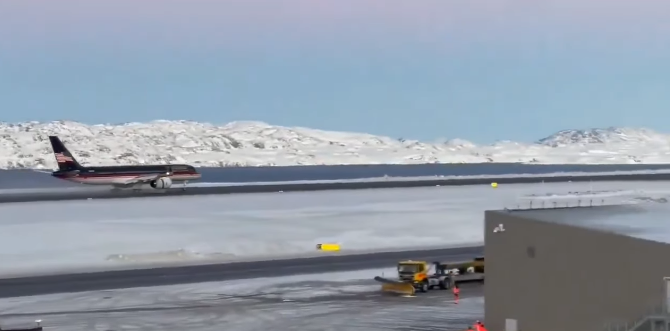
The idea that the United States might forcibly take control of Greenland would have sounded absurd not long ago. Today, it is being discussed seriously by diplomats, analysts, and allies not because Denmark or Greenland want it, but because Washington keeps refusing to take the idea off the table.
After a recent high-level meeting between Greenlandic, Danish, and U.S. officials failed to resolve what Denmark bluntly calls a “fundamental disagreement” over sovereignty, the White House doubled down. President Donald Trump’s position, according to his press secretary, remains unchanged: Greenland should belong to the United States, in the name of national security.
That statement alone should alarm every U.S. ally.
Greenland is not an unclaimed strategic asset. It is an autonomous territory within the Kingdom of Denmark, whose people have repeatedly rejected any notion of being bought, sold, or transferred. Treating it as a negotiable commodity undermines not only Danish sovereignty, but the very rules that bind Western alliances together.
Denmark and its European partners have responded cautiously but firmly, sending additional troops to Greenland to signal both resolve and commitment to Arctic security. This is not saber-rattling so much as reassurance to Greenlanders, to Europe, and to themselves that borders still matter among allies.
Behind closed doors, however, contingency planning is clearly underway. Most experts still believe an actual U.S. invasion or annexation remains unlikely. But the fact that it is even being planned for tells us how deeply unsettling Washington’s posture has become.
If the unthinkable did happen, Europe’s options would be grim and limited.
No one seriously believes Europe could “sanction” the United States in the way it sanctioned Russia. The economic and military imbalance is simply too large. As Canadian analyst David Perry points out, the U.S. can impose tariffs precisely because it has power; trying to mirror that power would likely hurt Europe more than Washington.
That leaves targeted, symbolic, and asymmetric responses.
Trade measures are already being quietly discussed. The European Parliament is debating whether to delay implementation of a controversial EU–U.S. trade deal, partly as a signal of displeasure. More aggressive still would be invoking the EU’s anti-coercion instrument the so-called “trade bazooka” a legal tool designed to punish economic intimidation.
Using it over Greenland would be legally creative and politically explosive. But as one analyst dryly noted, EU lawyers have become very good at creative lawyering.
If Europe does choose retaliation, the most realistic pressure point is not soybeans or steel it is Silicon Valley.
Targeting U.S. tech giants through fines, bans, or stricter regulation would hit economic and political interests close to the Trump administration, while limiting immediate damage to European industry. It would also directly challenge Washington’s long-standing complaints that Europe “attacks” American companies through digital taxes and content rules.
Such measures would be painful, disruptive, and controversial but not unprecedented. Europe’s rapid disengagement from Russian gas after the invasion of Ukraine once seemed impossible. Political will made it happen.
Decoupling from U.S. tech would be messy, but it is conceivable if Europe decided that sovereignty and credibility mattered more than convenience.
A hostile U.S. takeover of Greenland would not just strain NATO it would effectively end it.
There is no clause in NATO’s founding treaty for what happens when one member threatens or seizes the territory of another. The alliance was built to anchor the U.S. to European security, not to protect Europe from the U.S.
That structural reality leaves allies with no military mechanism to respond inside NATO itself. At most, European countries could reduce or close U.S. bases on their soil a dramatic move that would further fracture transatlantic defence cooperation.
For Canada, the implications would be existential. A U.S. annexation of Greenland would force Ottawa to rethink its entire Arctic posture, potentially even decoupling from NORAD a move that would take years and require massive increases in defence spending. Some estimates suggest levels far beyond even NATO’s controversial five per cent GDP target.
The greatest danger here may not be invasion, but normalization.
When the leader of the world’s most powerful democracy openly treats allied territory as something to be acquired, the moral distinction between “us” and “them” erodes. It becomes harder to condemn territorial aggression elsewhere when it is casually entertained at home.
As one analyst warned, retaliatory “nuclear options” economic or political are risky precisely because once used, they cannot be taken back. If they fail, everyone loses leverage and credibility.
That is why Europe, Canada, and Denmark are likely to keep hoping this crisis remains hypothetical. But hope is not a strategy.
Greenland is not for sale. And if the West cannot agree on that simple principle, then its alliances are already weaker than they appear.


![Three smiling women sit on a colorful padded floor, posing with a large sign that reads Canada Child Benefit and its French translation, in a community setting with a pillow saying This Classroom Runs on Kindness nearby.]','Three women pose for a group photo indoors, holding a white board about the Canada Child Benefit and its French equivalent, with colorful circles in the design and a kindness-themed cushion nearby.'] }``` Wait formatting wrong. We must provide proper JSON. Let's craft properly. Provide 5 options. Ensure no stray quotes. Let's produce proper JSON. Use single quotes in descriptions? Must be double quotes. I'll provide array of strings. Ensure no stray characters. Let's do. } For safety. Let's output.} Let's craft final.} Wait earlier included typos. Let's deliver.]]>](https://www.thesouthasiajournal.com/wp-content/uploads/2026/07/12-2-390x220.jpg)