Pablo Rodriguez’s Resignation Exposes a Deeper Crisis Inside Quebec’s Liberal Party
Abdur Rahman Khan
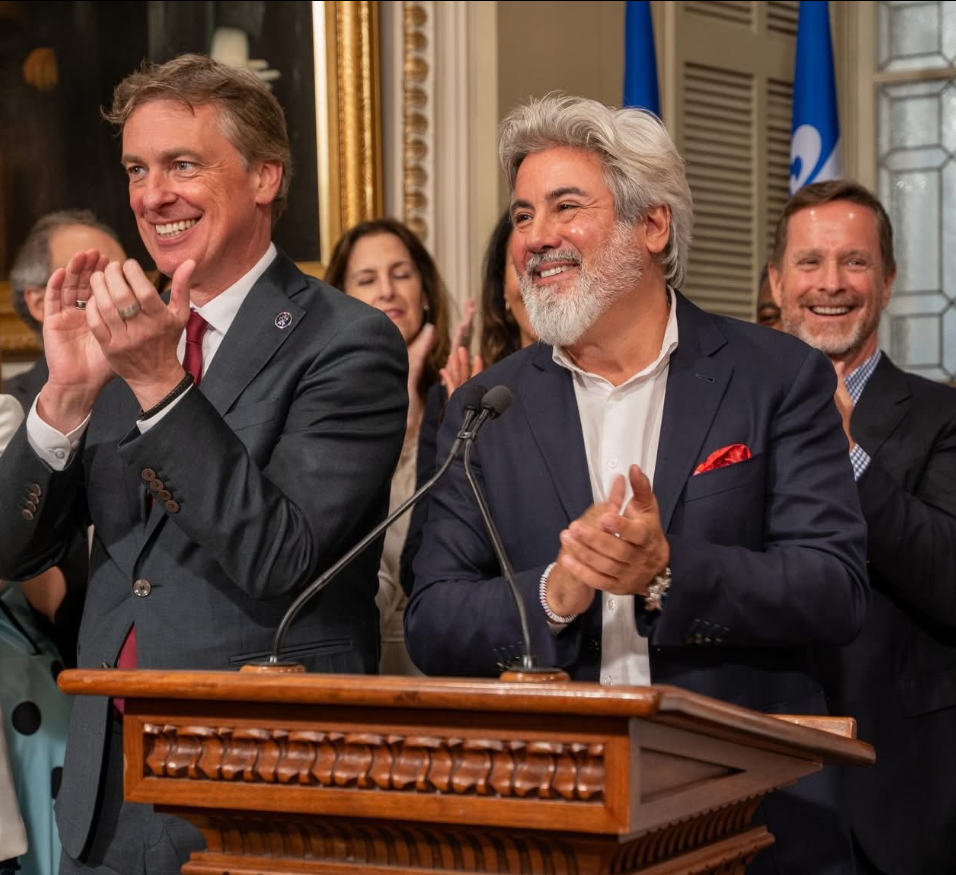
Pablo Rodriguez did not just resign as leader of the Quebec Liberal Party this week; his exit laid bare a party still struggling to regain its footing after years in the political wilderness. The controversy that consumed his short leadership has become a stark reminder that credibility, once lost, is extraordinarily hard to rebuild.
Rodriguez came into provincial politics with a clear mission. After a long career in federal cabinet, he presented himself as the experienced hand who could steady the Liberals, unite their factions, and offer Quebecers a strong alternative to both the sovereigntist Parti Québécois and the fatigued Coalition Avenir Québec. He framed his leadership as a bulwark against another independence referendum, warning that only the Liberals could prevent Quebec from returning to that divisive debate.
But that message never had a chance to take root.
Instead, Rodriguez’s leadership has been defined by allegations of vote-buying and reimbursed donations during the very race that brought him to power. The claims that donors to his campaign may have received envelopes of cash to reimburse their contributions strike at the heart of Quebec’s strict election financing laws and, more importantly, at public trust. Even though Rodriguez’s campaign has denied he knew anything about such practices, the damage was already done.
In politics, perception often matters as much as proof. Once Quebec’s anti-corruption police confirmed they had opened a criminal investigation into the party, the pressure became unbearable. Prominent Liberals began to say out loud what many were likely thinking in private: that the party could not afford to go into the next election under a cloud of suspicion.
Rodriguez tried to hold the line. He welcomed investigations, insisted he had nothing to hide, and even called in a retired judge to review the allegations. But leadership is as much about controlling the narrative as it is about policy or experience, and on that front, he lost control. Every new revelation, every leaked text message, and every internal dispute reinforced the sense of a party in chaos.
The turmoil was not limited to the leadership race. Internal conflicts including the explosive expulsion of former parliamentary leader Marwah Rizqy and the removal of another MNA amid an ethics investigation painted a picture of a caucus at war with itself. For voters already skeptical of the Liberals’ ability to govern, these episodes only confirmed old doubts.
Rodriguez’s resignation now forces the party to confront uncomfortable questions. Who can credibly lead a renewal? Can the Liberals present themselves as a clean, stable alternative when their recent history suggests otherwise? And perhaps most importantly, do Quebecers still see a place for the Liberals in a political landscape increasingly dominated by the PQ and a weakened but still present CAQ?
Potential successors like Charles Milliard and Karl Blackburn may see opportunity in the crisis, but they will inherit a party deeply bruised and running out of time. With less than a year before Quebecers head to the polls, any new leader will have to rebuild trust at breakneck speed no small task in a province where political scandals are not easily forgotten.
In the end, Pablo Rodriguez may be remembered less for what he tried to do than for what his downfall revealed. His resignation is not just the story of one leader undone by allegations; it is a warning sign that the Quebec Liberal Party’s problems run far deeper than any single individual. Whether the party can finally confront those problems and convince voters it deserves another chance remains very much an open question.