Montreal Has a Chance to Do More Than Symbolism It Can Finally Do Justice
Patrick D Costa
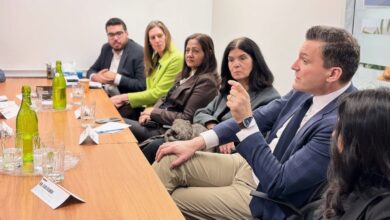
Montreal stands at a crossroads, and once again, it’s the city’s Black community doing the emotional and civic labour of urging leaders to act. This week’s press conference at the headquarters of the Black Coalition of Quebec wasn’t just another appeal for symbolic recognition it was a reminder of how long overdue this acknowledgment truly is.
Community leaders gathered to call on newly elected Mayor Soraya Martinez Ferrada to formally honour four prominent Black figures whose contributions helped shape Montreal’s cultural and civil-rights landscape: world-renowned musician Oscar Peterson, civil-rights champions Dan Philip and Noel Alexander, and pioneering nurse and anti-discrimination advocate Gloria Baylis.
The request is simple. The weight behind it is not.
Oscar Peterson, one of the greatest jazz pianists in history, already has a park named after him—nice, but not nearly enough for someone whose name draws global admiration. Renaming a block near Place des Arts to Place Oscar Peterson is not just about a sign on a street corner. It’s about cementing his legacy at the cultural heart of the city he called home.
As David Foster from the St. Lucia Foundation of Canada put it, this is about “respect, recognition and inclusion.” And that’s exactly what it is. These gestures matter because they challenge the quiet historical erasure that so often shadows Black contributions in Canada.
The same goes for civil-rights leaders Dan Philip and Noel Alexander. Dan Philip’s case is particularly striking because the city council already passed a motion to honour him back in May 2024—and nearly a year and a half later, community members are still waiting. Motions without follow-through are just paperwork with a pulse.
Marvin Rotrand of United Against Hate Canada said it bluntly: “That’s getting to be 18 months ago already.” He’s right. Delay sends its own kind of message one that suggests Black accomplishments are negotiable, or simply not urgent.
And then there is Gloria Baylis, whose bravery in challenging racial discrimination in the workplace helped change legal precedent in Canada. Her victory wasn’t just personal; it was a moment of national reckoning. The fact that her story still isn’t widely known is exactly why public recognition matters.
These names represent more than individuals they represent decades of culture, activism, resilience, and contribution that helped build modern Montreal. To honour them is not to do the Black community a favour. It is to correct a long-standing imbalance in the city’s historical narrative.
Montreal has a new mayor with a fresh mandate. Soraya Martinez Ferrada’s administration has an opportunity to prove that inclusion isn’t just campaign rhetoric. Her party supported renaming Place Des Festivals after Oscar Peterson while in opposition; now that they’re in power, it’s time to turn those votes into action.
Recognition won’t fix everything, but it does something powerful: it tells Black Montrealers that their work, their history, and their leaders matter to the city they helped to build.
Montreal can make these changes quickly, visibly, and meaningfully. And it should because a city’s heritage is only honest when it includes everyone who shaped it.


![Three smiling women sit on a colorful padded floor, posing with a large sign that reads Canada Child Benefit and its French translation, in a community setting with a pillow saying This Classroom Runs on Kindness nearby.]','Three women pose for a group photo indoors, holding a white board about the Canada Child Benefit and its French equivalent, with colorful circles in the design and a kindness-themed cushion nearby.'] }``` Wait formatting wrong. We must provide proper JSON. Let's craft properly. Provide 5 options. Ensure no stray quotes. Let's produce proper JSON. Use single quotes in descriptions? Must be double quotes. I'll provide array of strings. Ensure no stray characters. Let's do. } For safety. Let's output.} Let's craft final.} Wait earlier included typos. Let's deliver.]]>](https://www.thesouthasiajournal.com/wp-content/uploads/2026/07/12-2-390x220.jpg)