If you live in the Alberta riding of Battle River–Crowfoot, you might want to bring a thermos of coffee and a steady hand to the voting booth because this byelection is shaping up to be one of the most unusual political spectacles in recent Canadian memory.
Conservative Leader Pierre Poilievre, fresh from losing his Carleton seat in April’s general election, is staging his political comeback in this traditionally safe Tory riding. On paper, that might seem straightforward. But here’s the twist: more than 200 candidates have thrown their hats into the ring, thanks in large part to a protest group calling itself the Longest Ballot Committee. Their mission? Draw attention to the flaws in Canada’s first-past-the-post electoral system by making ballots so long they become physically unwieldy.
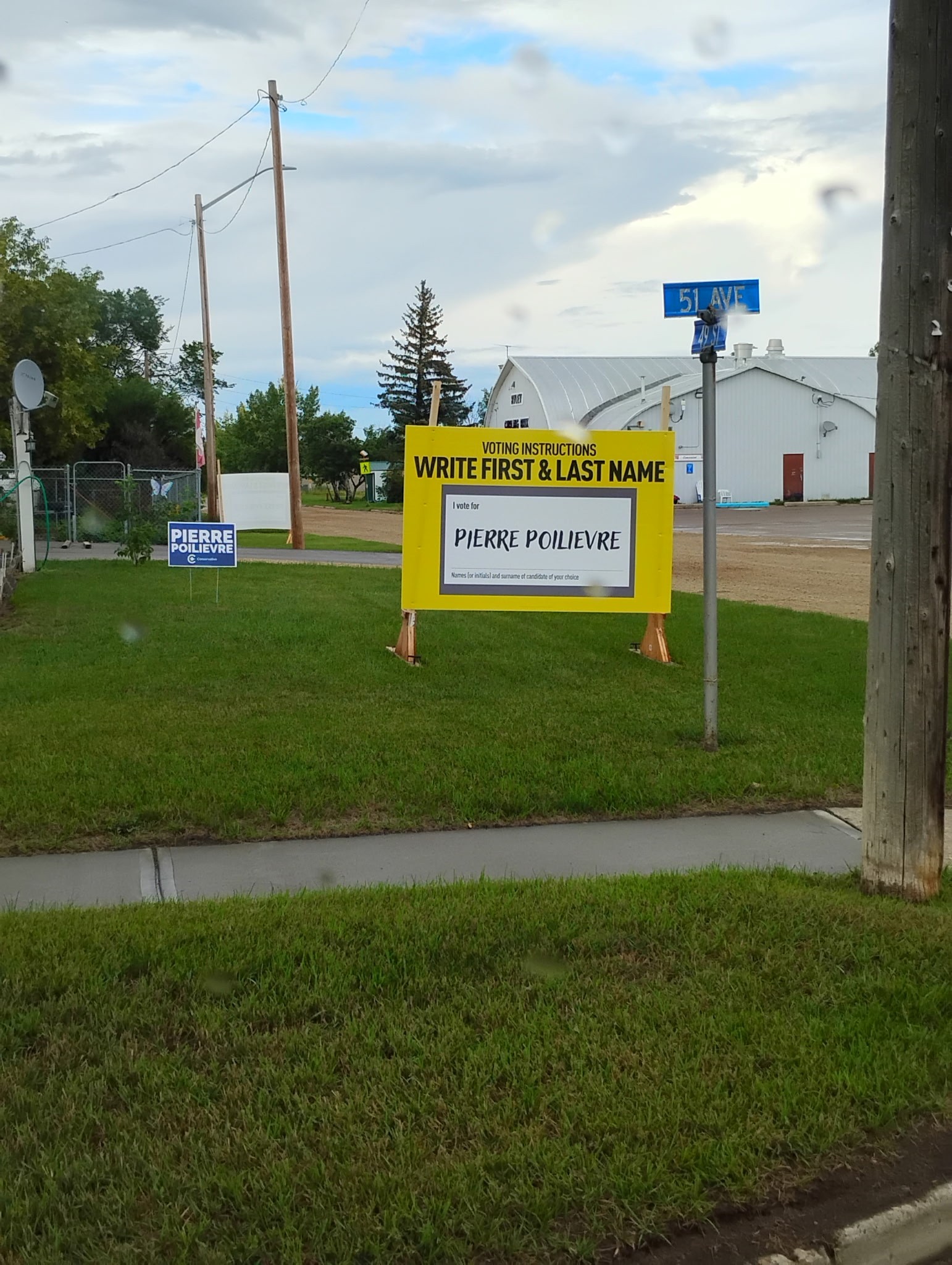
Elections Canada has already adapted. Rather than handing voters a ballot longer than a CVS receipt, they’re requiring people to write out the name of their preferred candidate. It’s a practical solution, but it also adds a quirky layer of complexity that feels almost symbolic of our tangled democratic machinery.
Advance polls will be open from Aug. 8 to 11, 9 a.m. to 9 p.m., and election day is Aug. 18. Voters can also cast their ballot early at the local Elections Canada office or by mail assuming they can remember the exact spelling of the name they’re supporting.
The Longest Ballot Committee isn’t new to this kind of performance politics. They pulled a similar stunt in Poilievre’s former Ottawa riding of Carleton in April, registering 91 candidates and arguably helping contribute to his defeat. This time, they’ve turned the dial up to eleven or rather, to two hundred.
The question is whether this is clever activism or democratic sabotage. On one hand, it sparks conversation about the shortcomings of our voting system. On the other, it risks turning an important election into a novelty act, where voters are too distracted by the circus to focus on actual policy.
Either way, the Battle River–Crowfoot byelection is a reminder that democracy isn’t just about casting a ballot it’s about the shape, length, and even the legibility of that ballot. And in this case, it’s also about whether a political leader can fight his way back to Parliament through a thicket of names, many of which may be there just to prove a point.