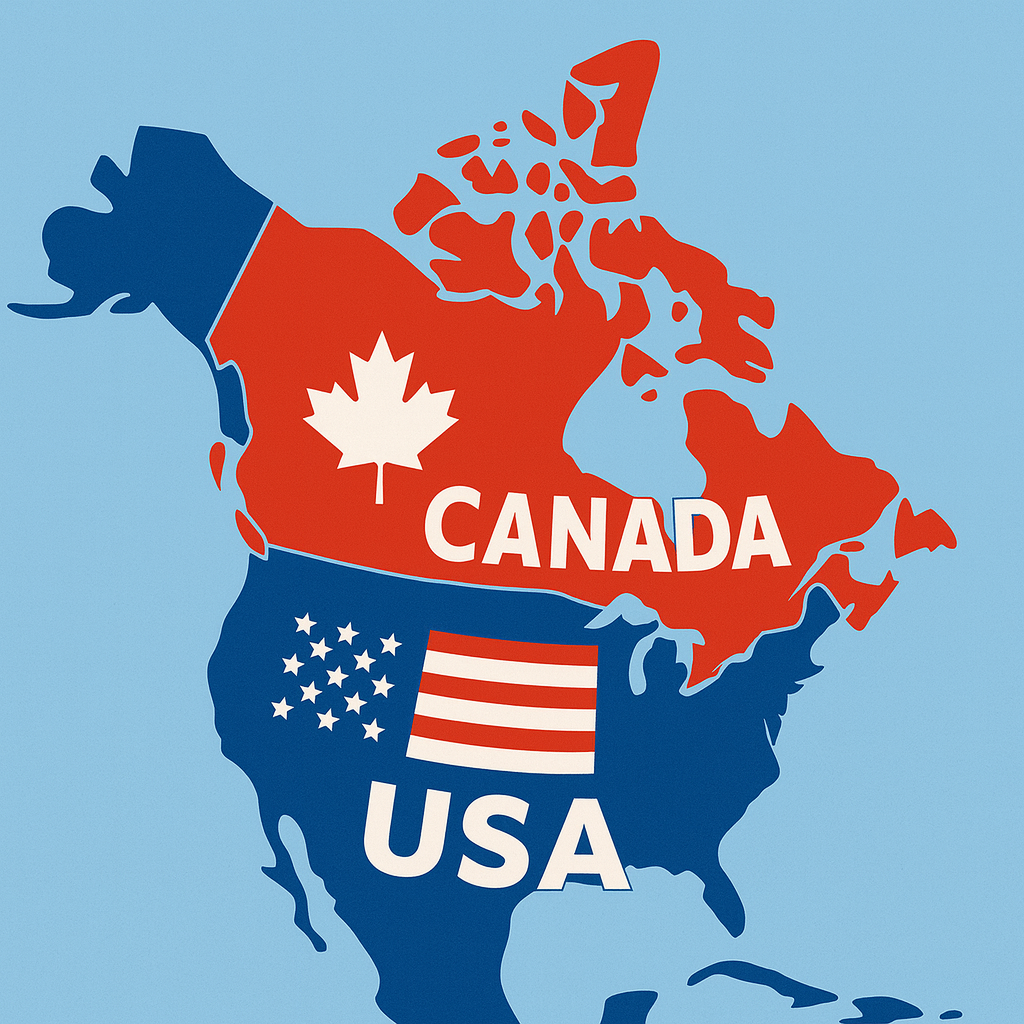
There’s something quietly powerful happening in Canada right now, and it’s showing up in airport terminals, highway border crossings, and family vacation plans. More and more Canadians are saying no thanks to the idea of visiting the United States and frankly, who can blame them?
According to new data from Statistics Canada, trips by Canadians to the U.S. dropped nearly 32% in May 2025 compared to the same time last year. That marks five months in a row of declining travel south of the border. And it’s not just about skipping Florida beaches or New York shopping sprees overall international travel by Canadians is down too, by more than 22% compared to May 2024.
Something has shifted. And it’s not just about airfare or weather. It’s about principle.
Ever since U.S. President Donald Trump reignited a trade war with his barrage of tariffs, Canadian attitudes toward our “closest ally” have cooled drastically. A relationship that once felt stable, almost familial, is now being viewed with skepticism and, in many cases, outright disappointment.
The sting isn’t just economic. It’s emotional. Canadians feel betrayed. After decades of being a loyal neighbour and trade partner, the idea that Canada could be targeted with aggressive tariffs particularly by a country we’ve supported time and again doesn’t sit well. And when trust erodes, so does tourism.
That emotional rift is now reflected in travel behaviour. Canadians are skipping U.S. destinations and turning their attention to Europe, other parts of the world, or even better home.
In fact, while U.S.-bound travel by air and car has plummeted (with automobile trips down a staggering 37.4%), trips to overseas destinations have actually increased by 9.3%. Canadians aren’t staying put they’re just becoming more selective about where their travel dollars go.
There’s a deeper meaning behind this trend, though. It’s not just a boycott it’s a reclamation of identity. Canadians are responding with a renewed sense of patriotism, not just waving flags but putting their money where their values are. We’re seeing this in everything from the increased popularity of local tourism to the success of the new Canada Strong Pass, which offers free or discounted access to parks, museums, and rail travel.
When Prime Minister Mark Carney launched the initiative, calling the trade war “an attack on our economy,” it wasn’t just rhetoric it was a challenge to all Canadians to double down on being Canadian.
It’s working.
This isn’t about nationalism in a narrow sense. It’s about solidarity. A kind of quiet rebellion against policies that devalue partnership, cooperation, and trust. Canadians are making intentional choices, and the U.S. is starting to notice. When American senators come to Ottawa and say, “We miss you,” it’s not just a political soundbite. It’s an acknowledgment that something has been lost perhaps not permanently, but meaningfully.
The good news? Canadians are discovering the beauty of their own backyard, reconnecting with local experiences, and seeking out global destinations that align better with their values.
The world is big. Travel is personal. And in 2025, Canadians are showing that where we go says a lot about who we are and what we’re willing to stand for.