Canada’s Indo-Pacific Pivot: It’s Time to Put Economics First in Our Foreign Policy
Patrick D Costa
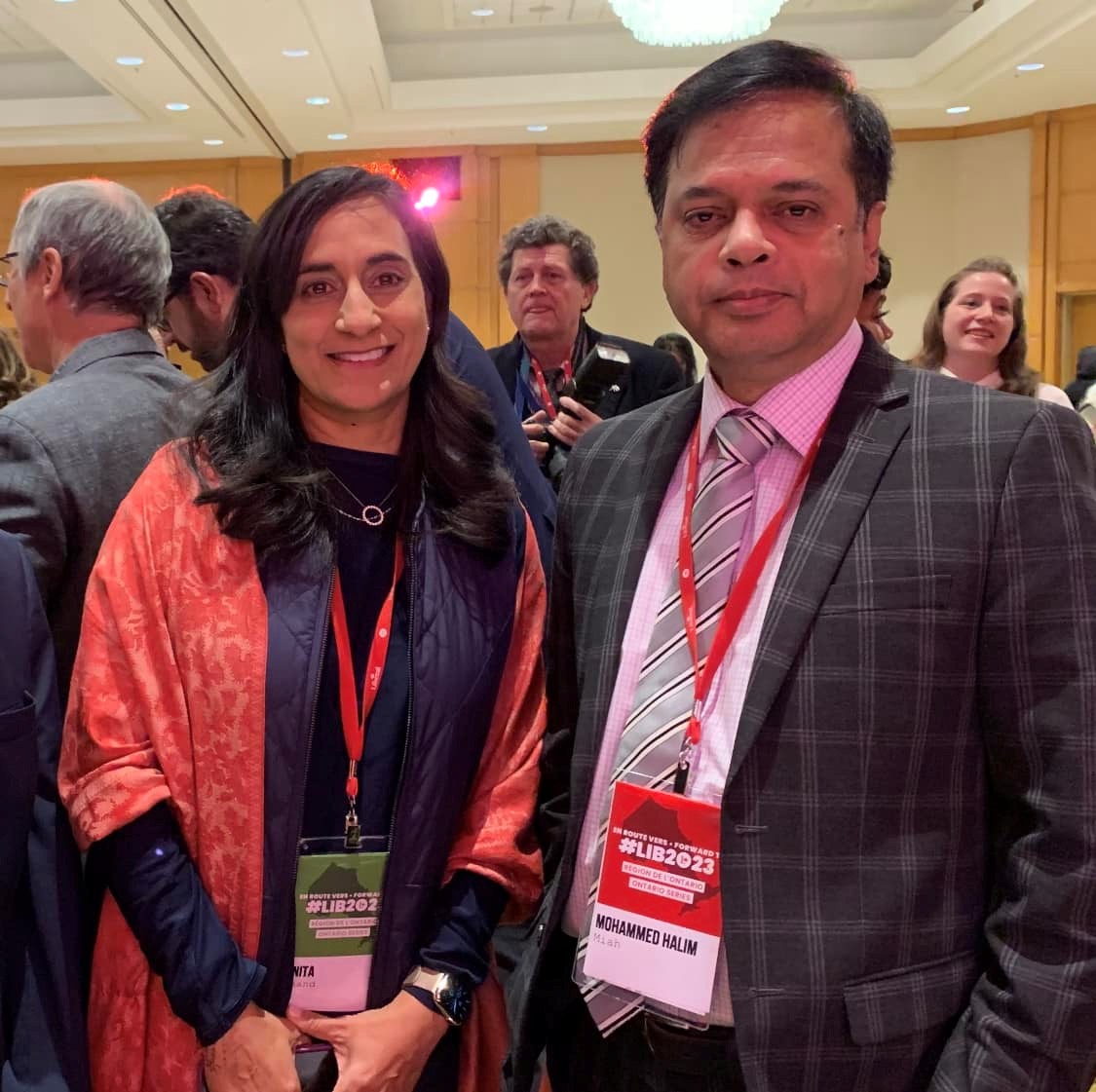
Canada’s foreign policy is undergoing a quiet but unmistakable transformation — and it’s long overdue.
Foreign Affairs Minister Anita Anand’s recent trip to Japan and Malaysia wasn’t just a routine diplomatic visit; it signaled a strategic shift in how Canada intends to engage with the Indo-Pacific. For too long, we’ve clung to idealistic frameworks — heavy on values, light on pragmatism — while our global competitors have raced ahead, forging deals and building influence with a laser-sharp focus on economic and strategic interests. That approach may have made us feel good, but it often made us look “preachy,” as Business Council of Canada head Goldy Hyder put it.
Anand’s message from the region was clear: Canada’s foreign policy will continue to value democracy and human rights, but now, the economy is taking centre stage. And that’s exactly where it should be. In a world of supply chain shocks, geopolitical tensions, and shifting alliances, foreign policy that doesn’t serve domestic economic goals is a luxury we can no longer afford.
Much of this pivot seems tied to a fresh approach under Prime Minister Mark Carney. The former central banker has brought an economist’s clarity to foreign affairs — viewing trade, security, and diplomacy through the lens of Canadian competitiveness. That clarity has been missing in Ottawa for some time.
While Carney has focused much of his early outreach on Europe, Anand’s Indo-Pacific visit sets the stage for deeper engagement with Asia — and more importantly, with India. Relations with New Delhi have been frosty ever since the 2023 killing of Sikh activist Hardeep Singh Nijjar in B.C., which Canada linked to Indian agents. Diplomatic expulsions followed on both sides, and trade talks were frozen.
But the truth is this: Canada cannot afford to leave India out of its Indo-Pacific strategy. As the world’s most populous democracy and a rising economic power, India is too important to sideline. Despite the tension, Canadian businesses have continued to engage with India’s vast market, understanding what our political class has often failed to see — that trade and diplomacy are long games. You can’t simply shut the door every time things get difficult.
Carney’s outreach to Prime Minister Narendra Modi at the G7 summit and the mutual decision to reinstate high commissioners are encouraging first steps. They suggest a desire to move forward without pretending the past didn’t happen. That’s how grown-up diplomacy works.
But we must go further. Canada should press for a clear, mutual understanding with India: no interference in our domestic affairs, and in return, no political legitimization of those who glorify political violence or promote separatism under the guise of free speech. This isn’t about giving in to another country’s demands — it’s about setting ground rules for a functional, respectful partnership.
And let’s be clear: we don’t need a fully-fledged trade deal to expand economic ties. Trade can and does grow in the absence of formal agreements — especially when infrastructure, business connections, and government support systems are in place. Scaling up ports, improving logistics, and investing in trade commissioners on the ground in India could do more in the short term than a stalled free trade agreement.
Still, if the will exists — and the tone improves — a deal is possible. As Vijay Sappani of the Macdonald-Laurier Institute pointed out, with the right political will, a free trade agreement could be signed by the end of the year. That would be a powerful signal to the world that Canada is ready to be more than just a polite participant in the global economy.
The Indo-Pacific is the next frontier. Everyone knows it. The U.S., China, the EU, Australia — they’re all deepening their ties there. Canada must stop dithering and get serious about its place in the region. That starts by recognizing that values matter, but they don’t operate in a vacuum.
If we want to have influence, we need leverage. And in today’s world, that leverage begins with economic strength.
It’s time we played the long game — with open eyes, steady hands, and clear priorities.


![Three smiling women sit on a colorful padded floor, posing with a large sign that reads Canada Child Benefit and its French translation, in a community setting with a pillow saying This Classroom Runs on Kindness nearby.]','Three women pose for a group photo indoors, holding a white board about the Canada Child Benefit and its French equivalent, with colorful circles in the design and a kindness-themed cushion nearby.'] }``` Wait formatting wrong. We must provide proper JSON. Let's craft properly. Provide 5 options. Ensure no stray quotes. Let's produce proper JSON. Use single quotes in descriptions? Must be double quotes. I'll provide array of strings. Ensure no stray characters. Let's do. } For safety. Let's output.} Let's craft final.} Wait earlier included typos. Let's deliver.]]>](https://www.thesouthasiajournal.com/wp-content/uploads/2026/07/12-2-390x220.jpg)