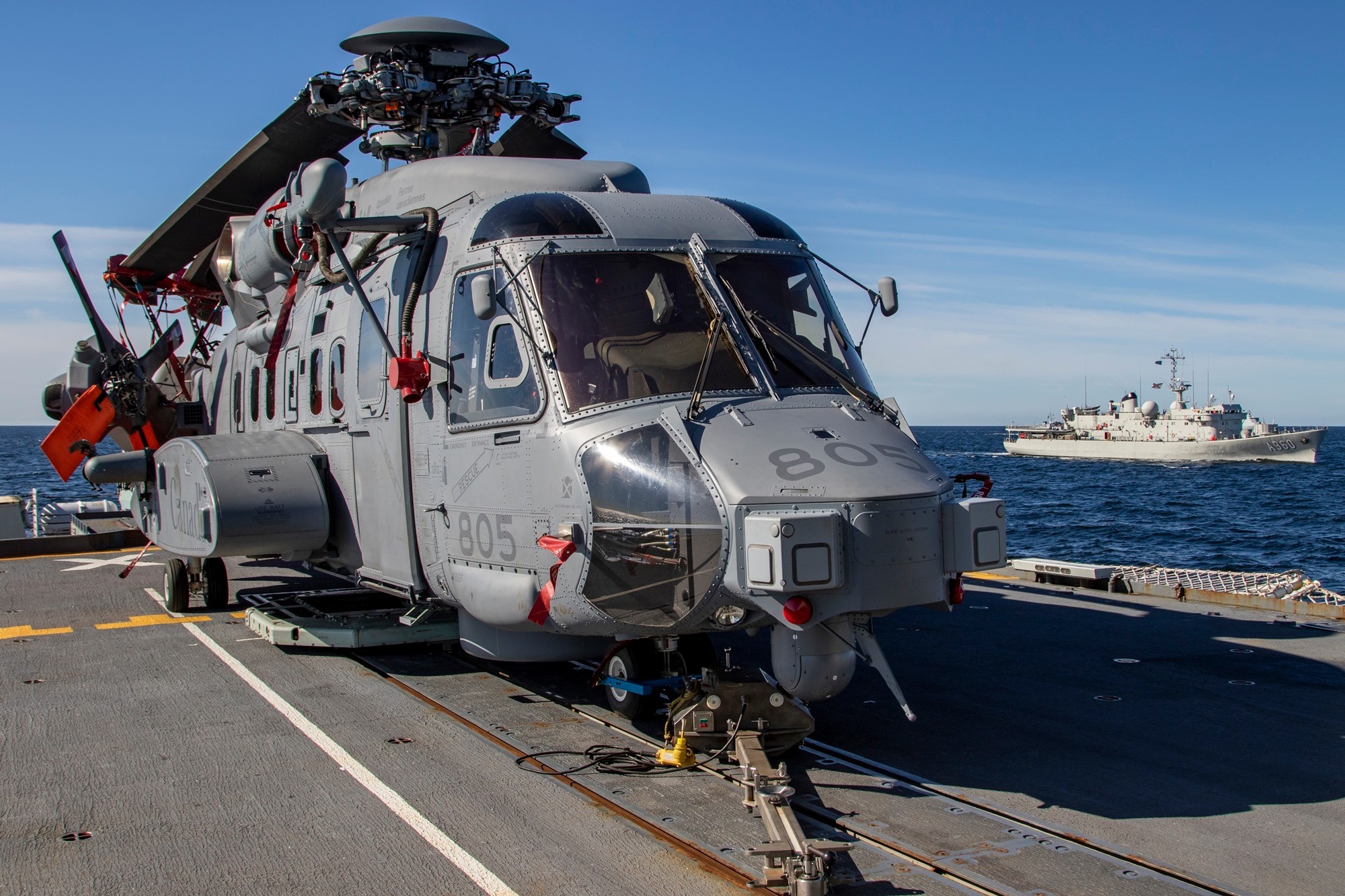
Canada is standing at the edge of a military revolution — one where fighter jets are no longer the sole kings of the sky, and where unmanned combat drones, working in tandem with piloted aircraft, are redefining how wars are fought and won. The Department of National Defence’s recent exploration into acquiring “collaborative combat aircraft” is not just prudent — it’s necessary.
Let’s be clear: the future of air combat will not be dominated solely by elite pilots in expensive jets. It will be shaped by the ability to deploy large swarms of unmanned systems — drones that can jam enemy radar, carry precision weapons, scout hostile territory, and even serve as decoys. These are not science fiction concepts; they are already being tested in countries like the U.S., Australia, and across Europe. Canada cannot afford to be left behind.
The appeal of these systems is obvious. They’re dramatically cheaper than F-35s, which cost tens of millions per unit, and they offer a force multiplier effect — adding mass to the Air Force without breaking the budget. In an era where modern air power demands both quality and quantity, drones fill a gap that no fighter jet, no matter how advanced, can.
Just look at the lessons from the war in Ukraine. Russia’s relentless use of drones and missiles to overwhelm Ukrainian air defenses shows how sheer numbers — even of relatively inexpensive weapons — can have strategic impact. Against that backdrop, deploying a mix of manned and unmanned aircraft becomes more than an option. It becomes a necessity for survivability and effectiveness in future conflict.
Military thinkers and analysts get this. Experts like David Perry of the Canadian Global Affairs Institute emphasize that these systems allow Canada to “keep up” with its closest allies, while giving the Air Force more flexibility and resilience. Daniel Norton of the RAND Corporation, who’s been studying U.S. military modernization for decades, also points out that these drones can do dangerous jobs that no one wants to risk a human pilot for. Why wouldn’t we pursue that?
Still, this isn’t a cheap venture. Early estimates suggest the cost of acquiring a drone fleet could be as high as $16 billion — not exactly pocket change. But compared to the $27.7 billion price tag for 88 F-35s, it begins to look like a bargain. Especially when you consider that only 16 jets have been fully paid for so far.
Of course, there are no off-the-shelf solutions yet. Programs like Boeing’s MQ-28A “Ghost Bat” and Anduril’s YFQ-44A are still in testing. But the groundwork is being laid. If Canada partners with nations already developing these systems, our aerospace sector could also get a seat at the table in producing the next generation of air combat technology.
Yet, this is where we must tread carefully. A recent analysis ruled out purchasing a fully Canadian-made drone fleet, citing cost and capability concerns. That’s fine — but we must ensure our domestic industry is involved in some capacity. Not doing so would be a missed opportunity for innovation and economic growth.
More importantly, the government must act decisively. Lt.-Gen. Jamie Speiser-Blanchet, the new RCAF commander, says the Air Force is already exploring these technologies. That’s encouraging, but exploration needs to turn into action — and soon. Waiting for a “perfect” system that may not arrive until 2030 risks putting Canada behind the curve.
With the federal government reviewing the F-35 purchase plan and a final decision expected by the end of summer, now is the time to think bigger than just stealth fighters. The battlefield is evolving — and if Canada is serious about protecting its skies and contributing meaningfully to allied operations, investing in autonomous combat aircraft must be part of the equation.
Not as a replacement for fighter jets, but as their indispensable wingmen.


![Three smiling women sit on a colorful padded floor, posing with a large sign that reads Canada Child Benefit and its French translation, in a community setting with a pillow saying This Classroom Runs on Kindness nearby.]','Three women pose for a group photo indoors, holding a white board about the Canada Child Benefit and its French equivalent, with colorful circles in the design and a kindness-themed cushion nearby.'] }``` Wait formatting wrong. We must provide proper JSON. Let's craft properly. Provide 5 options. Ensure no stray quotes. Let's produce proper JSON. Use single quotes in descriptions? Must be double quotes. I'll provide array of strings. Ensure no stray characters. Let's do. } For safety. Let's output.} Let's craft final.} Wait earlier included typos. Let's deliver.]]>](https://www.thesouthasiajournal.com/wp-content/uploads/2026/07/12-2-390x220.jpg)