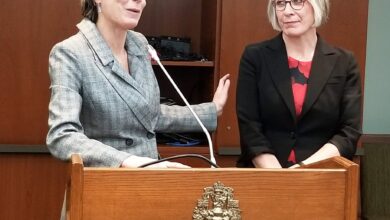
No New Pipelines? Steven Guilbeault’s Pragmatic Pause Could Save Canada From an Energy Misstep
Syed Azam

In the high-stakes tug-of-war between environmental stewardship and economic momentum, Canada’s federal leadership is sending signals as mixed as a Calgary spring forecast. On one side, Prime Minister Mark Carney has opened the door—if only a crack—to the idea of building new pipelines. On the other, newly minted Culture Minister Steven Guilbeault is urging Canadians to pause and take a long, hard look at how we’re using the infrastructure we already have.
Frankly, Guilbeault is onto something.
While Carney is trying to balance pragmatism and national unity with climate targets, Guilbeault’s comments reveal a necessary dose of realism. As the former environment minister, he’s no stranger to the difficult balancing act between reducing emissions and fueling economic growth. His central point: if we’re not even using all of what we’ve built, why rush to build more?
Take the Trans Mountain pipeline, for example. Guilbeault claims less than half of its capacity is being used. Critics immediately challenged that figure, pointing to a 76% utilization rate in late 2024. But even at 76%, that’s still room to grow without laying a single new pipe in the ground. Efficiency—not expansion—might be the smarter path forward, especially when oil demand is projected to peak globally in just a few years.
This isn’t a call for abandoning Canada’s energy sector. It’s a call to be strategic. As Buckley Belanger rightly pointed out, Canada is the third-largest producer of oil and gas globally. But that stature doesn’t require us to keep building without thought. It requires us to build wisely.
Yet, mixed messaging muddies the waters. Carney campaigned on keeping the emissions cap, but according to Alberta Premier Danielle Smith, he offered a different tone behind closed doors. Add to that a push from oil and gas executives—38 CEOs strong—to repeal assessment laws and ditch the emissions cap, and you’ve got a federal government walking a tightrope over a canyon of conflicting interests.
The path forward can’t simply be about appeasing one side over the other. It has to be about long-term sustainability, not just political expediency.
Guilbeault, now overseeing Parks Canada and biodiversity, may no longer hold the climate portfolio, but his voice remains important. It’s refreshing to hear someone in government acknowledge the data-driven projections from the International Energy Agency and the Canada Energy Regulator. We need more of that. Less rhetoric, more numbers. Less reaction, more reflection.
Before we lay down more steel and sink more billions into fossil fuel infrastructure, let’s ask ourselves if it truly serves our future—or just our fears.
Because in the end, building smarter beats building more.