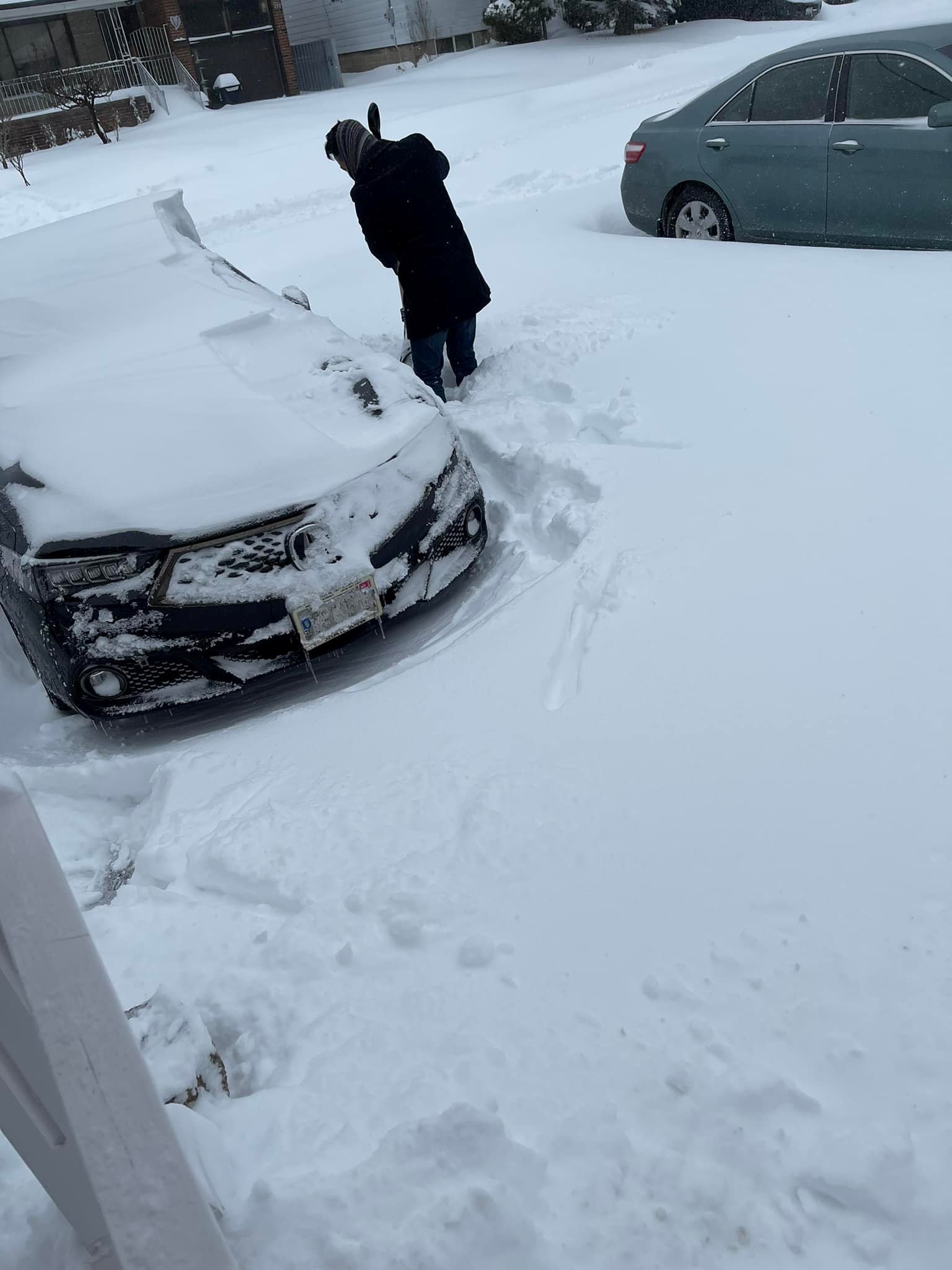
If it feels like déjà vu, that’s because it is. Just as many Canadians were bracing themselves for another soggy Sunday, Mother Nature decided that wasn’t quite enough and rolled out an even messier Monday. Across the country, winter is once again proving that it doesn’t believe in simplicity. Snow, rain, freezing rain sometimes all in the same day are colliding in a way that’s as exhausting as it is disruptive.
Ontario is a prime example of this seasonal confusion. Nearly half the province is already under some form of weather warning, and the list reads like a grab bag of winter misery: freezing rain, winter storms, snow squalls, heavy rainfall. In cities like Toronto, London, Niagara Falls and Kingston, residents aren’t just dealing with wet streets they’re facing the real possibility of flooding, power outages and dangerous travel. Thirty to sixty millimetres of rain paired with winds gusting up to 80 km/h is no small inconvenience, especially when freezing rain is layered on top, threatening ice-coated roads and downed power lines.
What’s particularly unsettling is the escalation. As Sunday wore on, several communities saw their warnings upgraded to orange the level that signals serious risk to safety, infrastructure and daily life. Places like Barrie, Newmarket and Innisfil are now staring down conditions that could linger well into Monday night. For people trying to commute, care for loved ones or simply keep the lights on, this isn’t just “bad weather.” It’s a disruption to normal life.
Northern Ontario isn’t catching a break either. Heavy snow is piling up in areas like Sudbury, Manitoulin Island and Sault Ste. Marie, with some communities potentially seeing up to 40 centimetres. That’s not picturesque winter snowfall it’s the kind that closes highways, strains municipal services and isolates communities.
Quebec is facing its own icy challenge. From Montreal to smaller regions like Papineau and Mont-Laurier, freezing rain warnings are once again forcing people to rethink travel plans and brace for slick sidewalks and unstable power. Meanwhile, heavier snow farther north could stretch into Tuesday, reinforcing the sense that winter isn’t just passing through it’s digging in.
Out east, the Maritimes are preparing for a familiar but no less frustrating mix of snow, ice pellets and freezing rain. New Brunswick and Nova Scotia may not see record-breaking ice totals, but even a few millimetres of freezing rain can be enough to turn roads into skating rinks and routine errands into calculated risks.
British Columbia, too, is seeing extremes. Heavy snowfall in the north and intense rainfall along the coast are creating a dual threat of dangerous travel and potential flooding. When places like Kitimat are already nearing 40 centimetres of snow in a single weekend, it’s hard not to wonder how much more the region can absorb before impacts become severe.
What makes all of this feel especially draining is the unpredictability. Canadians are used to winter, but not necessarily to this constant swing between extremes. One day it’s deep freeze, the next it’s rain and flood watches, followed by snowstorms that erase roads and rail lines. It’s not just inconvenient it’s mentally and physically taxing.
Yes, warnings are being lifted in some areas, like Alberta and Saskatchewan, where extreme cold has eased. But the broader picture remains clear: winter is far from finished, and it’s arriving in waves that demand constant vigilance.
At some point, this stops being just about weather and starts being about resilience of infrastructure, of emergency services, and of people who are tired of planning their lives around forecasts that change by the hour. Winter may be a fact of life in Canada, but weeks like this make it feel less like a season and more like a stress test.