Uncontrolled air pollution causes more than 1,100 premature deaths in Canada each year
Taslima Jamal
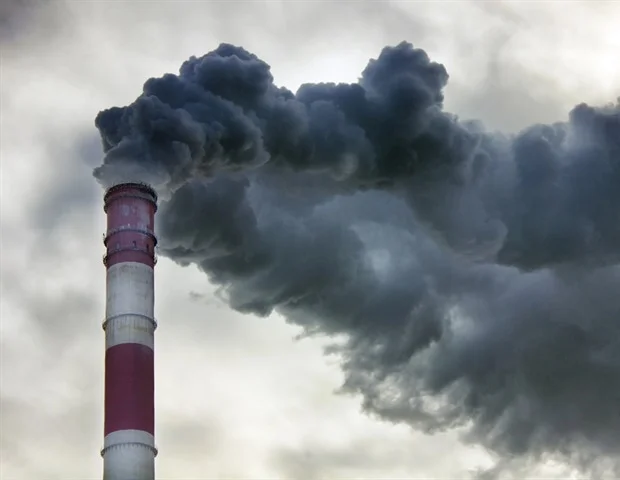
In a first-of-its-kind study in two of Canada’s largest cities, researchers led by McGill found that uncontrolled air pollutants are linked to nearly 1,100 premature deaths each year.
Ultrafine particles (UFP) come mainly from vehicle emissions and industrial activities. Canadian federal and provincial governments do not set concentration limits for UFP as they do for larger fine particles (eg, PM2.5).
Ultrafine particles are extremely small, allowing them to penetrate deep into the lungs and into the bloodstream. There is growing evidence that these pollutants can cause heart and lung disease as well as some types of cancer. However, to date, research has not investigated the effect of UFP on mortality in Canada.
To Wiechenthal, Principal Investigator and Associate Professor, Department of Epidemiology, Biostatistics and Occupational Health, McGill University
High-tech equipment detects serious pollution
The research team tracked air pollution levels from 2001 to 2016 in the Montreal and Toronto areas, home to 1.5 million adults. The researchers used a sophisticated model that combined machine learning methods with ground measurements, land use data and aerial imagery to estimate the number of tiny particles in the air at different times. They then used statistical methods to calculate the relationship between exposure and risk of death.
The results, published in the American Journal of Respiratory and Critical Care Medicine, show that long-term exposure to UFP is associated with a 7.3% increased risk of non-accidental death. The number of deaths from respiratory diseases increased the most, reaching 17.4%, followed by deaths from coronary artery disease, which increased by 9.4%.
Wiesenthal said particle size is important when assessing their health effects.
He added: “Previous studies did not take particle size into account and may have missed or underestimated the serious health risks associated with it.”
Call for fresh air
Environmental regulations have successfully reduced air pollution in North America, but ultrafine particles are slipping through the regulatory cracks, researchers say. In New York, as PM2.5 levels decreased, UFP levels increased.
“Our study shows a clear link between long-term exposure to UFP and increased risk of death, emphasizing the urgent need for regulatory action targeting these particles,” said Wiechenthal. “As urban areas grow, addressing air pollution is increasingly important to the health and well-being of city dwellers.”
The study was a collaboration between McGill University, the University of Toronto, Carleton University, the University of Ottawa, Health Canada and Statistics Canada and was funded by the US Institute for Health Effects.
Journal Reference:
Lloyd, M., et al. (2024). Airborne nanoparticle concentrations increase mortality risk in two of Canada’s largest cities. American Journal of Respiratory and Critical Care Medicine. doi.org/10.1164/rccm.202311-2013oc