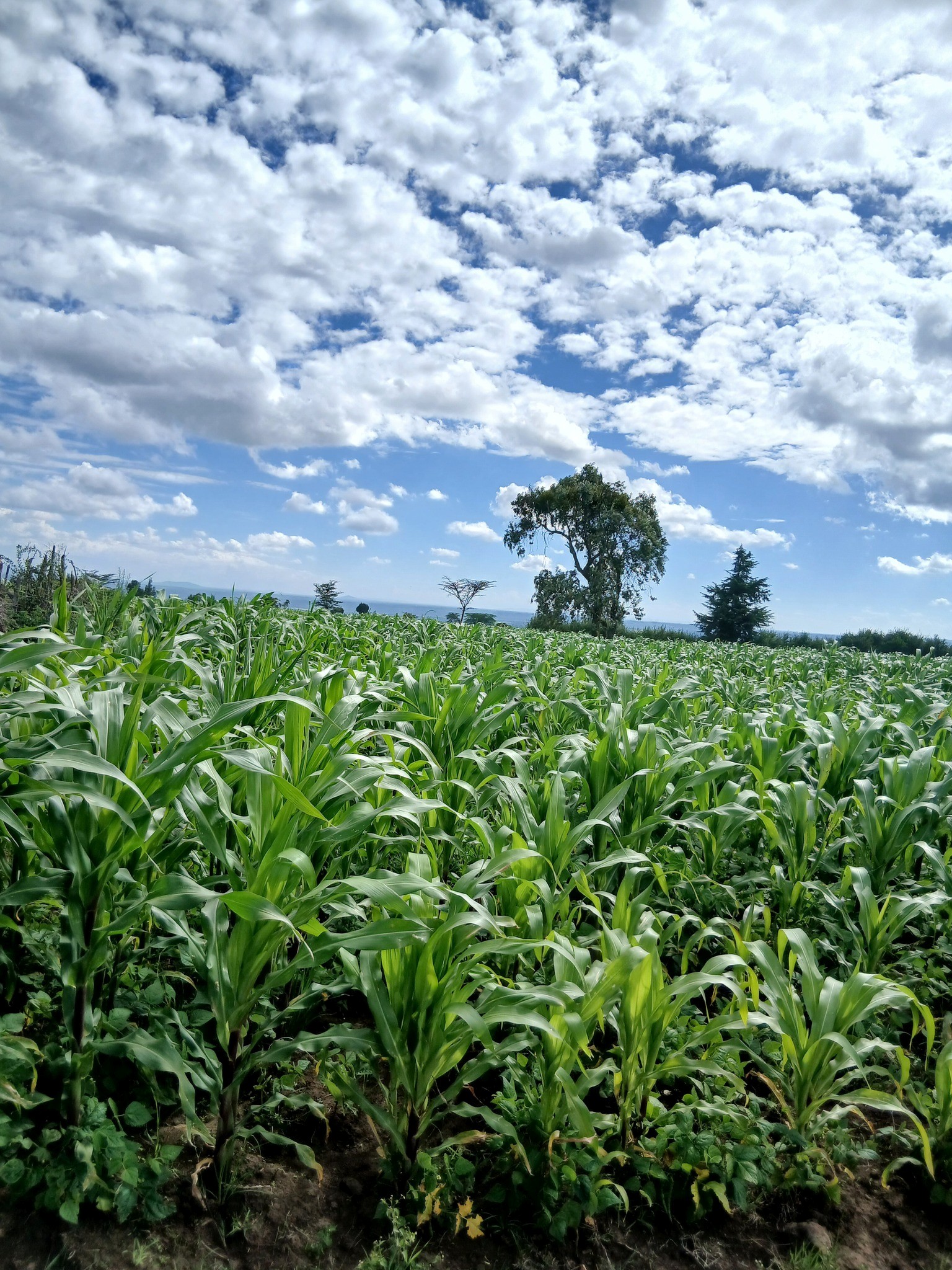
Farming has always been a gamble, but this year it feels like the odds are stacked higher than ever.
Take the story of Korey Peters from Randolph, Manitoba. After a rain-induced break, he’s back in the fields, pushing through his wheat harvest. On paper, things looked promising. In reality, he says, the crop isn’t what he had hoped for. That’s farming in a nutshell you don’t know what you’ve got until the combine rolls. And when it comes up short, there’s no do-over. You take what the land gives, because, in his words, “It’s Mother Nature’s decision.”
The problem is that Mother Nature has been wildly unpredictable this season. Some areas have seen too much rain, others too little. In fact, the RM of West Interlake had to declare an agricultural emergency due to drought, while other farmers in the province battled late-season hailstorms and even an early frost. It’s a cruel irony: some farmers are flooded out while others are praying for a single decent rain.
And as if weather weren’t enough, international politics adds another layer of stress. China slapped a 75.8% tariff on Canadian canola, effectively cutting into one of our most important export markets. For farmers, that isn’t just a line in a trade report it’s money left on the table, crops sitting unsold in bins, and a knot of uncertainty in every business decision. Peters admits he was lucky to pre-sell some of his canola before the tariff hit, but the rest will sit waiting for the right market window. That’s not strategy; that’s survival.
Critics might say, “Well, just stop growing canola then.” But that shows a lack of understanding of how farms actually work. Crop rotation isn’t optional it’s a biological necessity to maintain soil health and prevent disease. Farmers can’t just swap out one crop for another the way you’d change a menu item at a restaurant.
This year’s harvest is a reminder that farming is more than just planting seeds and waiting for payday. It’s about managing risk at every level: weather, markets, trade wars, and timing. For those of us who aren’t on the land, it’s easy to forget how fragile the system is that puts food on our tables.
If anything, the struggles of farmers like Peters should make us pause. We depend on them more than we realize, yet we leave them at the mercy of forces they can’t control from the skies above to the decisions made in distant boardrooms and government offices.
Maybe it’s time we start valuing farming not just as an industry, but as a lifeline because that’s exactly what it is.
![Three smiling women sit on a colorful padded floor, posing with a large sign that reads Canada Child Benefit and its French translation, in a community setting with a pillow saying This Classroom Runs on Kindness nearby.]','Three women pose for a group photo indoors, holding a white board about the Canada Child Benefit and its French equivalent, with colorful circles in the design and a kindness-themed cushion nearby.'] }``` Wait formatting wrong. We must provide proper JSON. Let's craft properly. Provide 5 options. Ensure no stray quotes. Let's produce proper JSON. Use single quotes in descriptions? Must be double quotes. I'll provide array of strings. Ensure no stray characters. Let's do. } For safety. Let's output.} Let's craft final.} Wait earlier included typos. Let's deliver.]]>](https://www.thesouthasiajournal.com/wp-content/uploads/2026/07/12-2-390x220.jpg)