The people’s desired demand from the interim government is reform. The government is also committed to reform. Whether all the people are satisfied with the reform measures – that is a big question! Whether the government is also able to properly implement the reforms it wants – is also a matter of consideration. In the discussions that are going on about the outline of the reform, there are arguments and debates about changes in policies, procedures, and laws. But the question is, what steps have been taken to reform those who will implement the reformed rules, procedures, and laws and among those who will implement them? Even a good law can be misused by bad people. Again, a good person has many ways to avoid evil. Preventing and preventing – this is applicable to very good people and absolutely bad people. But does the government realize or take steps to further develop the good qualities of those who have some good and some bad things in them?
You can get a big job by memorizing guidebooks, you can become a good teacher by practicing notes and guides, you can become an Islamic scholar with a beautiful voice and superficial knowledge, but it is difficult to become a human being if the lessons of values and morality are not in your heart. To make people human, you have to return to your own religion and develop a reading habit. Sustainable change is not possible by reforming laws and changing policies alone. It is necessary to create golden people to build a golden country. It is possible to get people with certificates in schools and colleges just by reading textbooks, but for idealistic people, you have to flock to history and literature. If there is no lesson in morality in family education, if the corrupt are not hated socially, and if honest officers are not rewarded by the state, then honest people will not be found. If the state fails to produce good people, then all the reforms are for two days. On the third day, the gourd will return to that gourd!
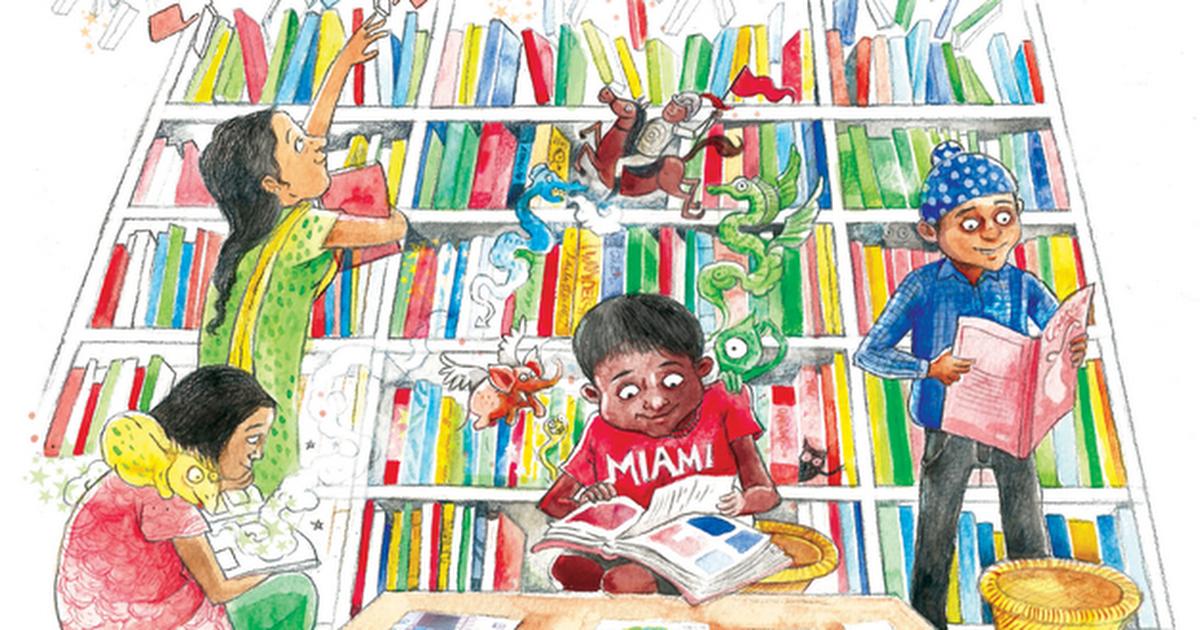
The government needs to have statistics on reader attendance in all public libraries in the country. It is necessary to know whether anyone is reading books bought with an investment of hundreds of crores of taka or whether knowledge acquisition is limited to turning the pages of guide books and magazines for jobs. How are students traveling to school and college libraries or are students scurrying around in classes and private ones? Are any library movement activities going on at the upazila level, union level or village level? If people do not read books, it is difficult to become an enlightened person. If the eyes do not fall on the light that is written in black letters between two walls, the brain will not get food for thought. There is no place for knowledge or books in the list of resources that has been given to people! So many books have been included in our education curriculum or by the own decisions of some institutions that it is creating a fear of education among students and benefiting the writers and publishers of guide books. However, it was necessary to create an environment for children to read fun rhymes, poems and stories in this opportunity to form the brain. Our unplanned education system makes children of 4-6 years old memorize the names of all the capitals, currencies and legislatures of the world! The government should pay attention to these educational institutions that are springing up in rented buildings in cities and villages. At the same time, these warehouses for selling education need to be closed. It is debatable what kind of generation will be raised by studying in educational institutions that do not have spacious courtyards or playgrounds for students to play.
There are also many schools and colleges where the libraries are locked. The bodies of the books are covered in dust. Students do not know that some books have to be read outside the classroom! It is almost impossible to create humane people if students are not told that class texts are a small field of knowledge and books about the outside world are the realm of knowledge. Most of this college vs. college student fight, student vs. crowd chase would not exist if students could be directed to the library. The library is the center of human development. The country is sinking into addiction, the generation is losing its way – so many complaints but have we been able to provide an alternative to students and youth? The fragility of libraries in upazila cities should shame us as a nation. It is safe to say that there are no libraries under government and private patronage at the union level. In addition, the occupation of playgrounds in various ways proves our ethnic cowardice. Where will the youth spend their leisure time? That is mobile. The result is open!
Just a decade and a half ago, the habit of reading in villages, the library movement, the culture of reading books in every home, and the discussion of books between the old and the young are now absent. In those days, the habit of hiding novels in the books of the class is still intact. Can you imagine that among today’s students? There is something else hidden in their books too, and that is mobile! There is no discussion of Rabindra-Nazrul, Samaresh-Humayun in every household in Bengal. Even the sound of reciting the Holy Quran from Muslim families in the morning is now completely absent. Mobile-Internet is completely destroying many of our good habits. It is very difficult to teach a 100-page book to a generation that sits with its mobile all day, spends its time on Facebook-WhatsApp, shorts-reels. The interest and patience required for reading books are also not seen. However, without reading books, the beauty of character, sense of humanity, and morality will not develop. In the history of human civilization, especially since the Greek civilization, the practice of knowledge and science has played a key role in each of the human civilizations that have developed. History shows that in 323 BC, the famous library in Alexandria served as the center of knowledge in the ancient world. In addition, in the Muslim Empire, the Persian and Indus Empires, the Roman and Egyptian Empires, libraries were the center of national development and reading was the field of human excellence.
If the desired reform is to be sustainable, the library movement must be spread nationwide. Reading books must be turned into a movement through government and private initiatives. For this, government sponsorship, awareness campaigns, and institutions similar to the World Literature Center must be established nationwide. If the habit of reading and knowledge cannot be increased among students, it is difficult to develop golden people for Sonar Bangla. There is no shortage of educated people with certificates in our country, but the lack of humane, liberal, non-sectarian, tolerant, honest, moral and good-natured people makes us suffer greatly. Due to the absence of positivity among people, small crises create large-scale breakdowns. Such a commotion is created over small issues that create a provocative and destructive situation. When people turn to books, they will develop a sense of judgment to differentiate between good and bad, right and wrong. This will reduce the spread of rumors, the promotion of religious extremism, or the promotion of uninteresting topics. People in the developed world are studying with their minds engrossed in books in the open spaces of bus stops, railways, and airports. Passengers reading books while traveling in train compartments – this scene is very common abroad. Their position is much lower than ours in terms of civilization and politeness. Without contact with books, people are not aware of their responsibilities. Nationalism and patriotism are not awakened. The more a nation reads, the less crime it has. Even students can discover themselves in a new way.
The interim government must take initiatives to accelerate the library movement for the success of the reforms. If a culture of reading cannot be developed in cities, towns, ports, educational institutions, offices, mosques and families, it is not possible to develop a moral generation and conscious citizens. There is no alternative to reading. The only alternative to knowledge is knowledge and books, the greater source of knowledge. For the overall development of a nation, books, like daily necessities, must be made a daily companion. For this, good writers must be encouraged to write, publishers must be given incentives to publish good books and readers must be made interested in buying books. Instead of giving mobile phones to children, books with interesting stories and poems should be given. Even the knowledge of how children-citizens will benefit from using mobile-internet is also contained in books. Instead of using modern equipment, we are misusing it more. Books should be given as gifts at annual sports and cultural events of schools and colleges. Good books should be in the gift bags at any festival. Initiatives should be taken to introduce world literature to the youth. Religious institutions should be turned into library-centric places of worship. Children in families who grow up seeing their parents and elder family members reading books become bookworms. This is very important for the national development of the nation. The nation has seen the misuse of mobile phones for decades and is paying the price for it. Now it is the turn of the state to provide books to the citizens and instill the culture of reading habits. If necessary, the reading habit should be imposed. A nation that reads does not lose its way. All kinds of reforms will fail if the people are not aware. The only antidote to make the people aware is reading habits. Good books can change the reader’s philosophy of life. Wise people have said that there is no friend more useful than books. Just as a student has fewer enemies, so does his pride and arrogance. To get rid of sorrow, one has to create a world in the mind and that world can be created through a relationship with books. To become a human being, books must be kept as companions in the schoolroom. For one who does not have knowledge, wealth can be his enemy and can even destroy him. Because knowledge is necessary for the proper use of resources.

![Three smiling women sit on a colorful padded floor, posing with a large sign that reads Canada Child Benefit and its French translation, in a community setting with a pillow saying This Classroom Runs on Kindness nearby.]','Three women pose for a group photo indoors, holding a white board about the Canada Child Benefit and its French equivalent, with colorful circles in the design and a kindness-themed cushion nearby.'] }``` Wait formatting wrong. We must provide proper JSON. Let's craft properly. Provide 5 options. Ensure no stray quotes. Let's produce proper JSON. Use single quotes in descriptions? Must be double quotes. I'll provide array of strings. Ensure no stray characters. Let's do. } For safety. Let's output.} Let's craft final.} Wait earlier included typos. Let's deliver.]]>](https://www.thesouthasiajournal.com/wp-content/uploads/2026/07/12-2-390x220.jpg)