LeBlanc Rejects Claims of “Traitors” in Parliament as Foreign Interference Inquiry Continues
Sathia Kumar
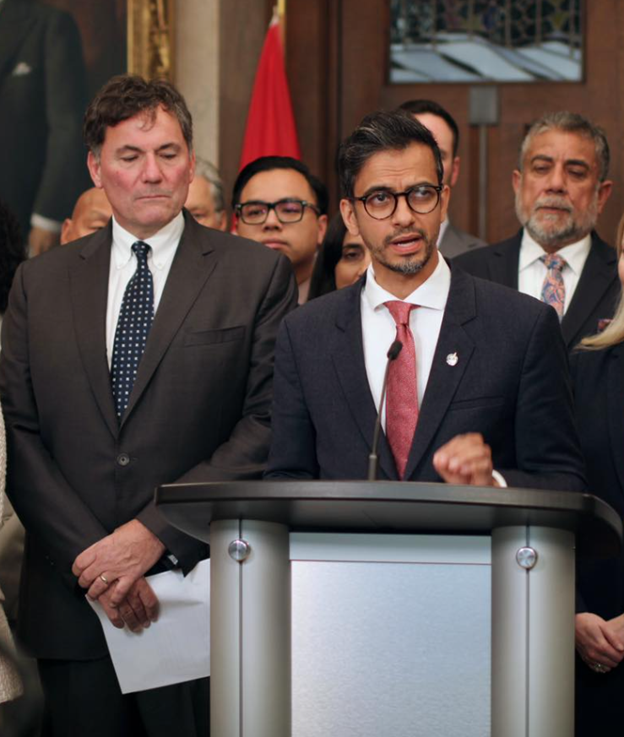
Canada’s Public Safety Minister Dominic LeBlanc has sharply pushed back against suggestions that traitors or treasonous individuals are currently sitting in Parliament, calling such claims irresponsible and unsupported by evidence.
Testifying at a public hearing of the federal inquiry into foreign interference, LeBlanc said language implying treason goes far beyond what intelligence and law enforcement findings actually show. He stressed that criminal accusations must be grounded in evidence gathered by police and security agencies something he said is not present in this case.
The controversy stems from a June report by the National Security and Intelligence Committee of Parliamentarians, known as NSICOP. The committee, made up of MPs and senators with top-level security clearance, stated that some parliamentarians may have been “semi-witting or witting” participants in efforts by foreign states to influence Canadian politics. While the report stopped short of naming individuals, its vague but blunt wording raised public concern that knowingly compromised politicians could still be active.
Appearing before the inquiry, Nathalie Drouin, the prime minister’s national security and intelligence adviser, said the suggestion that MPs may have acted treasonously made her deeply uncomfortable. After reviewing the underlying intelligence, she testified that she found no evidence of members of Parliament engaging in espionage, sabotage, or other actions that threatened Canada’s national security.
LeBlanc told the inquiry that Drouin’s assessment aligns with the intelligence briefings he has reviewed in his role as minister.
Beyond concerns about individual lawmakers, the NSICOP report also highlighted weaknesses in political party nomination processes, warning that foreign actors could exploit loopholes to support preferred candidates. In response, Elections Canada has floated several reforms, including prohibiting non-citizens from participating in nomination contests, requiring parties to publicly disclose their nomination rules, and explicitly banning practices such as voting more than once.
LeBlanc said the government is examining these recommendations urgently and with an aim toward constructive reform. However, he emphasized that party leaders ultimately retain the authority to decide whether a nominated candidate is allowed to run in a general election a responsibility he described as a key accountability mechanism.
The inquiry also heard from Katie Telford, chief of staff to Prime Minister Justin Trudeau, who cautioned against assuming there is an easy fix. Telford described candidate nominations as a “complex space,” noting that political parties operate under widely different rules and traditions. She warned that imposing uniform standards could dramatically disrupt how parties’ function without necessarily solving the problem.
Both Telford and LeBlanc underlined the importance of party leaders holding appropriate security clearances so they can be informed of any sensitive concerns related to candidates.
The inquiry is also scrutinizing how intelligence and sensitive information flow to senior decision-makers. Brian Clow, the prime minister’s deputy chief of staff, testified that Trudeau receives roughly 1,000 briefing notes each year. Under cross-examination, Clow rejected the idea that this workload should be easily manageable, arguing that such a calculation ignores the depth and complexity of many briefings.
According to Clow, a single note such as one dealing with a proposed foreign influence transparency registry can involve vast amounts of information and decisions worth billions of dollars.
As the inquiry continues, officials have sought to strike a careful balance: acknowledging real vulnerabilities in Canada’s democratic system while rejecting claims that, they argue, are not supported by intelligence evidence.