Hope on the Horizon for GTA Homebuyers, But Uncertainty Still Lingers
Abdur Rahman Khan
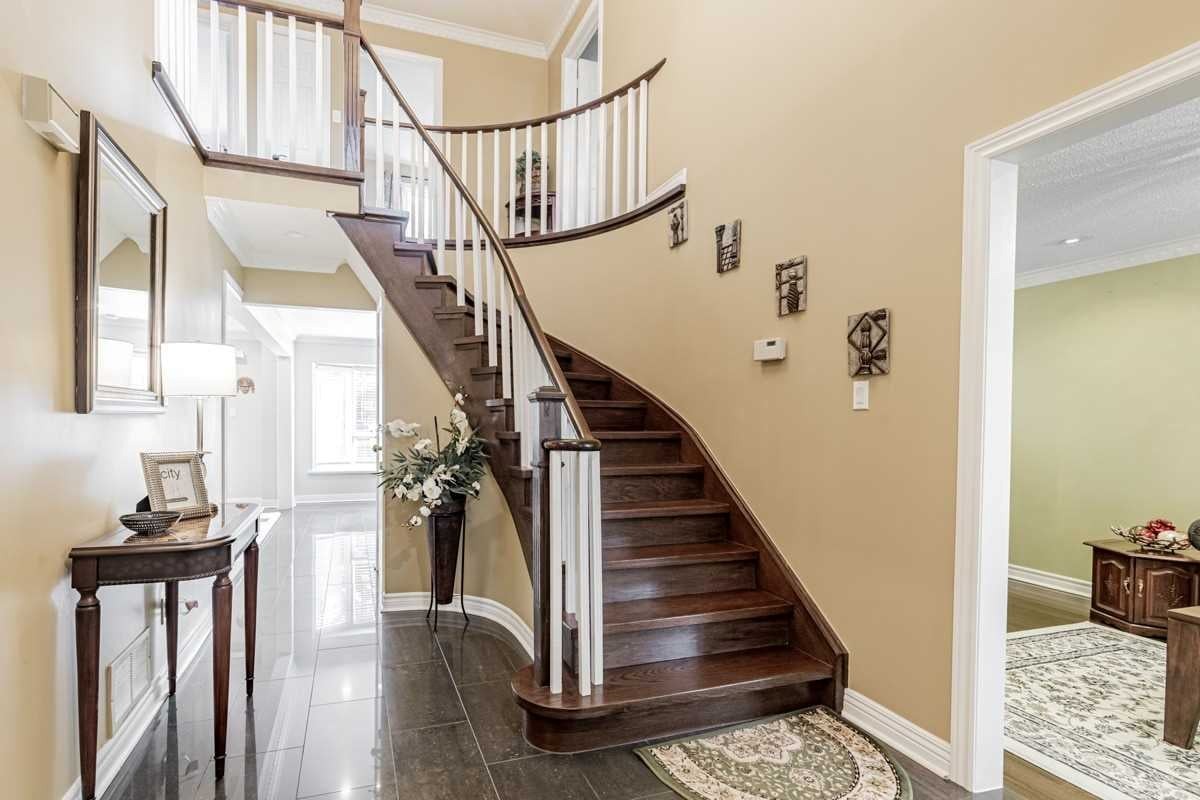
For anyone watching the Greater Toronto Area (GTA) real estate market over the past year, June brought a mixed bag of signals — a market that seems to be limping toward recovery, but not quite ready to sprint.
On the surface, the numbers tell a story of sluggish momentum. Home sales dipped by 2.4% compared to June 2024, with 6,243 properties changing hands. The average selling price slid 5.4% year-over-year to just over $1.1 million. It’s easy to glance at these stats and assume the GTA market is in trouble — and to some degree, it is.
But dig a little deeper, and you start to see flickers of optimism.
For one, sales were up 8.1% from May on a seasonally adjusted basis — a sign that, despite the bumpy road, buyer confidence may be slowly returning. The Toronto Regional Real Estate Board (TRREB) even described it as a “continued sign of recovery.” That’s not just spin; it’s a measured take.
Inventory is also swelling. With nearly 20,000 new listings in June — up 7.7% from a year ago — and over 31,000 active listings on the market, buyers now have more to choose from. That’s important in a region where scarcity has often driven frenzied bidding wars and inflated prices. Today’s market feels more balanced. In fact, TRREB’s president Elechia Barry-Sproule pointed out that buyers are not only shopping around more, but also negotiating better deals — something that felt impossible not long ago.
This shift is partly thanks to easing borrowing costs. Interest rates, while still elevated compared to the ultra-low era, are lower than they were a year ago. For many families who had given up on owning a home in the GTA, 2025 might finally offer a glimmer of hope.
But here’s the catch: uncertainty still looms large.
Canada’s ongoing trade tension with the U.S. has cast a shadow over consumer confidence. That economic unease was painfully evident in April and May, when sales dropped 23% and 13% year-over-year, respectively. As TRREB’s chief information officer Jason Mercer noted, a firm trade agreement and a more stable geopolitical climate could do wonders for both the housing market and household sentiment.
Also, while the Bank of Canada has paused further interest rate cuts for now, more easing could be key to unlocking demand. Two additional cuts, as Mercer suggests, could significantly reduce monthly mortgage burdens, especially for first-time buyers or growing families trying to stay close to the city.
And let’s not forget the regional split. While the City of Toronto saw a modest 3.5% increase in sales, the rest of the GTA suffered a 5.6% decline. Clearly, the rebound is not evenly distributed.
The segment breakdown tells another interesting story. Townhouses saw the sharpest drop in sales at 4%, followed by detached homes, condos, and semi-detached units. This decline across all property types reinforces that, while activity is improving, it’s still far from robust.
So where does that leave us?
The GTA housing market seems to be in a delicate state of transition. It’s not a buyer’s market, nor is it a seller’s paradise. It’s something in between — a cautious, wait-and-see environment shaped by shifting interest rates, international politics, and local affordability challenges.
Still, if you’ve been on the sidelines, this could be the window of opportunity you’ve been waiting for. Prices are softer, inventory is growing, and negotiations are back on the table. But don’t expect a dramatic crash or a sudden boom. What we’re seeing is a slow recalibration — and that might be just what the market needs.


![Three smiling women sit on a colorful padded floor, posing with a large sign that reads Canada Child Benefit and its French translation, in a community setting with a pillow saying This Classroom Runs on Kindness nearby.]','Three women pose for a group photo indoors, holding a white board about the Canada Child Benefit and its French equivalent, with colorful circles in the design and a kindness-themed cushion nearby.'] }``` Wait formatting wrong. We must provide proper JSON. Let's craft properly. Provide 5 options. Ensure no stray quotes. Let's produce proper JSON. Use single quotes in descriptions? Must be double quotes. I'll provide array of strings. Ensure no stray characters. Let's do. } For safety. Let's output.} Let's craft final.} Wait earlier included typos. Let's deliver.]]>](https://www.thesouthasiajournal.com/wp-content/uploads/2026/07/12-2-390x220.jpg)