Ford’s Medical School Ban on International Students Misses the Bigger Picture
Taslima Jamal
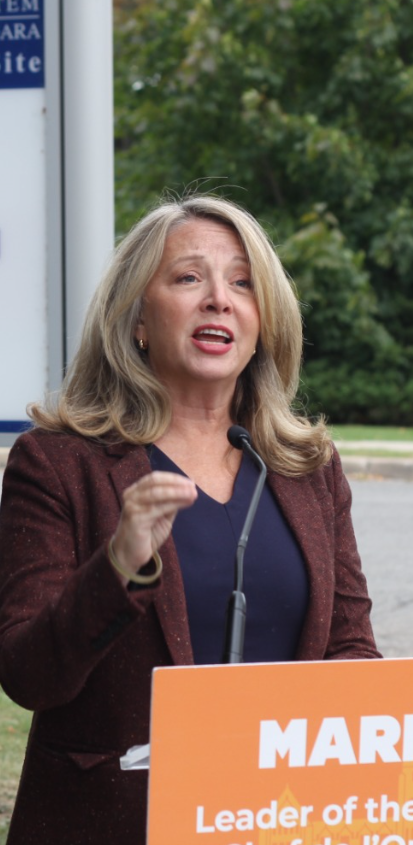
Doug Ford’s government has unveiled yet another headline-grabbing plan this time to effectively ban international students from Ontario’s medical schools. By 2026, 95 per cent of medical school seats will be reserved for Ontario residents, with the remaining five per cent open to the rest of Canada. International students? Shut out completely.
The government’s pitch is simple: fewer foreign students means more opportunities for Ontarians, which supposedly means more doctors staying in the province. Ford framed the move as a way to address the crisis of 2.5 million people in Ontario who don’t have a family doctor. Health Minister Sylvia Jones reinforced the idea, saying Ontario taxpayers shouldn’t be subsidizing the education of students who may leave after graduation.
On paper, it sounds like a common-sense policy. But dig a little deeper, and the cracks show.
First, this “ban” risks shrinking the talent pool at a time when we desperately need more doctors, not fewer. Ontario NDP Leader Marit Stiles is right to warn that this could throttle the number of physicians entering the system. We don’t just have a distribution problem in healthcare we have a supply problem. Cutting off potential doctors who might want to stay, live, and work here is shortsighted.
Second, Ford’s rhetoric about “taking care of our kids first” oversimplifies the issue. It’s true that many Ontario students are forced to study medicine abroad due to limited spots at home, but the real question is: why hasn’t the government expanded medical school capacity more dramatically? Announcing a cap on who can apply doesn’t solve the bottleneck it just narrows it further.
To sweeten the deal, Ford has promised that starting in 2026, the province will cover medical school tuition for 1,000 students who commit to working as family doctors in Ontario. That’s a step in the right direction, but the numbers don’t add up. Even with that program, the province estimates 1.36 million more people could get a family doctor but we still fall short of covering the full 2.5 million gap.
There’s also something a bit unsettling about the premier’s off-the-cuff remarks about “backdating” financial aid and calling his finance minister “Mr. Moneybags.” It underscores just how reactive and performative these announcements can be, with little concrete planning behind them.
If the government truly wanted to fix the doctor shortage, it would focus less on restricting who gets into medical school and more on: Expanding residency spots, so graduates actually have somewhere to train, Incentivizing family medicine properly, since many graduates avoid it due to lower pay and high workloads compared to specialties and Making Ontario a place where doctors want to stay, by fixing burnout and investing in long-term healthcare infrastructure.
Ontario’s medical crisis won’t be solved by slamming the door on international students. It will be solved by expanding opportunities for all qualified students regardless of where they come from and by addressing the structural reasons so many doctors leave or avoid family practice in the first place.
Ford’s announcement may win political points with those frustrated about access to care, but in practice, it risks making a bad situation worse.
![Three smiling women sit on a colorful padded floor, posing with a large sign that reads Canada Child Benefit and its French translation, in a community setting with a pillow saying This Classroom Runs on Kindness nearby.]','Three women pose for a group photo indoors, holding a white board about the Canada Child Benefit and its French equivalent, with colorful circles in the design and a kindness-themed cushion nearby.'] }``` Wait formatting wrong. We must provide proper JSON. Let's craft properly. Provide 5 options. Ensure no stray quotes. Let's produce proper JSON. Use single quotes in descriptions? Must be double quotes. I'll provide array of strings. Ensure no stray characters. Let's do. } For safety. Let's output.} Let's craft final.} Wait earlier included typos. Let's deliver.]]>](https://www.thesouthasiajournal.com/wp-content/uploads/2026/07/12-2-390x220.jpg)