The courage to speak justly and assert one’s rights while locking eyes with others is what I see in the eyes of the border guards, and it inspires a dream of building a unique Bangladesh. No one can unlawfully seize even an inch of Bangladesh’s land, nor can it remain encroached. The vigilance of all people on the border, guarding the country, encourages us to weave the dreams of a new dawn. Rising above political differences and forgetting all divisions, standing united for the country’s interests teaches us the lesson of fearlessness. Breaking free from the shackles of the once submissive foreign policy, Bangladesh now seeks to solve problems based on justice and equality. With courage, it speaks of its rights and strives to regain the looted independence. Standing firm with a fearless gaze, the border soldiers are supported by the people of Bangladesh—women, men, and children. Such an unyielding example of patriotism was not seen on the border even in last winter. It is like a new warmth in the heart of a patriotic sailor. The strength of the patriotic students and citizens who, with determination, are claiming their rightful demands while locking eyes with others will play a significant role in breaking the chains of occupation and ensuring their victory. It makes me want to raise my voice and sing, “One Bangladesh, the awakened people’s land, a wonder of the world, my pride.”
The Indian Border Security Force (BSF) has never acted in a friendly manner with Bangladeshi citizens along the Bangladesh-India border. The painful wound of Felani’s death at the hands of the BSF has yet to heal in our hearts. The mourning in our minds has not faded. In comparison to its other bordering countries, where the BSF’s death toll is nearly zero, over the past 15 years, the BSF has killed more than 600 people from Bangladesh along the border. The relationship between Bangladesh and India was very cordial for the last 15 years, almost like a husband and wife relationship! It is said that in the 53 years since Bangladesh’s independence, there has never been such a friendly relationship. Such a bond had never been witnessed before. Yet, along the border, innocent Bangladeshis were shot like birds, and this ‘friendly’ relationship was celebrated and enjoyed! Both sides have labeled the victims as smugglers, cattle thieves, or drug carriers. Innocent people, farmers, and workers who lost their lives in the BSF’s bullets were buried under false accusations. Even on the Bangladeshi side, press conferences were held to justify the killings by the Indian border forces, with fabricated statements sent to the media. To ensure no stain on the ‘friendship,’ the lives of innocent people were sacrificed.
India had indulged in a master-servant relationship with Bangladesh for its own benefit. It asked for and got permission to use sea ports, land routes, and rail transits. It also received permission to use airspace. The life of Buet’s Abrar Fahad was sacrificed simply for protesting against India’s hegemonic tendencies. Bangladesh was forced into many agreements with India where Bangladesh received no benefits and its sovereignty was at risk. Some governments, with India’s support, were trying to push Bangladesh into a position similar to that of Sikkim. But for the sake of power, these leaders did not hesitate to sacrifice the nation’s interests. Otherwise, the Teesta water issue would not remain unresolved. India’s actions like opening the Farakka dam, which led to flooding Bangladesh’s lands, destroying crops, and putting the lives of people and animals at risk, should not go unpunished. The freedom to express opinions against India’s misdeeds was also suppressed by Bangladesh’s authorities.
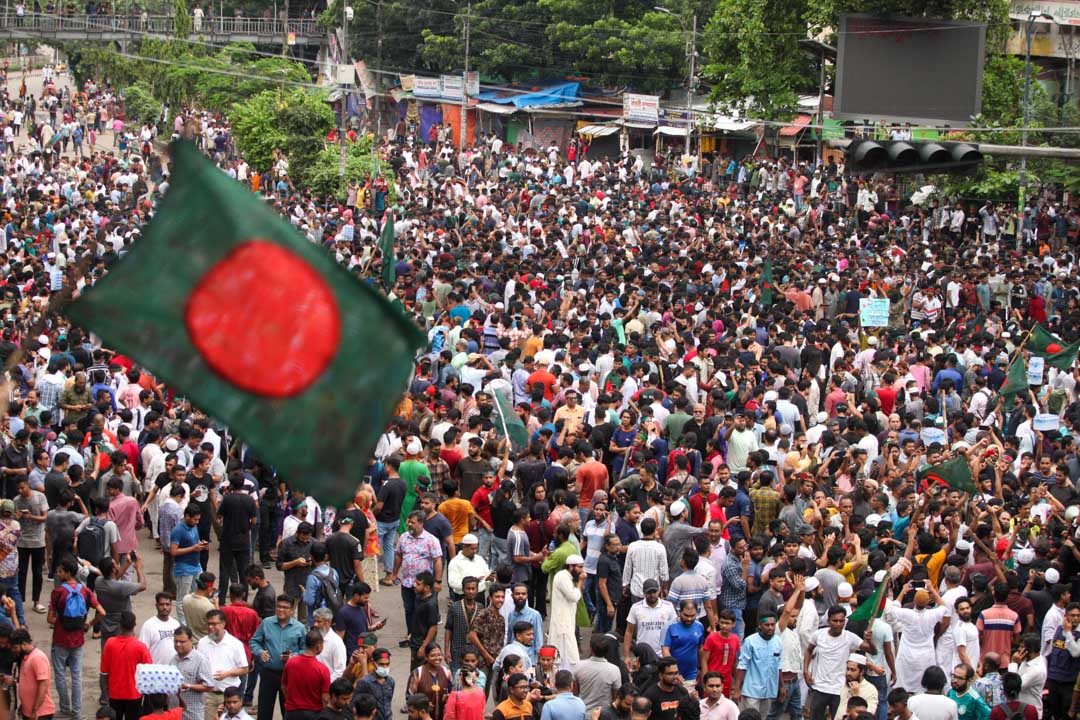
We must fight for the preservation of the country’s independence and sovereignty, even if it costs our lives. India’s aggressive stance towards Bangladesh over decades must be proven unjust. Neighboring countries can change, but the geography of a nation cannot. The mass uprising of students and citizens in July 2024 has given people new hope for life. There is no enmity between the common people of India and Bangladesh. We do not oppose the people of India, but we strongly oppose the current aggressive Indian government’s policies towards Bangladesh. As a greater neighbor, maintaining good relations with India is our aspiration, but these relations must be based on equality and justice. Border killings must be reduced to zero. Bangladesh’s issues must be resolved based on justice. India can use Bangladesh’s sea, land, and airspace, but this must be done with trust, not with ill intentions. India’s lucrative market for various products in Bangladesh should not be disturbed by sudden export bans or harassment. Bilateral agreements are essential to address such issues. The rightful share of Bangladesh in international or jointly owned rivers like Teesta must be given. The opening of dams that cause artificial floods in Bangladesh, leading to the suffering of its people, must not happen.
Until August 5, 2024, India has received everything it demanded from Bangladesh without any obstruction or questions. But now, Bangladesh is different. The government has ordered the border security forces to show not their back, but their chest! The slogans against Indian aggression and calls to boycott Indian products across Bangladesh have already put India in a difficult situation, and this will not change. Every year, a significant number of Bangladeshis used to travel to India for tourism and medical purposes. Bangladeshis contributed significantly to various sectors such as hotels, transport, and retail in India. However, as the relationship deteriorates, there is a crisis in some Indian states near Bangladesh. Indian farmers, in protest against their government, have raised their voices against the deteriorating situation. India’s markets for perishable items like onions, potatoes, and green chilies depend heavily on Bangladesh, and this market cannot be replaced. After India’s declaration that it would stop sending cows to Bangladesh, Bangladeshi farmers responded with rebellion. If India increases its hostility towards Bangladesh, it will suffer as much as Bangladesh does. India may be a larger and economically stronger neighbor, but Bangladesh’s geographical importance makes it a key element in India’s territorial integrity. On the other hand, India’s antagonism toward Bangladesh only strengthens the bond between Bangladesh and China-Pakistan. In such a case, Bangladesh, too, will seek trustworthy international alliances. Despite being a smaller country than India in terms of size and economic importance, Bangladesh has managed to maintain respect in the world, even while dealing with worse neighbors than India.