Canada’s Wealth Divide Widens as Homeownership Drives Financial Security, New Survey Shows
Manjit Sing
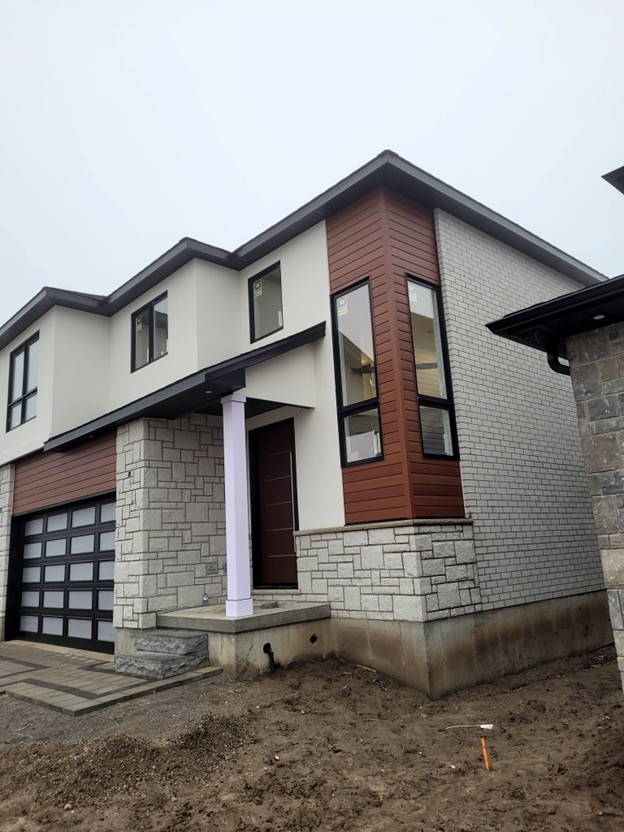
A new survey from Statistics Canada reveals a deep and growing divide in wealth between Canadian homeowners and renters, highlighting how owning property has become a critical gateway to financial security while also understating the true concentration of wealth among the country’s richest families.
The Financial Security Survey, conducted only once every few years, paints a stark picture. In 2023, families aged 55 to 64 whose main income earner owned a home and had an employer-sponsored pension reported a median net worth of $1.4 million. By contrast, renters in the same age group without a pension had a median net worth of just $11,900.
While pensions help, the data shows that homeownership is the dominant factor behind wealth accumulation. Homeowners without pensions still had a median net worth of $914,000, far exceeding the $359,000 held by renters who did have pension plans.
According to Dan Skilleter, director of policy at Social Capital Partners, the numbers underscore how real estate has increasingly become the foundation of financial well-being in Canada.
“The most striking aspect of the data is the explosive growth of real estate as an asset class,” Skilleter said. “Canadians across all income levels are getting the message that property ownership is essential. That’s a sign of a system that’s becoming dysfunctional and unsustainable.”
The trend is also visible among younger Canadians. Families under 35 who own their primary residence reported a median net worth of $457,100, compared with $44,000 for those who do not. Even that figure masks a shift, as an increasing share of renters’ wealth now comes from owning investment properties rather than their own homes.
Statistics Canada noted that among renters without pensions, 15 per cent had net worths above $150,000 in 2023 triple the share recorded in 2019 largely due to real estate investments.
Overall, Canadian household wealth has grown sharply. The median net worth reached $519,700 in 2023, a 57 per cent increase from 2019. Households under 35 saw median wealth rise to $159,100, up from $56,400, while those aged 55 to 64 remained the wealthiest group at $873,400.
The survey, based on a detailed 45-minute questionnaire sent to nearly 40,000 households, is the most comprehensive snapshot of Canadians’ assets and debts available. Yet it has a critical limitation: it fails to adequately capture the country’s ultra-rich.
Statistics Canada’s top survey category includes the wealthiest five per cent of households roughly those worth more than $2.4 million lumping together millionaires and billionaires alike. As a result, the financial realities of the top one per cent, and especially the top 0.1 per cent, are largely invisible.
Skilleter pointed out that the richest family captured in the survey reported a net worth of $27.3 million in 2016, far below the wealth held by Canada’s true elite. Estimates from Credit Suisse suggest there are more than 5,500 Canadians worth over $50 million, including 120 individuals with fortunes exceeding $500 million.
While survey data suggests the top one per cent owns about 13.7 per cent of Canada’s wealth, a revised estimate by the Parliamentary Budget Officer, using external sources such as the Forbes rich list, puts that share at nearly 25 per cent. The top 0.1 per cent alone may control more than 11 per cent of all wealth.
Statistics Canada acknowledges that its data understates wealth at the very top. Unlike the United States, which deliberately samples billionaires in its wealth surveys, Canada’s approach can make the country appear more economically equal than it truly is.
“We’re not even fully aware of how quickly ownership of capital is accelerating wealth at the top,” Skilleter said. “Without that clarity, it’s harder to have an honest conversation about policy choices that could reduce inequality and improve financial security for everyone.”
As homeownership continues to define who builds wealth and who falls behind, the survey raises pressing questions about affordability, opportunity, and whether Canada’s economic model is leaving too many behind — while obscuring just how much is concentrated at the very top.