Canada’s Extra $15 Million for Lebanon Is the Right Move but It’s Only a Start
Arshad Khan
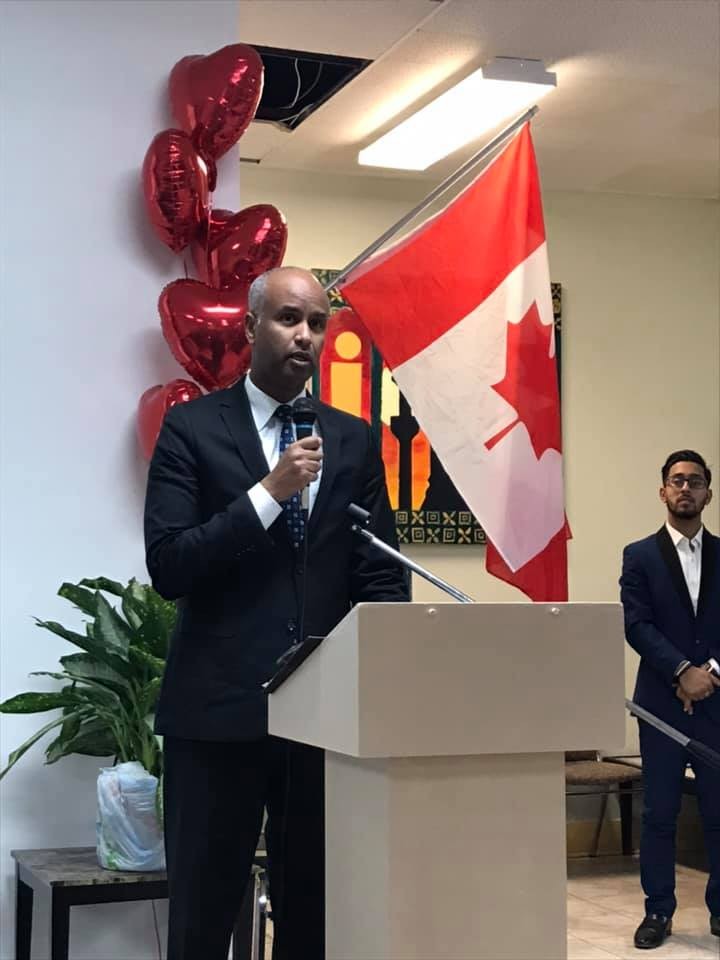
When International Development Minister Ahmed Hussen announced another $15 million in humanitarian aid for Lebanon, he framed it as a response to a worsening tragedy. He’s right: the conflict between Israel and Hezbollah has already killed more than 2,000 people in Lebanon, including two Canadians, and displaced countless families. Food, medicine, and shelter are running short, and winter is closing in.
Canada’s new commitment brings the total pledge to $25 million. On paper, that sounds significant. In practice, it’s a drop in the bucket compared to the sheer scale of need. The UN relief agency for Palestinian refugees, the World Food Program, and the Red Cross are all scrambling to keep pace with surging demand. Lebanon’s 978 official shelters are already packed, leaving thousands to sleep outdoors. The Humanitarian Coalition, a group of 12 major Canadian aid organizations, calls the situation “catastrophic” and they’re not exaggerating.
To its credit, Ottawa is pairing cash with concrete supplies: 5,000 blankets and 1,000 hygiene kits are on the way, and Canada has helped evacuate more than a thousand citizens and permanent residents. These are meaningful gestures. But let’s be honest: they barely scratch the surface. Lebanon’s crisis is decades in the making, compounded by political paralysis, economic collapse, and now a war that threatens to spill beyond its borders.
If Canada wants to make a real difference, it needs to treat this as more than a one-off response. That means sustained funding, yes, but also diplomatic engagement. Canada has historically punched above its weight in peacekeeping and mediation. Right now, an assertive push for de-escalation alongside allies at the UN and in regional forums would save far more lives than any aid shipment.
Canadians watching from afar may feel powerless. We’re not. Donating to the Humanitarian Coalition, whose funds the government will match until late November, is one immediate way to help. Pressing our leaders to keep Lebanon on the foreign-policy agenda is another.
Ottawa’s $25 million shows compassion and responsibility. But compassion shouldn’t stop when the headlines fade. For Lebanon’s people and for the Canadians still caught in the conflict this must be the beginning of a sustained, strategic commitment, not the end of one.

![Three smiling women sit on a colorful padded floor, posing with a large sign that reads Canada Child Benefit and its French translation, in a community setting with a pillow saying This Classroom Runs on Kindness nearby.]','Three women pose for a group photo indoors, holding a white board about the Canada Child Benefit and its French equivalent, with colorful circles in the design and a kindness-themed cushion nearby.'] }``` Wait formatting wrong. We must provide proper JSON. Let's craft properly. Provide 5 options. Ensure no stray quotes. Let's produce proper JSON. Use single quotes in descriptions? Must be double quotes. I'll provide array of strings. Ensure no stray characters. Let's do. } For safety. Let's output.} Let's craft final.} Wait earlier included typos. Let's deliver.]]>](https://www.thesouthasiajournal.com/wp-content/uploads/2026/07/12-2-390x220.jpg)