Canada’s Conditional Recognition of Palestine: A Step Toward Peace or a Risky Gamble?
Arafat Rahman
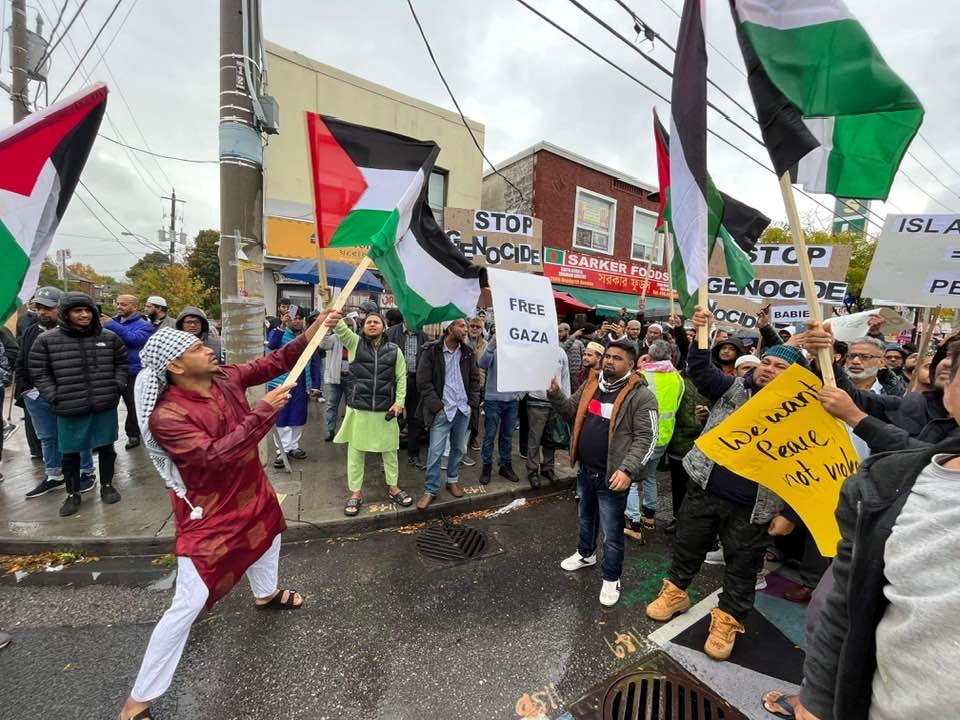
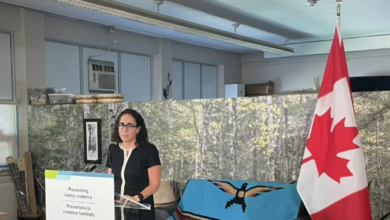
In a bold and highly consequential move, Canadian Prime Minister Mark Carney has announced that Canada intends to recognize the State of Palestine at the 80th United Nations General Assembly in September 2025. But the recognition comes with significant strings attached, namely, a sweeping reform of the Palestinian Authority (PA), a ban on Hamas’s participation in governance, and a commitment to hold democratic elections in 2026.
To say the least, this announcement has sparked sharp debate both at home and abroad. On the surface, Canada appears to be joining a growing coalition of Western and allied nations pushing for the long-elusive two-state solution. Yet Carney’s carefully-worded conditions make it clear that this is not a blind endorsement of Palestinian statehood, but a measured diplomatic maneuver aimed at recalibrating a peace process that has all but collapsed.
Let’s be honest: the timing of this announcement is no coincidence. The humanitarian catastrophe unfolding in Gaza, the devastating toll on civilian life, and the stubborn intransigence of both Hamas and the Israeli government have made the current status quo morally indefensible and politically untenable. Carney’s words “The deepening suffering of civilians leaves no room for delay” are both a reflection of global frustration and an appeal to the conscience of the international community.
But here’s where things get complex. The recognition of Palestine will not be automatic. Canada’s support hinges on “much-needed reforms,” including a democratic overhaul of the Palestinian Authority, the exclusion of Hamas from future elections, and the demilitarization of the Palestinian state. In other words, Canada is offering recognition not as a reward, but as leverage—an incentive to push Palestinian leadership toward more credible, accountable governance.
Critics argue this is wishful thinking. The Conservative Party, for one, denounced the move as premature and dangerous. Their statement warns that unilateral recognition could reward violence, embolden extremists, and sideline the diplomatic process. They may have a point. Holding elections in Gaza under current conditions is, as Carney himself acknowledged, “not a possibility now.” And how does one enforce the exclusion of Hamas an entrenched and deeply embedded force in Palestinian politics without further destabilizing the region?
Israel’s response was predictably defiant. Ambassador Iddo Moed rejected the notion outright, framing it as an existential threat: “We will not sacrifice our very existence by permitting the imposition of a jihadist state.” The language is harsh, but it underscores the deep mistrust and fear that has paralyzed any genuine movement toward peace.
Still, Carney’s strategy deserves credit for one thing: it attempts to thread the needle. He condemned Hamas unequivocally, reaffirmed Canada’s support for Israel’s security, and took a hard line against antisemitism at home. In doing so, he sought to strike a balance that has eluded many world leaders recognizing the suffering of Palestinians without excusing terrorism, and supporting Israel without giving its government a free pass.
But let’s not overstate the impact. Recognition is symbolic unless followed by real policy shifts and on-the-ground changes. Can a demilitarized Palestinian state realistically exist alongside a heavily armed and increasingly nationalist Israeli state? Can Mahmoud Abbas—an aging leader with dwindling legitimacy deliver the sweeping reforms Canada is demanding? Can Hamas truly be sidelined when its influence is rooted in decades of occupation, displacement, and despair?
What Canada is attempting is a high-wire act. It’s trying to force a political reboot in Palestine while simultaneously nudging Israel toward restraint. That might be overly ambitious, even naïve. But it also reflects a growing international consensus: doing nothing is no longer an option.
Fourteen other countries have already expressed readiness to recognize Palestine, with France and the UK among them. The momentum is shifting. The idea of a Palestinian state is no longer a distant, final goal it’s increasingly being viewed as a starting point for serious negotiation.
In the end, Carney’s plan is neither a panacea nor a provocation. It’s a diplomatic gamble grounded in principle: that peace requires partners, and partners require legitimacy. Whether that gamble pays off will depend not just on the Palestinians or the Israelis but on whether the world is truly ready to treat both states as equals, not just in rhetoric, but in reality.