Canada–India Relations Hit Historic Low After Diplomatic Expulsions Linked to Nijjar Killing
Afroza Hossain
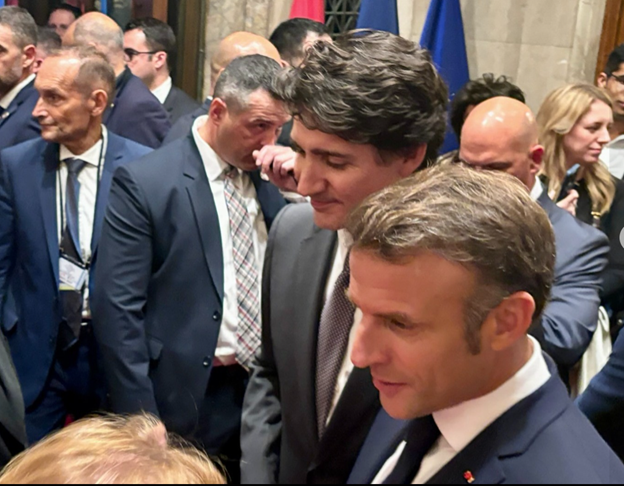
Relations between Canada and India have plunged to one of their lowest points in decades after both nations expelled senior diplomats amid a bitter dispute over the 2023 killing of Sikh leader Hardeep Singh Nijjar in British Columbia.
The latest escalation came this week when Canadian Prime Minister Justin Trudeau announced the expulsion of six Indian diplomats, including India’s High Commissioner to Canada, Sanjay Kumar Verma. Ottawa said the decision followed intelligence and law-enforcement assessments alleging the involvement of Indian state-linked actors in intimidation, coercion, and violent criminal activity targeting individuals on Canadian soil.
India immediately rejected the allegations, calling them baseless and politically driven, and responded by ordering six Canadian diplomats to leave the country, deepening an already tense standoff.
At the heart of the dispute is the fatal shooting of Nijjar, who was killed on June 18, 2023, outside the Guru Nanak Sikh temple in Surrey, British Columbia. Nijjar, a Canadian citizen and prominent figure within the Sikh community, was a vocal supporter of the Khalistan movement. While New Delhi had previously designated him a terrorist, his death shocked Canada’s Sikh population and raised serious concerns about possible foreign involvement in violence inside Canada.
Tensions simmered for months before erupting publicly in September 2023, when Trudeau told Canada’s Parliament that intelligence agencies were examining “credible allegations” linking Indian government actors to Nijjar’s assassination. The statement marked an extraordinary diplomatic break and triggered reciprocal expulsions, suspended visa services, and the freezing of trade negotiations between the two countries.
India has consistently denied any role in Nijjar’s killing, accusing Canada of allowing extremist elements to operate freely and of failing to adequately protect Indian diplomatic staff amid protests and hostile demonstrations. Canadian officials, meanwhile, have argued that freedom of expression must be upheld, while stressing that violence and foreign interference are unacceptable.
The dispute drew further international scrutiny later in 2023 after U.S. prosecutors revealed a murder-for-hire plot targeting a Sikh activist in the United States. Court filings alleged discussions involving an Indian national with suspected links to Indian security services and referenced multiple assassination plots, including Nijjar’s killing. Although India again denied state involvement, the case heightened concerns among Western allies about transnational repression.
In May 2024, Canadian authorities arrested and charged three men Karan Brar, Kamalpreet Singh, and Karanpreet Singh with first-degree murder and conspiracy to commit murder in connection with Nijjar’s death. While the criminal cases are still before the courts, the diplomatic damage has already been done.
Economically, Canada’s decision to halt trade talks with one of the world’s fastest-growing major economies has created uncertainty for businesses on both sides. Diplomatically, engagement has been scaled back sharply, with dozens of officials recalled and formal communication channels reduced.
For Canada, the crisis has reinforced concerns over sovereignty, diaspora safety, and foreign interference. For India, the allegations pose a serious challenge to its international standing and raise fears of prolonged scrutiny of its security practices abroad. Analysts warn that without transparency, cooperation in the investigation, and careful diplomacy, the dispute risks solidifying into a long-term rupture.
Despite the heated rhetoric, both governments have publicly signaled that dialogue remains possible. Observers say rebuilding trust will require respect for legal processes, meaningful cooperation, and sustained engagement not only between Ottawa and New Delhi, but also with international partners closely watching the outcome.
What began as a single criminal investigation has evolved into a defining test of how democracies respond to allegations of cross-border violence and how quickly even long-standing bilateral relationships can fracture when questions of justice and sovereignty collide.